


Key Highlights
- Chun Wang, co-founder of F2Pool, will serve as Mission Commander for SpaceX’s inaugural commercial crewed voyage to Mars.
- The expedition spans two years and features a lunar pass and Mars flyby before returning home.
- Wang oversees approximately 11.3–11.5% of Bitcoin’s worldwide hashrate and possesses roughly $300 million in personal Bitcoin assets.
- SpaceX publicly disclosed holding 8,285 Bitcoin while confidentially submitting IPO paperwork aimed at a $1.75 trillion market capitalization.
- Wang previously commanded Fram2, SpaceX’s inaugural crewed polar orbit expedition, in 2025.
Chun Wang, cryptocurrency mining pioneer and F2Pool co-founder, has been selected to command SpaceX’s inaugural crewed Mars expedition—a 24-month deep space odyssey scheduled to depart in 2026.
[[EMBED_0]]
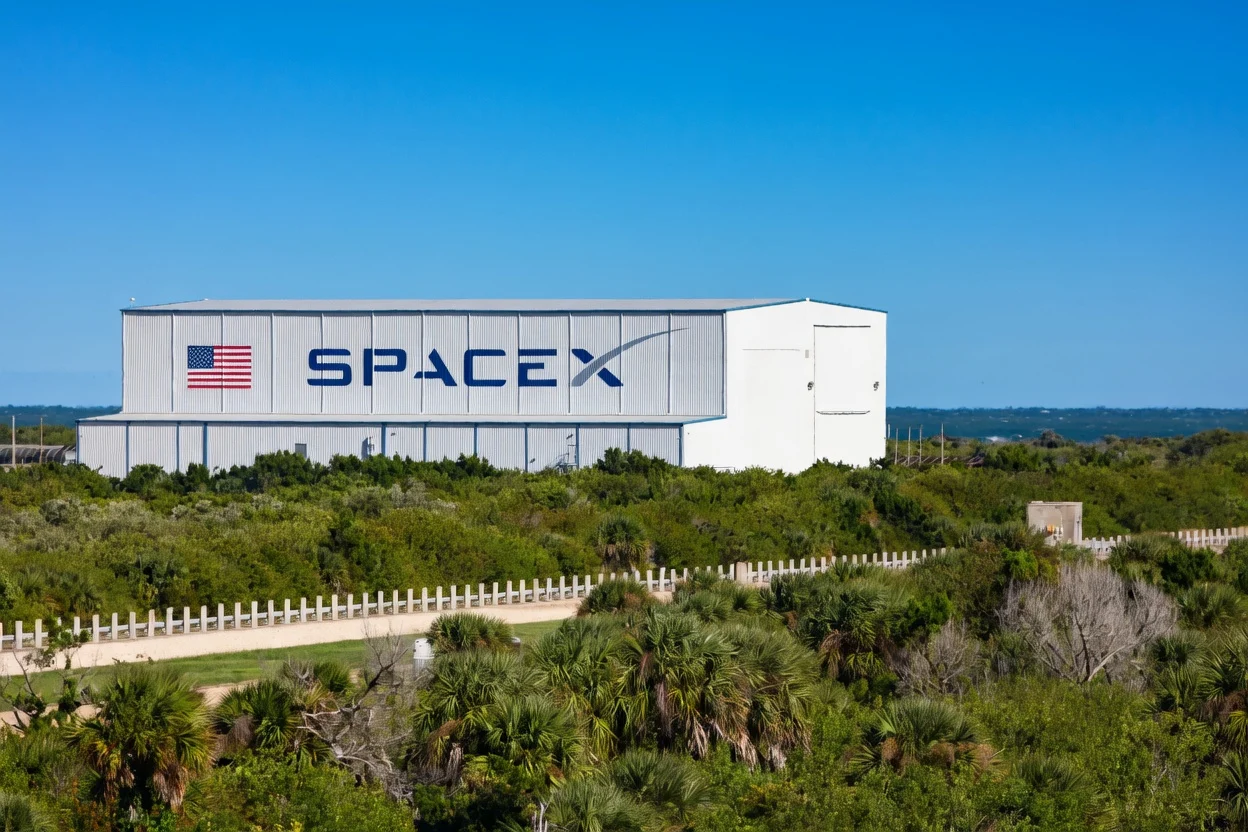
SpaceX made the Thursday announcement that Wang will pilot its Starship vessel on an unprecedented mission venturing past the Earth-Moon boundary, executing a Mars approach, and completing the return journey to our planet.
Wang, a Chinese-Maltese-Kittitian digital currency entrepreneur, established F2Pool alongside Shixing Mao in 2013. The mining operation presently manages between 11.3% and 11.5% of worldwide Bitcoin computational power. Wang’s private Bitcoin portfolio is valued at more than $300 million.
Prior to the Mars expedition, Wang will participate in SpaceX’s inaugural commercial crewed lunar approach aboard Starship—a seven-day voyage bringing him to approximately 125 miles from the Moon’s surface, traveling with Dennis and Akiko Tito.
This marks Wang’s second space venture. He commanded the Fram2 mission in 2025, which represented SpaceX’s first crewed polar orbit expedition.

A 24-Month Expedition Into Deep Space
The Mars expedition will extend across two complete years. The astronauts will venture beyond the Earth-Moon boundary, execute a high-altitude Mars approach, and navigate a sophisticated trajectory back to our planet.
The voyage utilizes SpaceX’s advanced Starship V3 platform. The enhanced vehicle incorporates vacuum-insulated header supply lines, high-voltage cryogenic circulation mechanisms, and 60 specialized avionics modules engineered to manage up to 9 megawatts of maximum power output.
The astronauts will confront substantial hazards throughout the expedition. These encompass equipment degradation, cryogenic propellant management in deep space conditions, and radiation exposure spanning 24 months.
Wang and his fellow astronauts will also gather biomedical information. This encompasses behavioral wellness monitoring and obtaining humanity’s first X-ray imaging conducted in microgravity environments.
This information is intended to assist SpaceX in enhancing Starship for quick turnaround operations and designing subsequent expeditions. Elon Musk’s ultimate objective involves transporting as many as one million individuals to Mars.
“After we come back from Mars, we will have the opportunity to take some real photos, especially of Mars,” Wang said in a SpaceX video. “Mars will no longer be a distant place. It will become reality.”
SpaceX’s Bitcoin Portfolio and Public Offering Strategy
The Mars revelation arrives during a pivotal period for SpaceX. The aerospace corporation has confidentially submitted IPO documentation seeking a market capitalization exceeding $1.75 trillion, positioning it as history’s largest public offering.
SpaceX additionally made its first public acknowledgment of its Bitcoin portfolio. The enterprise possesses 8,285 Bitcoin.
SpaceX has transported 78 astronauts to and from orbital space throughout 20 expeditions since 2020. Seven represented commercial or private astronaut voyages.
Precise launch windows have not been established for either the lunar or Mars expeditions.
Get 3 Free Stock Ebooks
Discover top-performing stocks in AI, Crypto, and Technology with expert analysis.
- Top 10 AI Stocks - Leading AI companies
- Top 10 Crypto Stocks - Blockchain leaders
- Top 10 Tech Stocks - Tech giants



