



Key Takeaways
- Brent crude declined to approximately $79 per barrel following Iran’s announcement of “major progress” in diplomatic negotiations with the United States in Switzerland
- Last week saw both benchmark contracts lose nearly 10% on expectations of an interim peace agreement
- Negotiators established a 60-day framework, with ongoing technical discussions scheduled throughout the week at the Bürgenstock resort
- Tehran temporarily shut the Strait of Hormuz again during the weekend, citing Israeli actions in Lebanon as justification
- Market experts caution against excessive optimism, noting that approximately 80 million barrels could enter markets if Hormuz achieves full operational status
Crude oil markets weakened Monday following Tehran’s announcement that diplomatic negotiations with Washington in Switzerland had achieved “major progress.” Brent crude declined approximately 2% to around $79 per barrel, while West Texas Intermediate retreated toward $75.
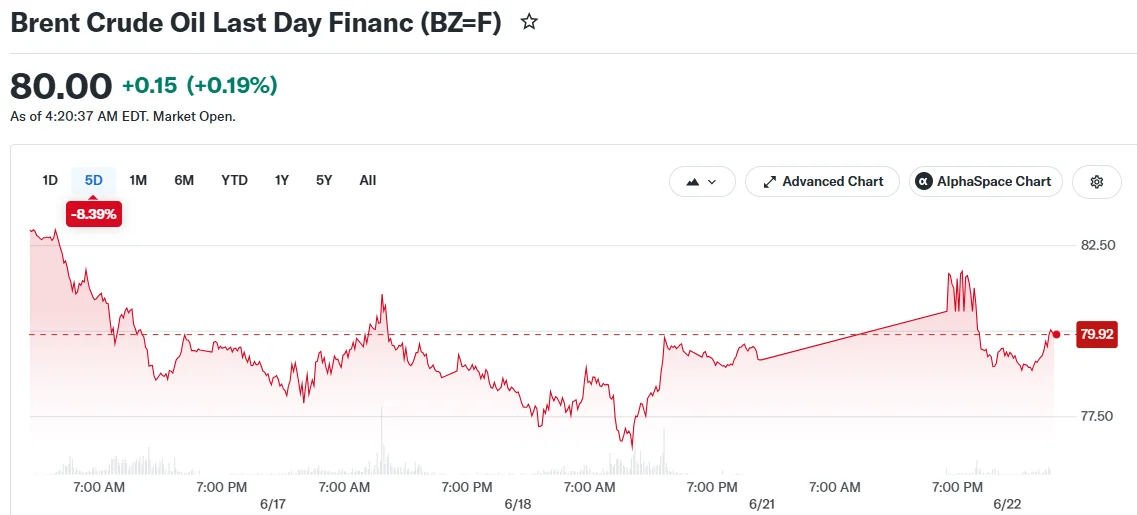
Both benchmark contracts had experienced nearly 10% losses during the previous week when an interim peace framework was unveiled. Monday’s decline extended that momentum as market participants priced in the potential for increased Iranian crude supplies reaching global buyers.
Iranian Foreign Minister Abbas Araghchi validated that substantive advancement occurred during the quadrilateral negotiations. These discussions are facilitated by Qatar and Pakistan at Switzerland’s Bürgenstock resort.
Negotiators established a 60-day timeline for reaching a comprehensive agreement. Technical-level discussions are scheduled to continue throughout the remainder of the week.
Topics Addressed in Negotiations
Discussions encompassed sanctions relief, maritime security protocols, and a structure for subsequent negotiations regarding Iran’s nuclear activities. Participants also established a communication framework designed to maintain commercial shipping operations through the Strait of Hormuz.

US Vice President JD Vance participated in the talks alongside senior Iranian representatives. The gathering follows a memorandum of understanding executed by both nations during the previous week.
The diplomatic process encountered complications over the weekend. Tehran asserted it had once again restricted access to the Strait of Hormuz, referencing continued Israeli military activities in Lebanon and purported American failures to honor interim agreement obligations.
Substantial volumes of crude oil continued transiting the strait throughout the weekend, nevertheless. Chubb CEO Evan Greenberg informed Fox News that regional security conditions remain unstable.
US President Donald Trump intensified pressure Sunday through a social media post threatening consequences. “Iran must immediately stop their highly paid PROXIES in Lebanon from causing trouble. If they don’t, we’ll hit Iran very hard again, just like we did last week, only harder!!!” he declared.
Escalation Dangers Still Present
Market participants responded to Trump’s statements by reincorporating a geopolitical risk premium into oil prices. ING analysts cautioned that “moving towards a more permanent deal will be challenging, with very real risks of a flare-up in hostilities during the 60-day ceasefire.”
Vivek Dhar, an analyst with Commonwealth Bank of Australia, suggested markets may be demonstrating excessive optimism regarding swift normalization of regional oil exports.
Persian Gulf producers are positioning themselves for elevated production levels. Kuwait rescinded previous force majeure declarations, and Abu Dhabi National Oil Company instructed clients to resume cargo collection from Persian Gulf facilities.
Should Hormuz achieve complete reopening, market analysts project roughly 80 million barrels of crude could enter markets rapidly. This volume potentially exceeds refinery capacity, particularly given subdued demand from China, the planet’s largest oil consumer.
Crude prices remain elevated compared to pre-conflict levels, though future trajectory hinges on diplomats’ capacity to sustain the peace framework in coming days.
Get 3 Free Stock Ebooks
Discover top-performing stocks in AI, Crypto, and Technology with expert analysis.
- Top 10 AI Stocks - Leading AI companies
- Top 10 Crypto Stocks - Blockchain leaders
- Top 10 Tech Stocks - Tech giants



