



TLDR
- Brent crude declined more than 2% to reach $99.11 per barrel; WTI slid to $93.08 during Thursday trading
- Wednesday had already seen both benchmarks plunge over 7% amid diplomatic optimism
- Sources indicate Washington and Tehran are nearing agreement on a brief memorandum to conclude hostilities
- Central to the agreement is a phased reopening of the Strait of Hormuz, a passage for approximately 20% of worldwide oil shipments
- American crude reserves decreased by 2.3 million barrels, falling short of the anticipated 3.4 million barrel reduction
Crude oil prices continued their downward trajectory Thursday, building on significant declines from the previous session, as optimism mounted regarding a potential diplomatic agreement between Washington and Tehran that could restore access to a critical global energy corridor.
Brent crude declined $2.16, approximately 2.1%, settling at $99.11 per barrel. US West Texas Intermediate decreased $2 to reach $93.08. Both major benchmarks had previously tumbled more than 7% during Wednesday’s session, marking two-week lows.
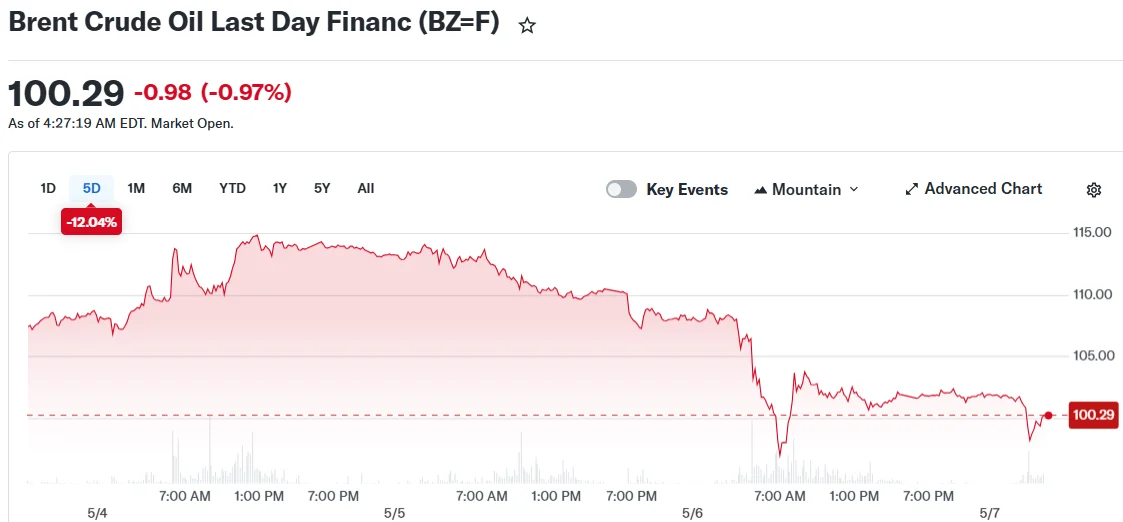
The primary catalyst behind the selloff was a series of media reports indicating the United States and Iran are approaching consensus on a brief memorandum of understanding that would formally conclude their military confrontation.
Axios indicated the White House anticipated Iran’s formal response within a 48-hour window. CNN reported Tehran was expected to deliver its reply to the American proposal by Thursday. A spokesperson for Iran’s foreign ministry confirmed the nation would transmit its response through diplomatic intermediaries.
Saudi Arabia’s Al Arabiya additionally reported both nations had achieved preliminary understandings to reduce the US blockade affecting Iranian ports in return for a gradual reopening of the Strait of Hormuz. Reuters was unable to independently confirm this reporting.

The Strait of Hormuz represents one of the planet’s most strategically vital oil transportation corridors. Approximately one-fifth of global petroleum commerce transits through this narrow passage. Any interruption or restoration of maritime traffic through this chokepoint directly influences worldwide supply dynamics and pricing.
Earlier this week, the United States suspended a military initiative aimed at restoring commercial shipping through the strait following an aggressive Iranian response.
Diplomatic Developments Shape Market Sentiment
Financial markets have demonstrated heightened sensitivity to each development emerging from the ongoing negotiations. Priyanka Sachdeva, senior market analyst at Phillip Nova, noted energy markets have been “stuck between diplomacy and disruption for more than two months.”
She indicated a formalized agreement could trigger oil prices to decline substantially as geopolitical risk premiums evaporate from market valuations.
Analysts at ING stated an agreement restoring navigation through Hormuz would diminish supply-risk premiums, though any postponement could rapidly reverse price declines.
US Treasury Secretary Scott Bessent called on China this week to encourage Iran toward reopening the strategic waterway. He revealed President Trump and China’s Xi Jinping would address the situation during their scheduled meeting next week.
Hiroyuki Kikukawa of Nissan Securities Investment suggested peace negotiations would likely persist at least through the US-China summit, though prospects beyond that timeframe remain uncertain.
Weekly Inventory Report Constrains Price Rebound
Weekly American oil inventory data released by the Energy Information Administration provided modest support to crude valuations. Petroleum stockpiles decreased by 2.3 million barrels during the week concluding May 1, reaching 457.2 million barrels.
Market analysts had forecasted a more substantial withdrawal of 3.4 million barrels, meaning the smaller-than-projected decline prevented any meaningful price recovery.
Gasoline reserves dropped by 2.5 million barrels. Distillate inventories, encompassing diesel fuel and heating oil, fell by 1.3 million barrels.
The EIA report additionally highlighted robust US petroleum export activity, indicating sustained demand for American supplies while Middle Eastern energy flows remain constrained.
Iran announced Wednesday it was examining the US proposal, which sources indicated would formally terminate the conflict but leave unaddressed several key American demands, including suspension of Iran’s nuclear enrichment program.
Get 3 Free Stock Ebooks
Discover top-performing stocks in AI, Crypto, and Technology with expert analysis.
- Top 10 AI Stocks - Leading AI companies
- Top 10 Crypto Stocks - Blockchain leaders
- Top 10 Tech Stocks - Tech giants



