


Key Highlights
- Brent crude reached $112.87 per barrel on Tuesday; WTI traded at $102.49
- Iranian forces allegedly attacked a Kuwaiti oil tanker near Dubai, igniting the vessel
- Reports suggest Trump may conclude military actions regardless of Strait of Hormuz status
- March is witnessing a historic 50–54% monthly increase in both Brent and WTI crude
- U.S. gasoline prices surpassed $4 per gallon, a level not seen since August 2022
Crude oil valuations remained elevated above $110 per barrel on Tuesday as escalating Middle Eastern hostilities continued to rattle international energy sectors.
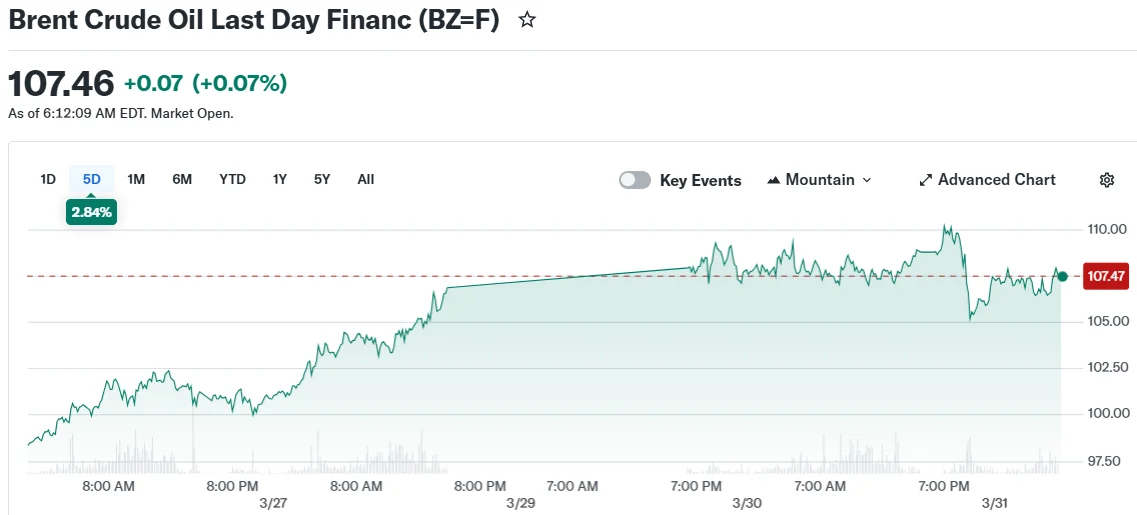
Brent crude, serving as the worldwide pricing standard, climbed 0.1% to reach $112.87 per barrel. West Texas Intermediate experienced a modest decline, settling at $102.49. Both pricing indicators are positioned to conclude March with gains ranging from 50% to 54%, marking one of the most substantial monthly increases in historical records.
Gas prices at retail locations exceeded $4 per gallon for the first time since August 2022, based on AAA tracking information.
The initial price spike followed reports that a Kuwaiti petroleum tanker caught fire close to Dubai’s maritime facilities. The vessel’s operators attributed responsibility for the incident to Iranian forces.
Trading activity moderated somewhat following a Wall Street Journal disclosure indicating President Trump informed his team he’s prepared to halt military engagement with Iran, regardless of whether the Strait of Hormuz achieves full operational status.

Trump and senior officials determined that restoring complete access through the strait would require significantly more time than the originally projected four-to-six week period. The revised strategy involves concluding American operations after degrading Iran’s naval forces and missile systems, followed by diplomatic efforts targeting Tehran.
The Strategic Importance of the Strait of Hormuz
Prior to the current conflict, approximately 20% of global world’s oil and liquefied natural gas shipments transited through the Strait of Hormuz. This critical passage continues to face at least partial obstruction.
Iran’s legislative body has authorized a toll collection system for ships navigating the waterway, according to official Iranian media sources.
While the strait experiences restricted access, petroleum prices in the triple-digit range may persist, creating downward pressure on equity markets more broadly.
Asian nations with substantial dependencies on Persian Gulf crude supplies have begun implementing energy conservation measures. Bangladesh closed its university system. Pakistan and the Philippines instituted reduced weekly work schedules.
Additional Conflict Zones Creating Market Uncertainty
Yemen’s Houthi faction joined the fighting during the weekend, launching strikes against Israel. The Houthis have demonstrated previous capability to target maritime vessels in the Red Sea corridor, intensifying concerns about an expanded theater of operations.
Iranian officials have mostly rejected claims of conducting direct negotiations with American representatives, contradicting Washington’s characterization of productive diplomatic channels.
The United States has positioned thousands of military personnel throughout the region. Trump has reiterated warnings about potential strikes on Iranian energy facilities and water systems if the Strait doesn’t reopen by April 6.
Pakistan extended an invitation to facilitate ceasefire negotiations in Islamabad. Defense Secretary Pete Hegseth and the Chairman of the Joint Chiefs had a press briefing scheduled for Tuesday morning.
Multiple Gulf region countries suspended petroleum extraction and export activities during the past month because of the ongoing conflict.
Get 3 Free Stock Ebooks
Discover top-performing stocks in AI, Crypto, and Technology with expert analysis.
- Top 10 AI Stocks - Leading AI companies
- Top 10 Crypto Stocks - Blockchain leaders
- Top 10 Tech Stocks - Tech giants



