



Key Highlights
- Brent crude heading toward a 5% weekly increase, with WTI climbing approximately 4%, even as Friday sees minimal movement
- Washington conducted additional airstrikes against Iranian military installations Thursday aimed at safeguarding Strait of Hormuz navigation
- Tehran responded by launching missile and drone strikes targeting Bahrain, Kuwait, Qatar, and Jordan
- President Trump announced the temporary ceasefire had collapsed following attacks on merchant ships
- Energy traders remain confident the hostilities won’t escalate into widespread supply disruptions affecting Gulf exports
Crude oil benchmarks maintained stability on Friday while positioning for substantial weekly advances following heightened military confrontations between Washington and Tehran that stirred concerns across energy trading desks earlier this week.
West Texas Intermediate futures dipped 0.1% to settle at $72.01 per barrel during Friday’s trading session. Brent crude decreased 0.07% to reach $76.25. Notwithstanding the subdued Friday performance, both major oil benchmarks were tracking toward impressive weekly advances — Brent approaching a 5% surge and WTI recording gains near 4%.
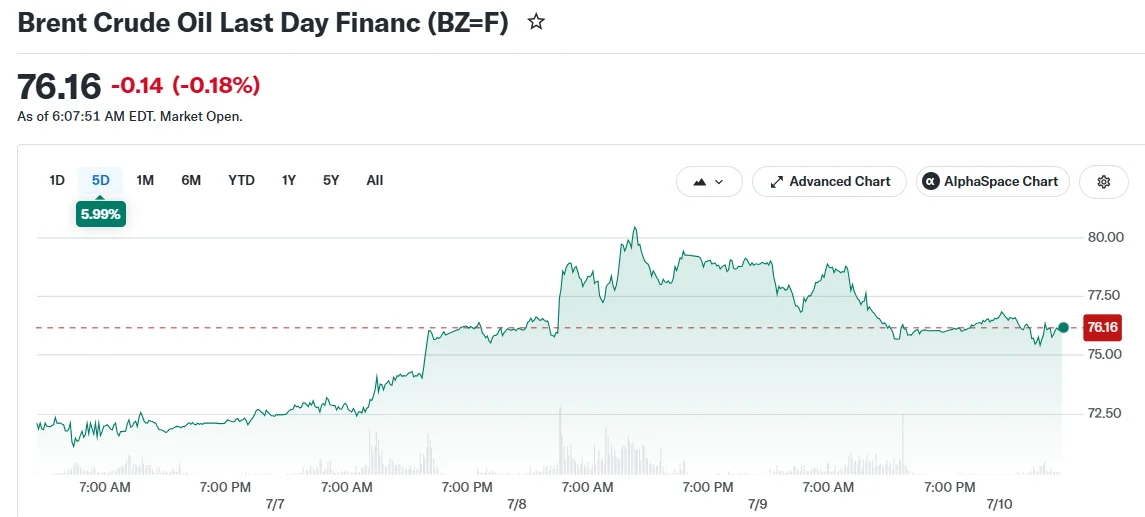
The weekly price momentum stemmed from escalating confrontations surrounding the Strait of Hormuz, recognized globally as a critical chokepoint for petroleum transportation. Recent strikes on merchant vessels navigating through and near this strategic corridor prompted several maritime operators to postpone or abandon planned routes.
Washington Launches Strikes, Tehran Retaliates
The United States executed an additional wave of precision strikes against military installations within Iranian territory on Thursday. Administration officials stated the operations were designed to diminish Tehran’s capacity to threaten international shipping traversing the Strait of Hormuz.
Tehran’s military command responded by deploying missile barrages and unmanned aerial vehicles against multiple nations aligned with Washington’s regional strategy, specifically Bahrain, Kuwait, Qatar, and Jordan. Market observers characterized the exchange as among the most extensive military confrontations witnessed since last month’s temporary cessation of hostilities agreement.

President Donald Trump declared that strikes on commercial maritime traffic had rendered the ceasefire essentially void. He issued stern warnings that Washington would deploy increasingly aggressive countermeasures should Iranian forces target additional vessels.
Despite the president’s assertive rhetoric, diplomatic channels remained active. Iranian Foreign Minister Abbas Araghchi engaged in discussions with his counterparts from Saudi Arabia, Oman, and Turkey, working to contain the conflict from expanding into neighboring territories.
Traders Discount Significant Supply Disruption Scenarios
Market strategists at IG noted in their latest briefing that petroleum’s measured price reaction demonstrates increasing trader conviction that hostilities will remain geographically limited rather than escalating into extended regional warfare.
They emphasized that American military operations have specifically targeted Iranian defense installations rather than petroleum production facilities or export terminals. Gulf region crude shipments have persisted with minimal interruption.
Tanker traffic navigating the Strait of Hormuz has steadily increased since the June framework agreement reopened the vital passage. Nevertheless, vessel movements remain below historical norms as insurance underwriters and shipping executives continuously evaluate operational hazards.
IG strategists identified the primary upside catalysts for crude prices would emerge if Washington implemented stricter sanctions on Iranian oil exports or if military operations directly impacted energy production infrastructure or critical shipping corridors.
Currently, Gulf petroleum exports have maintained consistent volumes, and regional stakeholders’ reluctance to disrupt commercial maritime operations has helped limit additional price appreciation.
Energy market participants are monitoring weekend developments with heightened attention, particularly any additional military engagements, tanker traffic patterns, and indications that Gulf crude shipments might experience delays or reductions.
Get 3 Free Stock Ebooks
Discover top-performing stocks in AI, Crypto, and Technology with expert analysis.
- Top 10 AI Stocks - Leading AI companies
- Top 10 Crypto Stocks - Blockchain leaders
- Top 10 Tech Stocks - Tech giants



