



Key Highlights
- Crude benchmarks declined for the third consecutive trading session following improved vessel traffic through the Strait of Hormuz
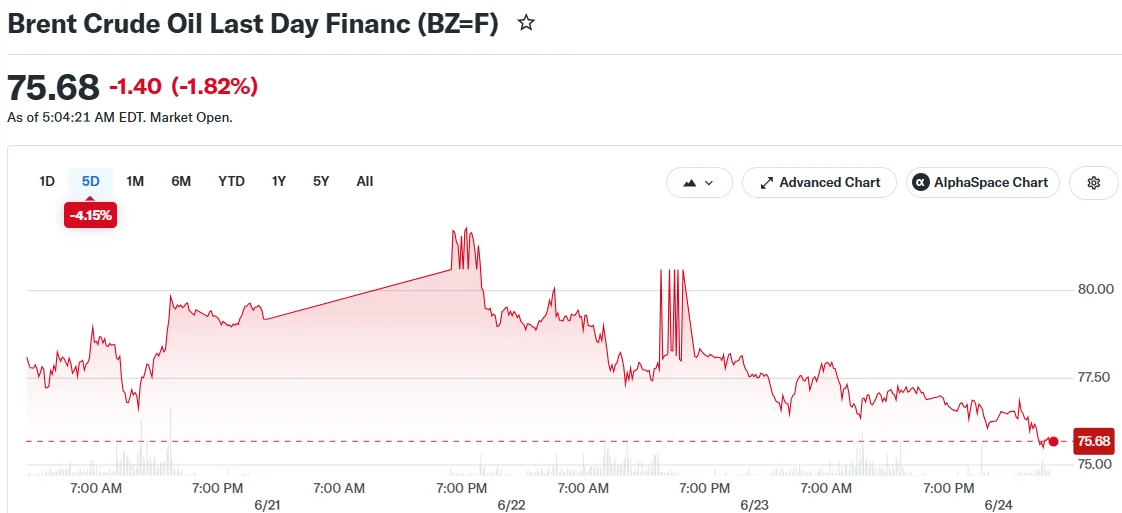
- Brent crude decreased 1.1% to reach $75.93 per barrel while WTI declined 1.3% to $72.31 during European morning trade
- Washington issued a temporary sanctions exemption permitting specific Iranian crude shipments through the end of August
- American and Iranian representatives reached consensus on a 60-day framework targeting comprehensive diplomatic resolution
- American petroleum reserves decreased by 765,000 barrels during the previous week, falling short of market forecasts
Crude oil markets have extended their downward trajectory for a third consecutive session as emerging indicators of restored Middle Eastern energy transportation alleviate supply disruption worries.
Brent crude futures declined approximately 1% to $76.46 per barrel during Wednesday morning trade on June 24. The West Texas Intermediate benchmark experienced a similar percentage decline, settling at $72.65. Both major crude indicators concluded the prior trading session near four-month minimum levels.
The Strait of Hormuz, which typically facilitates the passage of approximately 20 million barrels daily, experienced significant operational disruptions throughout an extended regional military engagement. This maritime passage represents one of the planet’s most critical energy transit corridors.
Maritime Traffic Showing Signs of Recovery
Market participants are maintaining close surveillance over shipping movements. Multiple very large crude carriers that had been immobilized in Gulf waters have now successfully navigated through the strait carrying petroleum cargoes. Qatari-affiliated liquefied natural gas transport vessels have similarly recommenced transit operations through the strategic waterway.
Energy strategists at ING estimate that approximately 6 to 7 million barrels daily are currently transiting the strait. This volume remains substantially below the typical 20 million barrel throughput.

Nevertheless, ING researchers indicated that Persian Gulf petroleum supplies could revert to pre-conflict volumes should strait flows achieve approximately 14 million barrels daily, considering alternative pipeline infrastructure accessible to Saudi Arabia and the United Arab Emirates.
Diplomatic Progress Between Washington and Tehran
Diplomatic breakthroughs have contributed additional downward momentum on crude valuations. American and Iranian diplomatic teams have established agreement on a 60-day strategic framework designed to achieve a more comprehensive accord.
The United States administration has additionally issued a temporary sanctions exemption authorizing specific Iranian oil exports to continue through August. This policy adjustment has elevated market expectations regarding additional crude volumes entering global markets during upcoming weeks.
Strategists at MUFG indicated that markets are incorporating expectations of progressive normalization within Middle Eastern energy distribution networks. They emphasized that the American sanctions exemption has reinforced anticipation of substantial increases in regional petroleum supply.
Notwithstanding the recent price weakness, ING energy analysts suggested they consider the decline excessive. They highlighted that market fundamentals remain in tightening mode and that current price action implies traders are anticipating relatively swift restoration of Persian Gulf supply capacity.
Meanwhile, American crude inventory statistics presented a nuanced picture. The American Petroleum Institute disclosed that petroleum stockpiles contracted by 765,000 barrels during the week concluding June 19. Market analysts had projected a more substantial withdrawal.
Inventories at the Cushing, Oklahoma delivery center decreased by 1 million barrels. Meanwhile, gasoline and distillate fuel reserves each registered increases.
Market observers await official weekly inventory statistics from the U.S. Energy Information Administration, scheduled for release later Wednesday, to obtain additional validation of supply dynamics.
As of June 24, both primary oil benchmarks persist near their lowest quotations in four months, with Brent trading approximately $75.93 and WTI around $72.31 per barrel.
Get 3 Free Stock Ebooks
Discover top-performing stocks in AI, Crypto, and Technology with expert analysis.
- Top 10 AI Stocks - Leading AI companies
- Top 10 Crypto Stocks - Blockchain leaders
- Top 10 Tech Stocks - Tech giants



