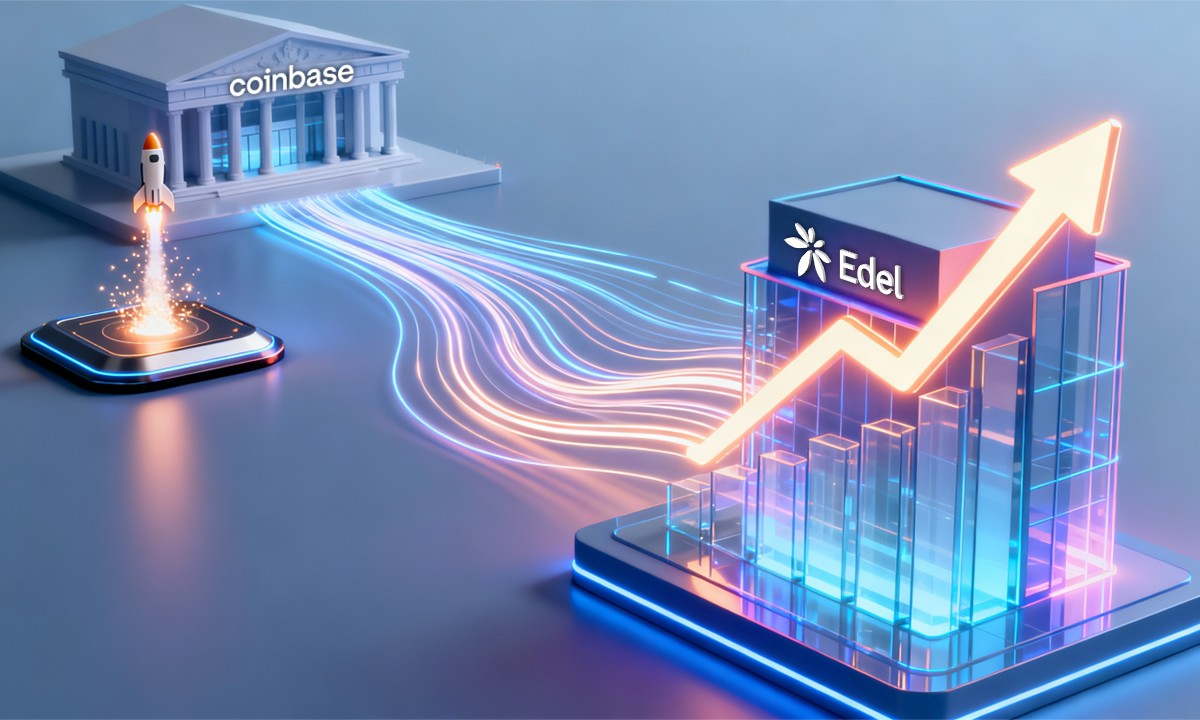
Coinbase is pushing beyond crypto-only trading. In mid-December 2025, it announced stock trading and event contracts, and it also outlined plans to introduce tokenized, 24/7 tradable stocks. That kind of move does two things at once. It brings tokenized equities into mainstream conversation, and it forces traders to think about what happens after you buy the token.
That second part is where Edel Finance keeps popping up. While Coinbase focuses on distribution, Edel focuses on what you can do on-chain with tokenized equities, especially lending and borrowing. Its testnet has helped build credibility. The Edel Arena runs weekly point distributions and weekly giveaways tied to participation, so people actually practice collateral management instead of just scrolling a landing page.
Coinbase Tokenized Stocks And What The Tollout Changes
Coinbase has been clear about its direction. Reuters reported in June 2025 that it was seeking approval from the U.S. Securities and Exchange Commission to offer tokenized equities. In December, it went further by announcing stock trading and saying that Coinbase tokenized stocks, 24/7 tradable stocks are on the roadmap.
So what changes when a household-name trading app points at tokenized equities?
More Attention, More First-Time Users
A big rollout brings new users who are comfortable with stocks but new to wallets, on-chain settlement, and smart contract risk. That is fine. Everyone starts somewhere. The problem is that tokenized securities can look like traditional shares while working very differently.
The World Federation of Exchanges has warned regulators about tokenised stocks being marketed like real shares even when they do not provide shareholder rights. An SEC commissioner has reiterated that tokenized securities remain securities, meaning the rules still apply even if the wrapper is a token.

This is the real impact of Coinbase tokenized stocks. It pushes the category into the open, and it forces sharper questions about rights, custody, and settlement.
24/7 Trading Sounds Great Until You Think About Settlement
Round-the-clock trading is attractive. It also creates edge cases. Traditional equity markets close. Corporate actions happen. Liquidity varies by venue. Regulators and market operators are already signaling that clearer definitions and stronger oversight will matter as tokenized equity products grow.
That is why some traders are preparing by building workflows that work even if rules and product designs keep shifting.
Why Edel Benefits When Big Platforms Move
Here is the simple version. When a large exchange expands tokenized equities, it increases demand for places where those assets can do more than sit in an account. Edel positions itself as a lending network for tokenized stocks, and its site highlights integrations with other networks in the space.
The Testnet Gave Traders a Place to Rehearse
Edel Arena is structured like a training ground. Users spin to receive mock assets, supply them, borrow against them, and learn how collateralization and liquidation thresholds behave.
Calling a testnet successful is usually vague. Here, you can point to visible signals. The Arena is gated, and outside coverage reports that demand pushed the team to lift the user cap more than once. And once you log in, progress is measurable: your lending and borrowing totals drive a fixed weekly points drop (every Thursday at 00:00 UTC), plus a weekly tokenized-stock giveaway funded by the entry-fee pool.
What Traders Want After They Buy
If your only goal is exposure, a centralized account might be enough. But many active traders want optionality. They want to borrow against an asset without selling it. They want to move collateral into strategies that live on-chain.
Edel’s docs describe a decentralized, non-custodial liquidity protocol for supplying and borrowing tokenized stocks on Ethereum Virtual Machine networks, built on Aave V3 architecture.
If you want to see how it is presented end-to-end, start with the products, then read the Edel documentation, then check the Edel ecosystem to understand what rails and partners it expects to plug into.
How Liquidity Rotates In Practice
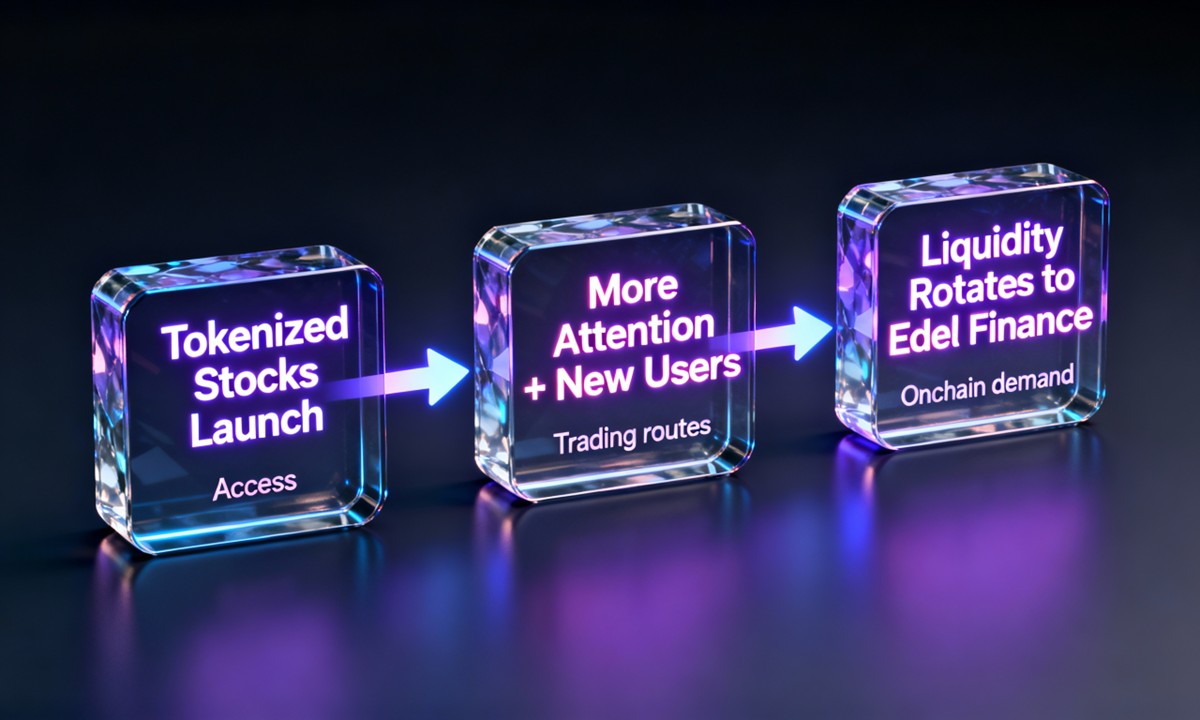
New distribution changes where liquidity ends up
Liquidity rotation is rarely dramatic. It is boring. Someone gets access, someone tries a token, someone asks, what can I do with it now?
You can see this distribution logic in the xStocks rollout. Kraken has been pushing tokenized equities into Telegram’s wallet environment, and Yahoo Finance reported in October 2025 that Telegram would integrate Kraken’s xStocks so eligible users can trade tokenized U.S. stocks and exchange-traded funds inside the app, starting with custodial access and later expanding toward a self-custodial wallet on TON. Kraken’s own update on the TON launch also points to growing on-chain supply and wallet holders as distribution expands.
That is the same pattern Coinbase is tapping into: make access easy, then let the rest of the ecosystem compete for what users do next.
Conclusion
Coinbase’s move puts tokenized stocks in front of a much bigger crowd, but the real question is what traders do after they get access. Some will stick with the simplest route inside an exchange account. Others will want on-chain tools that let those assets work as collateral and plug into broader strategies. That is where Edel fits. If its testnet momentum carries into mainnet, it becomes a practical option for traders preparing for 2026 who want more than passive exposure.
FAQs
1) Does Coinbase’s move mean tokenized equities are fully approved in the U.S.?
Not automatically. Coinbase has said it plans to introduce tokenized, 24/7 tradable stocks, and it has sought U.S. regulatory approval for tokenized equities.
2) Why does Edel’s testnet matter if it is not the mainnet?
Because it shows real behavior, the Arena pushes users to supply, borrow, and manage collateral repeatedly, with weekly point distributions and weekly giveaways tied to activity.
3) What is the biggest risk with tokenized equities?
Confusion about what you own. Market groups have warned that some tokenised stocks can be marketed like real shares even when they do not provide shareholder rights.
Disclaimer: This is a Press Release provided by a third party who is responsible for the content. Please conduct your own research before taking any action based on the content.
Get 3 Free Stock Ebooks
Discover top-performing stocks in AI, Crypto, and Technology with expert analysis.
- Top 10 AI Stocks - Leading AI companies
- Top 10 Crypto Stocks - Blockchain leaders
- Top 10 Tech Stocks - Tech giants