


Key Points
- Federal enforcement officials confirmed insider trading regulations extend to prediction market event contracts under swap classifications.
- David Miller announced the agency plans to prosecute traders exploiting confidential or misappropriated government data.
- The agency outlined enforcement priorities targeting market manipulation and anti-money laundering breaches.
- Congressional leaders proposed two bipartisan measures addressing insider trading concerns in financial prediction markets.
- Major platforms including Kalshi and Polymarket revised compliance frameworks following regulatory scrutiny.
Federal regulators announced plans to enforce insider trading regulations across prediction market platforms. Officials clarified that event contracts classified as swaps remain subject to existing securities laws. Regulatory attention intensified following monthly trading volumes surpassing $20 billion.
Federal Enforcement Officials Clarify Legal Framework for Event Contracts
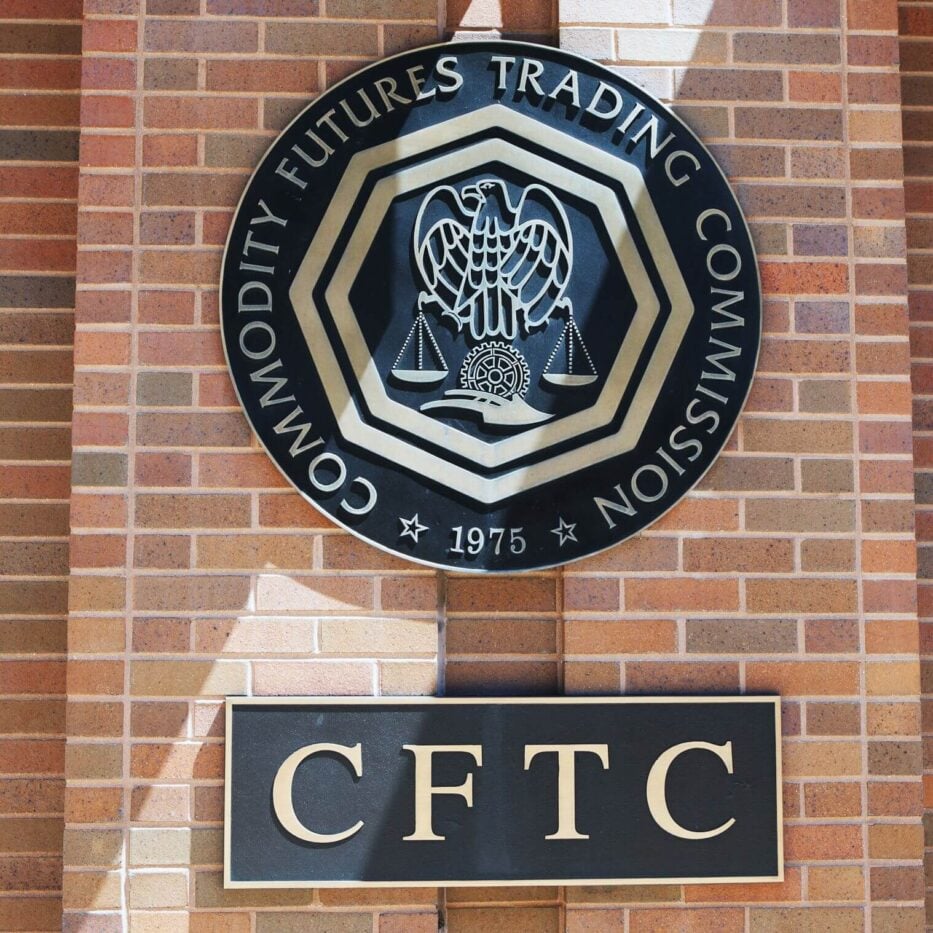
The CFTC’s enforcement director addressed regulatory compliance during a New York University panel discussion. [[LINK_START_0]]David Miller[[LINK_END_0]] dismissed assertions that insider trading prohibitions exclude prediction market platforms. He declared, “We maintain awareness of insider trading speculation and continue monitoring developments.”
Miller explained that widespread narratives incorrectly characterize applicable regulations and mislead market participants. He clarified that insider trading statutes govern these activities because event contracts meet swap definitions under federal law. He stated, “A misconception exists claiming insider trading exemptions for prediction markets, which represents an inaccurate interpretation.”
The enforcement director confirmed the agency will prioritize investigations involving misappropriated confidential information. He announced prosecutions will target individuals who share or exploit restricted government data for trading advantage. He assured attendees the agency will allocate resources toward significant violations.
Miller discussed prosecutorial discretion while detailing enforcement focus areas. He explained the Commission will concentrate on market manipulation schemes and anti-money laundering infractions. He emphasized that enforcement teams will conduct thorough fact assessments before initiating legal proceedings.
Escalating trading activity has drawn heightened attention from oversight bodies and congressional members. Prediction market contract volumes reached beyond $20 billion in monthly transactions, based on data from TRM Labs. Regulators expressed concern following multiple instances where traders executed well-timed positions preceding significant government disclosures.

One documented case involved an unidentified trader generating profits exceeding $400,000 through wagers on the apprehension of Venezuelan leader Nicolás Maduro. Additional cases emerged involving positions entered before announcements connected to President Donald Trump. Investigators examined trades corresponding to developments regarding Iran and Ayatollah Khamenei.
Congressional Action Accompanies Platform Policy Revisions
Congressional representatives introduced legislative proposals targeting insider trading within prediction market environments. In late March, legislators presented the Public Integrity in Financial Prediction Markets Act of 2026. The measure aims to prevent government personnel from leveraging nonpublic information for trading purposes.
During that same period, lawmakers unveiled the Preventing Real-time Exploitation and Deceptive Insider Congressional Trading Act, referred to as the PREDICT Act. This proposal focuses on preventing insider knowledge exploitation in event-based trading contracts. Legislative sponsors characterized the initiative as having cross-party support.
Concurrently, prominent platforms revised their internal compliance frameworks. Kalshi and Polymarket established new regulations prohibiting insider trading activities across their markets. Both companies announced policy modifications responding to congressional and public scrutiny.
Democratic legislators separately requested the CFTC provide formal guidance to federal workforce members. They called on the agency to caution employees about utilizing confidential information for prediction market transactions. The CFTC responded by acknowledging these requests while reaffirming current enforcement objectives.
Get 3 Free Stock Ebooks
Discover top-performing stocks in AI, Crypto, and Technology with expert analysis.
- Top 10 AI Stocks - Leading AI companies
- Top 10 Crypto Stocks - Blockchain leaders
- Top 10 Tech Stocks - Tech giants



