


Key Takeaways
- The Digital Asset Market Clarity Act passed the Senate Banking Committee with a 15-9 vote, securing bipartisan backing
- The legislation must now secure 60 votes on the Senate floor to advance swiftly
- A critical passage window exists between June and early August before Congressional recess
- Missing this timeframe could delay the bill until a post-election lame-duck session
- Industry analysts caution that Democratic control of the Senate after midterms could kill the bill permanently
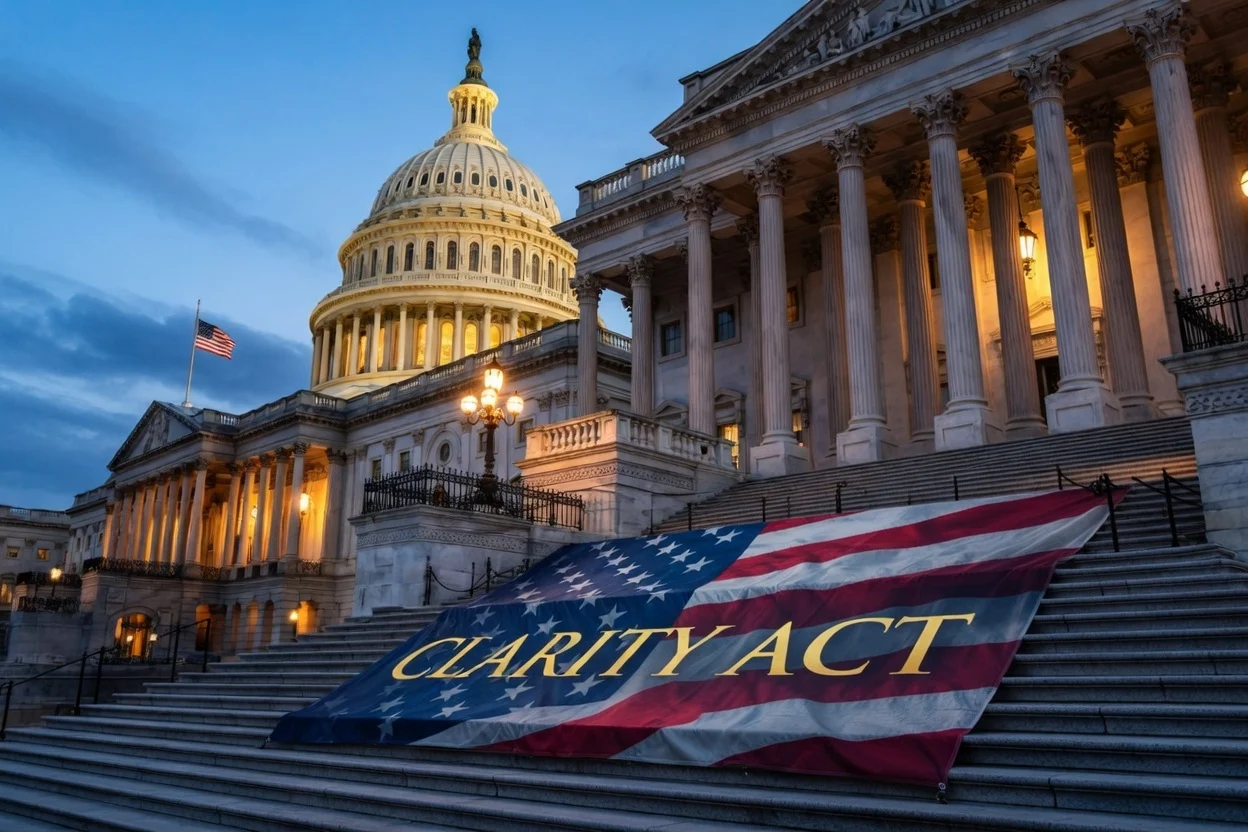
On Thursday, the U.S. Senate Banking Committee approved the Digital Asset Market Clarity Act in a 15-9 decision, sending the legislation to the full Senate. The vote saw two Democratic members cross party lines to join all Republican committee members, establishing bipartisan momentum.
This legislation aims to establish a regulatory framework for how U.S. authorities would supervise the crypto market. Many consider it the most significant cryptocurrency legislation pending this congressional session.
To move through the Senate floor expeditiously, the bill requires 60 affirmative votes. With Republicans controlling 53 seats, at least seven Democrats must join in support.
Democratic Senators Ruben Gallego and Angela Alsobrooks cast affirmative votes during the committee stage. Multiple additional Democratic senators have indicated potential support during floor proceedings if specific modifications are implemented.
Democratic Priorities for Amendments
Certain Democratic lawmakers are advocating for enhanced safeguards against criminal activity and sanctions circumvention. Additional members are championing an ethics clause that would prevent high-ranking government officials from financially benefiting from cryptocurrency industry connections.
Senators have indicated progress toward consensus on the ethics matter, though concrete terms remain unconfirmed. Any final agreement will require endorsement from the White House.

Thursday’s hearing did not address two proposed amendments. Senator Elizabeth Warren characterized one as having backing from law enforcement agencies. The second pertained to the regulatory treatment of yield rewards under the proposed framework.
The subsequent phase involves reconciling versions from the Senate Banking Committee and the Senate Agriculture Committee. According to Cody Carbone from the Digital Chamber, negotiations with the Agriculture Committee continue.
Critical Time Constraints
NYDIG’s research director Greg Cipolaro identified a practical passage window extending from June through early August. A White House cryptocurrency advisor had previously established July 4 as a target date.
Congressional recess runs from late July through early September. Following the recess, attention turns to November’s midterm elections, making Senate leadership unlikely to schedule a contentious floor vote.
Should the legislation miss this opportunity, the subsequent chance would arrive during a post-election lame-duck session—contingent upon Republicans maintaining Senate control.
Current electoral forecasts indicate a competitive battle for Senate control, with various projections showing Republicans holding a marginal advantage while designating several crucial races as toss-ups.
Cipolaro cautioned that Democratic Senate control would likely prevent the current bill from advancing when the new Congress convenes in January.
Should the legislation succeed, Cipolaro stated it would provide institutional investors with the regulatory certainty necessary for increased market participation. The bill would also designate Bitcoin as a commodity under Commodity Futures Trading Commission jurisdiction.
Without passage, Cipolaro noted the crypto industry would remain subject to what he termed “permanent jurisdictional ambiguity.”
Get 3 Free Stock Ebooks
Discover top-performing stocks in AI, Crypto, and Technology with expert analysis.
- Top 10 AI Stocks - Leading AI companies
- Top 10 Crypto Stocks - Blockchain leaders
- Top 10 Tech Stocks - Tech giants



