


Key Takeaways
- Since late February’s outbreak of U.S.-Iran hostilities, Treasury yields have climbed dramatically, with the 30-year bond reaching levels unseen in nearly two decades.
- April’s CPI data revealed inflation accelerating to 3.8%, while projections suggest it could surge to 6.7% by the second quarter as energy costs ripple through the economy.
- Market sentiment has completely reversed: instead of the anticipated dual rate cuts in 2025, traders now anticipate a Fed rate increase by early 2027.
- Historical data shows the S&P 500 has consistently declined during the initial three months of every Fed rate-hike cycle since 1999, averaging a 7% correction.
- Equity markets rallied on diplomatic breakthrough rumors between Washington and Tehran, yet bond traders remain skeptical ahead of critical economic releases scheduled for Thursday.
Geopolitical turmoil stemming from the U.S.-Iran conflict has unleashed a cascade of economic consequences: accelerating inflation, Treasury yields soaring to levels not witnessed in years, and a dramatic shift in Federal Reserve policy expectations. Here’s a comprehensive breakdown of these developments and their implications for market participants.
Bond Yields Surge Across the Yield Curve
The conflict’s eruption in late February triggered an immediate response in oil markets after Iran’s closure of the Strait of Hormuz—a critical chokepoint for approximately one-fifth of global petroleum shipments. This disruption sent energy prices skyrocketing, creating inflationary pressure throughout the economic system.
April’s Consumer Price Index registered 3.8%, marking the steepest increase since 2023. According to forecasting models from the Federal Reserve Bank of Cleveland, this figure may climb as high as 6.7% during the second quarter.
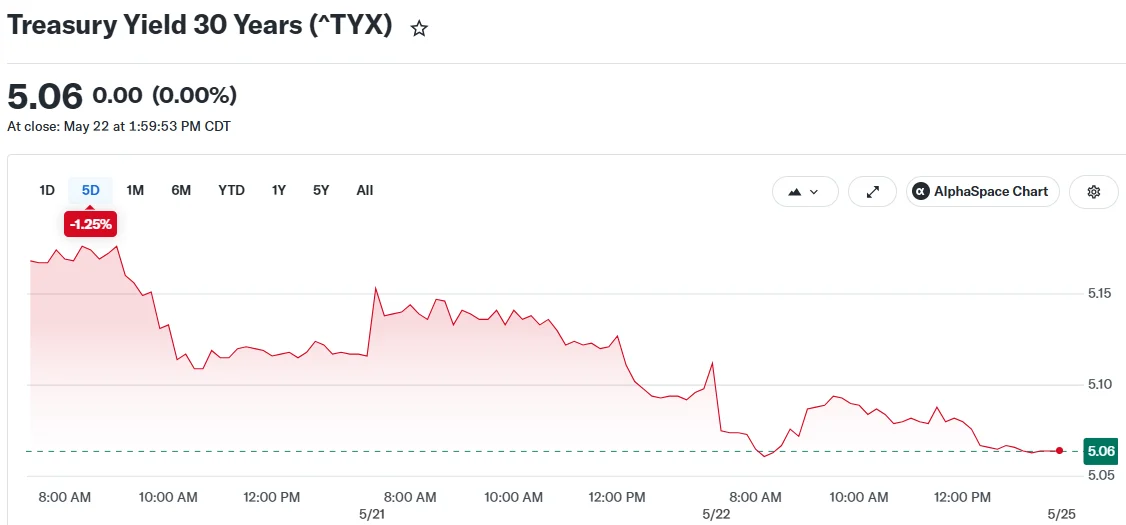
Rising inflation expectations triggered widespread Treasury bond liquidation. The inverse relationship between bond prices and yields means that as investors dumped bonds, yields climbed proportionally. The 2-year Treasury note has jumped 75 basis points since hostilities commenced. Meanwhile, the 30-year bond now offers yields exceeding 5%—a threshold not crossed in 19 years.
At the beginning of 2025, market consensus anticipated at least two Fed rate reductions. Current data from CME Group’s FedWatch tool tells a starkly different story: the central bank’s next policy adjustment is now projected to be a rate increase, potentially arriving as soon as January 2027.

Historical Context: Rate Increases and Equity Market Performance
Elevated interest rates create headwinds for corporate America by increasing capital costs, potentially dampening business expansion plans and compressing profit margins. Consumer behavior also shifts as financing costs for major purchases—homes, vehicles, appliances—become prohibitive.
Looking at historical precedent since 1999, the Federal Reserve has initiated four distinct tightening cycles. During each instance, the S&P 500 experienced losses in the subsequent three-month period without exception. These declines averaged 7%, with individual instances ranging from modest 1% corrections to substantial 17% drawdowns.
Year-to-date, the S&P 500 has appreciated approximately 9%, buoyed by robust corporate earnings reports. However, market strategists caution that this strength may be concealing underlying vulnerabilities.
“The S&P 500 is still riding a wave of euphoria from a blowout earnings season, but with that over for the next couple of months, the likelihood of a summer selloff is high,” said Dennis Follmer, chief investment officer at Montis Financial.
Diplomatic Progress Boosts Equities While Bonds Remain Skeptical
Tuesday’s trading session saw equity markets surge following reports suggesting imminent completion of peace negotiations between the United States and Iran. The Nasdaq composite jumped approximately 300 points, with technology heavyweights Nvidia, Intel, and Micron Technology leading the advance. The S&P 500 opened nearly 50 points higher.
Crude oil markets exhibited volatility. Brent crude increased more than 3% to reach $96.43 per barrel during early trading hours, though this still represents an 8.6% decline from Friday’s settlement price.
Secretary of State Marco Rubio characterized the diplomatic discussions as entering their concluding phase, while cautioning that finalization might require “a few more days.” Simultaneously complicating the narrative, Iran’s Revolutionary Guard announced it had engaged a U.S. military aircraft allegedly violating Iranian airspace, casting uncertainty over the diplomatic timeline.
Bond market participants remained notably less enthusiastic. The 10-year Treasury maintained its position above 4.5%. The 30-year bond held firm above the 5% threshold. Fixed-income traders are adopting a wait-and-see approach ahead of Thursday’s release of April inflation metrics and first-quarter GDP figures.
“Bond markets are sending a pretty strong signal that they see choppier waters ahead,” Follmer added.
Paul Donovan, global chief economist at UBS Wealth Management, acknowledged progress in talks but said “a deal still seems some way off.”
This week’s economic calendar features several important releases: new residential sales data and weekly unemployment claims figures, alongside Thursday’s critical inflation and GDP reports. These indicators will likely determine market direction as the trading week concludes.
Get 3 Free Stock Ebooks
Discover top-performing stocks in AI, Crypto, and Technology with expert analysis.
- Top 10 AI Stocks - Leading AI companies
- Top 10 Crypto Stocks - Blockchain leaders
- Top 10 Tech Stocks - Tech giants



