


TLDR
- Bloomberg has partnered with Kaiko to deploy licensed financial data directly on blockchain infrastructure for institutional clients
- Initial deployment focuses on tokenized US Treasury securities and repo markets operating on Canton Network
- The initiative addresses persistent data fragmentation issues plaguing tokenized asset markets
- The service is designed for institutional clients including banks and asset managers, not retail cryptocurrency participants
- The real-world asset tokenization market currently stands at approximately $25 billion when stablecoins are excluded
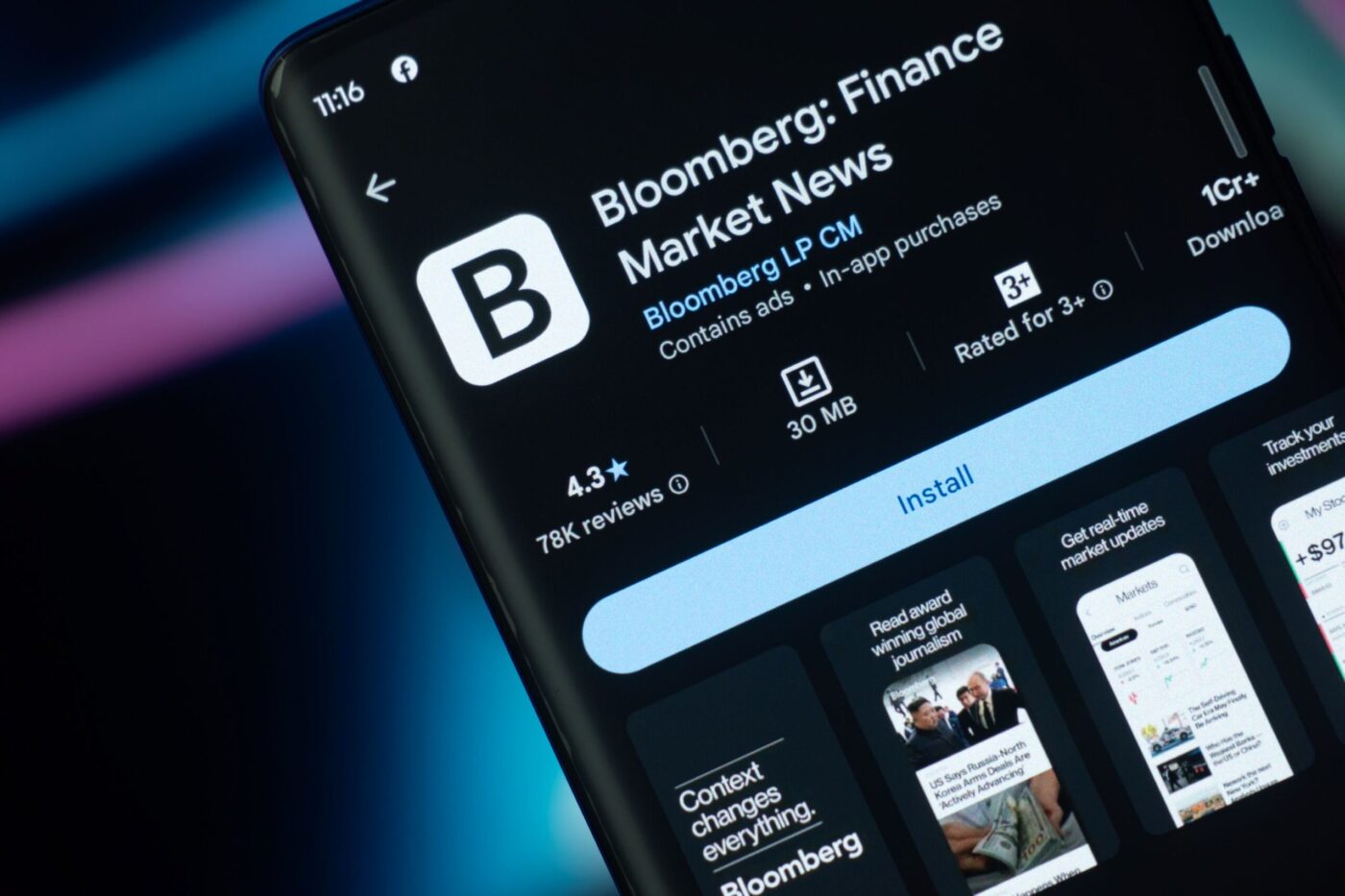
In a strategic collaboration announced Thursday, Bloomberg is teaming up with Kaiko, a digital asset data provider based in Paris, to deploy licensed financial data directly within blockchain networks.
The initiative will make critical market information—including pricing data, security identifiers, and reference datasets—accessible within blockchain environments. Traditionally, this information has resided in conventional, off-chain database systems.
The collaboration addresses a pressing challenge in tokenized financial markets: data inconsistency. Financial institutions frequently rely on differing versions of identical datasets, resulting in situations where one institution may value a Treasury security differently than another.
Such discrepancies create significant reconciliation burdens and elevate operational risk. By establishing a unified, licensed data source on-chain, the partnership enables all market participants to work from identical information.
The initial deployment concentrates on tokenized US Treasury securities and repurchase agreement (repo) markets. These markets operate on the Canton Network, a permissioned blockchain infrastructure purpose-built for institutional financial applications.
Kaiko introduced its data on-ramp capability for the Canton Network in August. The Bloomberg partnership represents an expansion of that integration.

The target audience consists of banks, asset management firms, and other regulated financial institutions—not retail cryptocurrency traders.
Data Reliability Has Been a Known Problem
Concerns regarding data accuracy in tokenized real-world asset markets have circulated for some time. Last May, Chris Yin, co-founder of RWA platform Plume, suggested the market might be significantly smaller than publicly reported figures indicated.
Yin’s assessment placed the actual market size at roughly half of what leading data aggregators were claiming. Current market estimates value the tokenized RWA sector at approximately $25 billion, excluding stablecoins, based on data from RWA.xyz.
Kaiko CEO Ambre Soubiran emphasized that institutional-quality data infrastructure is critical for proper market functioning. She noted that the Bloomberg partnership extends proven traditional market data infrastructure into the tokenized securities space.
Kaiko’s Expanding Role in Digital Asset Data
Kaiko has been systematically expanding its footprint in digital asset data provision. During 2024, the company acquired Vinter, a European cryptocurrency index provider.
That acquisition bolstered Kaiko’s capabilities in regulated benchmark and index services throughout Europe. The Bloomberg collaboration represents another strategic layer in that expansion.
In tokenized markets, consistent pricing information serves a critical operational purpose. Many tokenized assets represent traditional financial instruments such as Treasury bonds, and accurate data helps ensure the blockchain-based version accurately reflects the underlying physical asset.
The Canton Network, where this service is being implemented, was specifically engineered for institutional financial use cases. As a permissioned network, access is restricted and controlled rather than publicly available.
The partnership illustrates a broader trend of traditional financial data providers extending their infrastructure into blockchain-based systems. Bloomberg’s licensed data enjoys widespread adoption across global financial markets.
Get 3 Free Stock Ebooks
Discover top-performing stocks in AI, Crypto, and Technology with expert analysis.
- Top 10 AI Stocks - Leading AI companies
- Top 10 Crypto Stocks - Blockchain leaders
- Top 10 Tech Stocks - Tech giants



