


Key Highlights
- Bitcoin surged past $71,000 driven by Middle East de-escalation optimism boosting risk appetite
- Tehran dismissed Washington’s ceasefire offer, though contradictory statements created market confusion
- US equity futures declined 0.4% Wednesday night amid persistent geopolitical uncertainty
- Crude oil retreated on peace deal speculation, WTI at $90.32 and Brent at $102.22
- UK government prohibited cryptocurrency contributions to political organizations and limited foreign donations to £100,000 annually
Bitcoin reclaimed the $71,000 level on Wednesday as speculation around a potential Middle East ceasefire between Washington, Tel Aviv, and Tehran lifted investor sentiment toward risk assets. The leading digital currency advanced 1.1% to reach $71,129 during early evening hours Eastern Time.
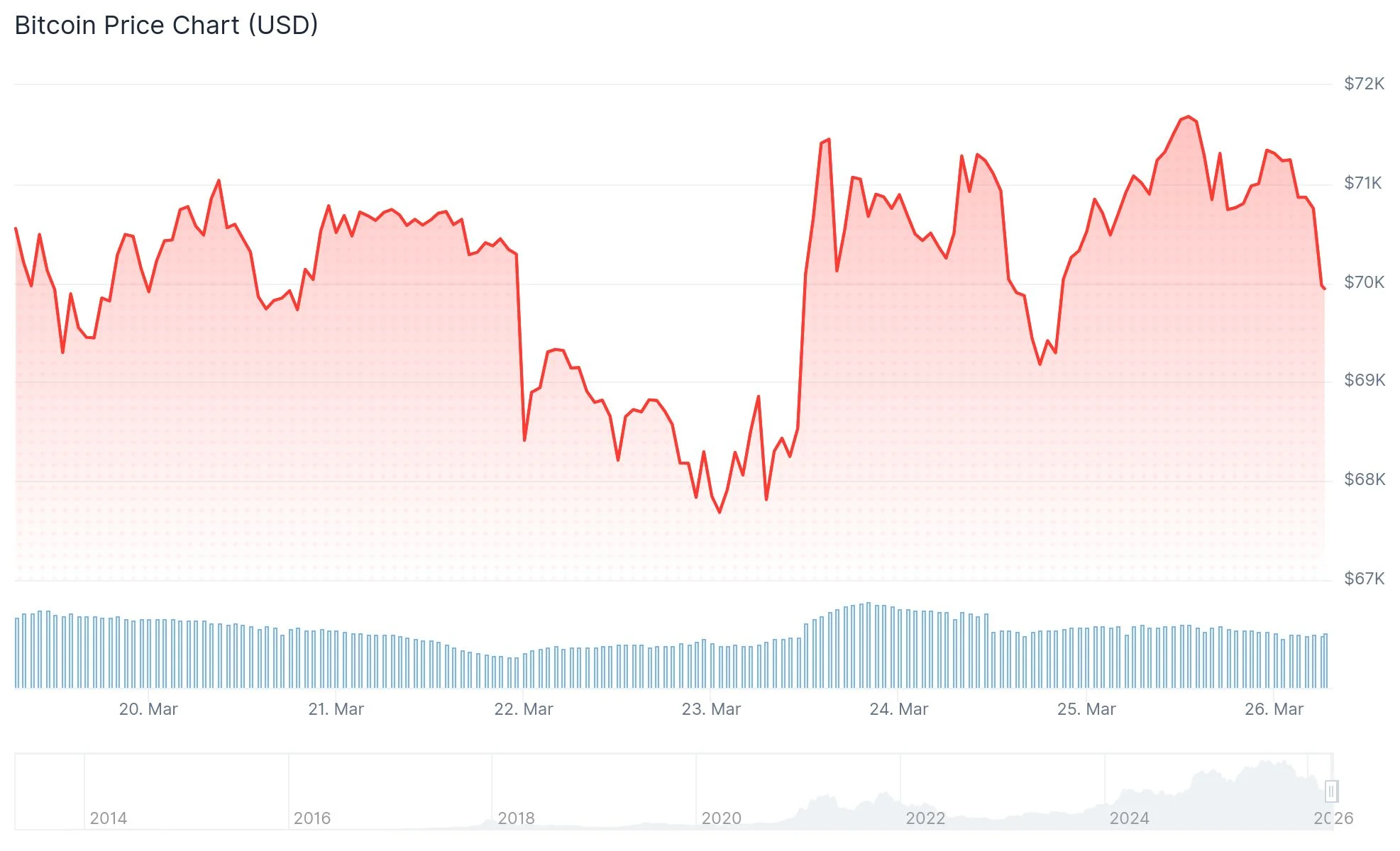
Earlier this week, Bitcoin had fallen beneath the $70,000 threshold following heightened geopolitical tensions that sparked widespread selling pressure across risky assets.
President Trump indicated on Tuesday that his administration was “in negotiations right now” with Iranian officials and suggested Tehran seemed receptive to diplomatic solutions. Multiple sources reported that Washington had forwarded a comprehensive 15-point framework to Iran aimed at resolving the standoff.
Tehran’s position appeared inconsistent and conflicting. The Fars News Agency stated that Iran rejects any ceasefire arrangement, while Foreign Minister Abbas Araghchi confirmed no active diplomatic channels exist with the United States.
Iranian state-controlled media published five specific conditions, including cessation of all military operations and global acknowledgment of Iran’s sovereignty over the Strait of Hormuz. Tehran reportedly insisted on shuttering all American military installations throughout the Gulf region.

Despite Tehran’s apparent refusal, Axios disclosed that Washington had not yet received any formal communication from Iran declining the diplomatic proposal. These conflicting signals maintained markets in a condition of tentative optimism.
Oil prices retreated on Wednesday as market participants factored in reduced supply disruption risks. West Texas Intermediate crude closed at $90.32 per barrel while Brent crude decreased to $102.22.
Equity Markets Respond to Geopolitical Volatility
US equity futures dropped 0.4% Wednesday evening. Contracts tied to the S&P 500, Nasdaq 100, and Dow Jones Industrial Average all registered declines as market participants maintained heightened vigilance.
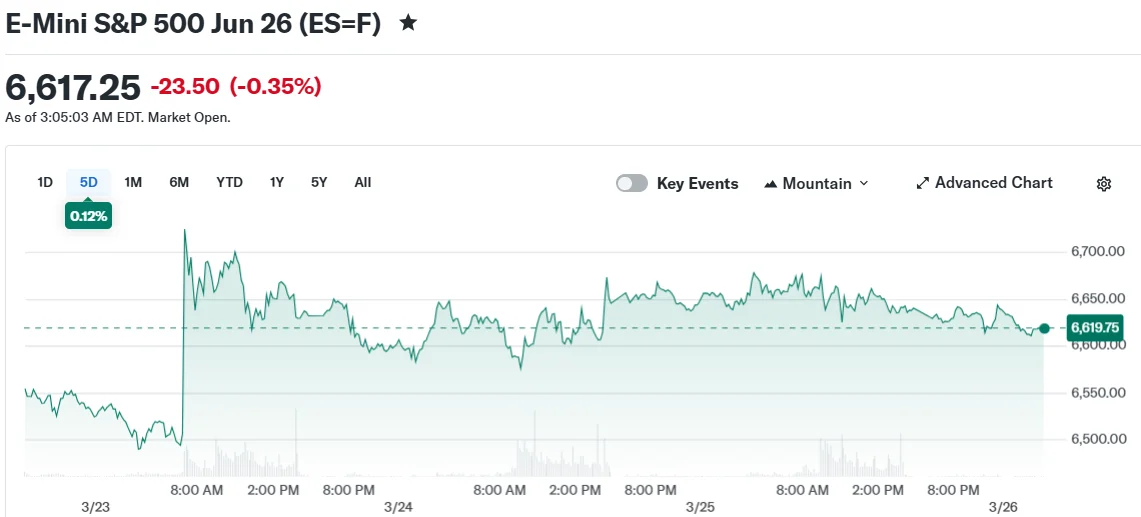
Notwithstanding the futures decline, primary equity benchmarks have accumulated gains throughout the week, positioning them to potentially end a four-week negative streak. Anxiety regarding crude price fluctuations and economic downturn possibilities have persistently pressured consumer confidence.
Market participants are currently monitoring Thursday’s weekly unemployment claims figures. Carnival Corporation is scheduled to announce quarterly results prior to Friday’s opening bell.
Britain Implements Cryptocurrency Political Contribution Prohibition
The United Kingdom unveiled a prohibition on cryptocurrency contributions to political organizations, taking effect Wednesday. Officials simultaneously instituted a £100,000 annual ceiling on foreign contributions from British nationals residing internationally.
Housing Minister Steve Reed stated the cryptocurrency restriction was essential to eliminate a “clear route” enabling questionable funds to enter the political system. This policy follows an investigation into foreign financial interference, initiated after a former Reform UK representative received a prison sentence for accepting illegal payments.
Reform UK, under Nigel Farage’s leadership, had pioneered acceptance of Bitcoin contributions among British political parties. Approximately two-thirds of the party’s financial support last year originated from international donors.
Most alternative cryptocurrencies posted gains on Wednesday. Ethereum appreciated 1% to $2,166, XRP increased 0.2% to $1.41, and Dogecoin advanced 1.5%.
Get 3 Free Stock Ebooks
Discover top-performing stocks in AI, Crypto, and Technology with expert analysis.
- Top 10 AI Stocks - Leading AI companies
- Top 10 Crypto Stocks - Blockchain leaders
- Top 10 Tech Stocks - Tech giants



