



Key Takeaways
- Bitcoin declined 3.4% to approximately $68,000 on Saturday following a mid-week peak of $74,000
- February’s U.S. employment report revealed 92,000 job losses, driving unemployment up to 4.4%
- The greenback surged with its largest weekly increase in over a year, weighing on digital assets
- Large holders liquidated approximately 66% of their recent BTC accumulation while small investors continued purchasing
- Bitcoin ETFs experienced $348.9 million in withdrawals — the highest daily exodus in three weeks
Bitcoin’s week began with optimism but concluded with significant downward momentum. The leading cryptocurrency surged to $74,000 on Thursday before experiencing a sharp reversal, tumbling to approximately $68,000 by Saturday morning — representing a 3.4% decline within a 24-hour period.
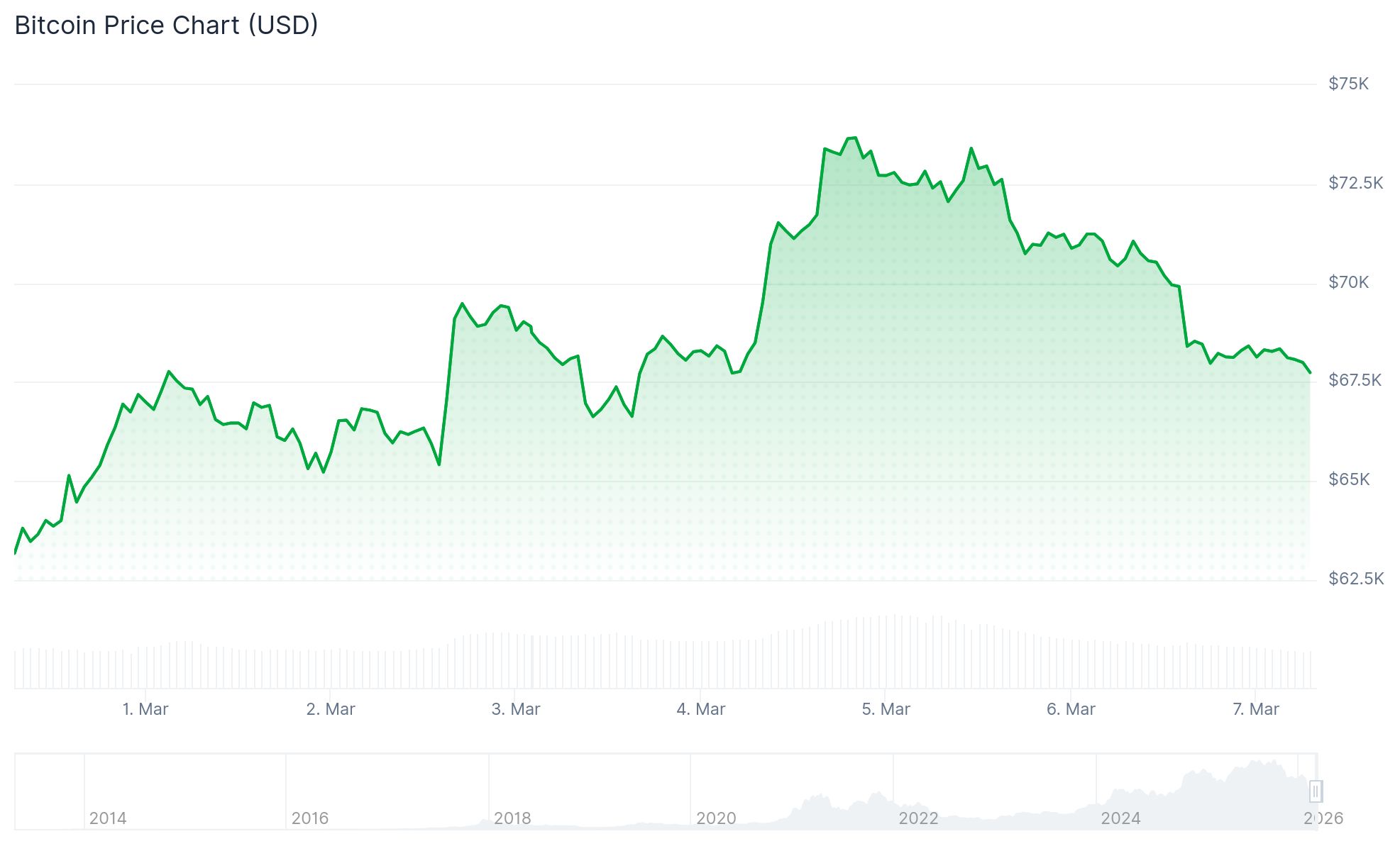
The downturn followed the Bureau of Labor Statistics’ announcement that the U.S. economy shed 92,000 positions in February. This figure dramatically underperformed economists’ projections of a 50,000 job increase. Simultaneously, the unemployment rate climbed from 4.3% to 4.4%.
Traditional financial markets also reacted negatively to the employment data. The Dow Jones plummeted over 900 points during Friday’s opening session. The Nasdaq experienced a 1.7% decline.
The broader cryptocurrency sector mirrored Bitcoin’s downward trajectory. Ether decreased 4.4% to $1,974. Solana retreated 4% to $84.31. Dogecoin declined 2.9% to $0.09. XRP fell 2.2% to $1.37.
Despite Friday’s selloff, most leading digital currencies remained positive on a weekly basis. Bitcoin appreciated 3.6% over the seven-day period. Ether increased 2.6%. BNB gained 2.1%.

Large Holder Distribution and ETF Capital Flight
According to analytics from Santiment, large holders — addresses containing between 10 and 10,000 BTC — accumulated positions between February 23 and March 3 while Bitcoin traded in the $62,900 to $69,600 range. After Bitcoin breached $70,000 and reached $74,000, these same addresses distributed roughly 66% of their accumulated holdings.
Concurrently, smaller investors — addresses holding less than 0.01 BTC — increased their positions. Santiment indicated this divergence typically signals additional downside potential.
Spot Bitcoin ETFs registered $348.9 million in net withdrawals on Friday, marking the most significant single-day outflow since February 12.
Market analyst Michael van de Poppe commented: “If Bitcoin doesn’t find support in this $67–68K region, then we’re likely going to retest the lows.”
Macroeconomic Challenges
The U.S. dollar experienced its most substantial weekly appreciation in twelve months. Escalating oil prices — Brent crude reached $90 per barrel, climbing over 20% within a week — combined with persistent Middle Eastern tensions elevated inflation concerns, diminishing expectations for imminent Federal Reserve interest rate reductions.
Data from Glassnode revealed that 43% of Bitcoin’s circulating supply currently trades below its acquisition cost. This dynamic creates resistance during price rallies, as holders attempt to exit at breakeven levels.
A potential positive indicator: net stablecoin deposits surged 415% to $1.7 billion during the week, suggesting capital accumulation awaiting deployment.
Economist Timothy Peterson observed that Bitcoin’s present price range has historically represented a floor, citing a 99.5% statistical probability that BTC maintains levels above $60,000.
The Crypto Fear & Greed Index dropped to 12 on Saturday, entering “Extreme Fear” territory.
Get 3 Free Stock Ebooks
Discover top-performing stocks in AI, Crypto, and Technology with expert analysis.
- Top 10 AI Stocks - Leading AI companies
- Top 10 Crypto Stocks - Blockchain leaders
- Top 10 Tech Stocks - Tech giants



