



Key Takeaways
- Bitcoin slipped beneath the $60,000 threshold, recording its steepest monthly decline since June 2022.
- Year-to-date losses for BTC reach 33%, contrasting sharply with the S&P 500’s 9%+ gain.
- U.S. spot Bitcoin ETFs experienced their eighth consecutive week of capital outflows, with June withdrawals exceeding $4 billion.
- MicroStrategy (MSTR) secured $1 billion in funding but opted to strengthen cash holdings rather than purchase additional bitcoin.
- Market observers Ali Charts and Barchart identify historical patterns that have previously indicated major cycle lows.
The leading cryptocurrency dipped below the $60,000 level on Tuesday, posting its most severe monthly decline in more than two years.
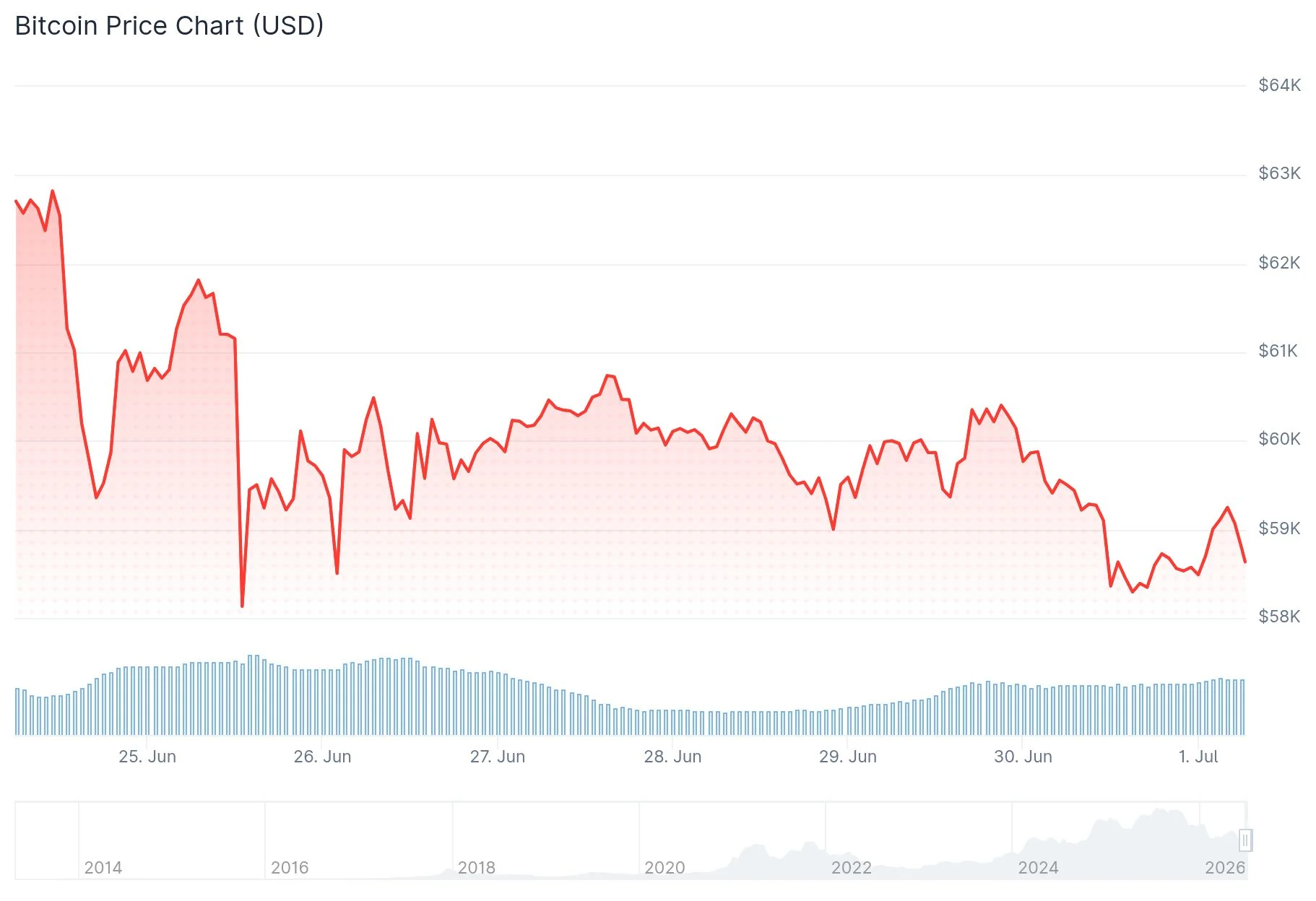
BTC was changing hands around $58,628, reflecting a 2.9% intraday decrease. The digital asset appeared headed toward consecutive quarterly losses for the first time since 2022.
Since the beginning of the year, Bitcoin has shed 33% of its value. During this identical timeframe, the S&P 500 has climbed over 9%.
From its October record peak, the token has retreated approximately 52%. Persistent selling activity and compulsory liquidations have fueled this downturn.
Expectations of additional interest rate increases have intensified market pressure. The Federal Reserve adopted a more hawkish stance during its June policy meeting, elevating the probability of another rate adjustment before year-end.

Elevated interest rates diminish the appeal of non-income-generating assets such as bitcoin. Market participants have also grown increasingly wary due to escalating geopolitical tensions between Washington and Tehran.
Persistent Capital Flight from ETF Products
Bitcoin spot exchange-traded funds recorded their eighth consecutive week of net outflows. Data from SoSoValue indicates that Monday witnessed $231.1 million in redemptions alone.
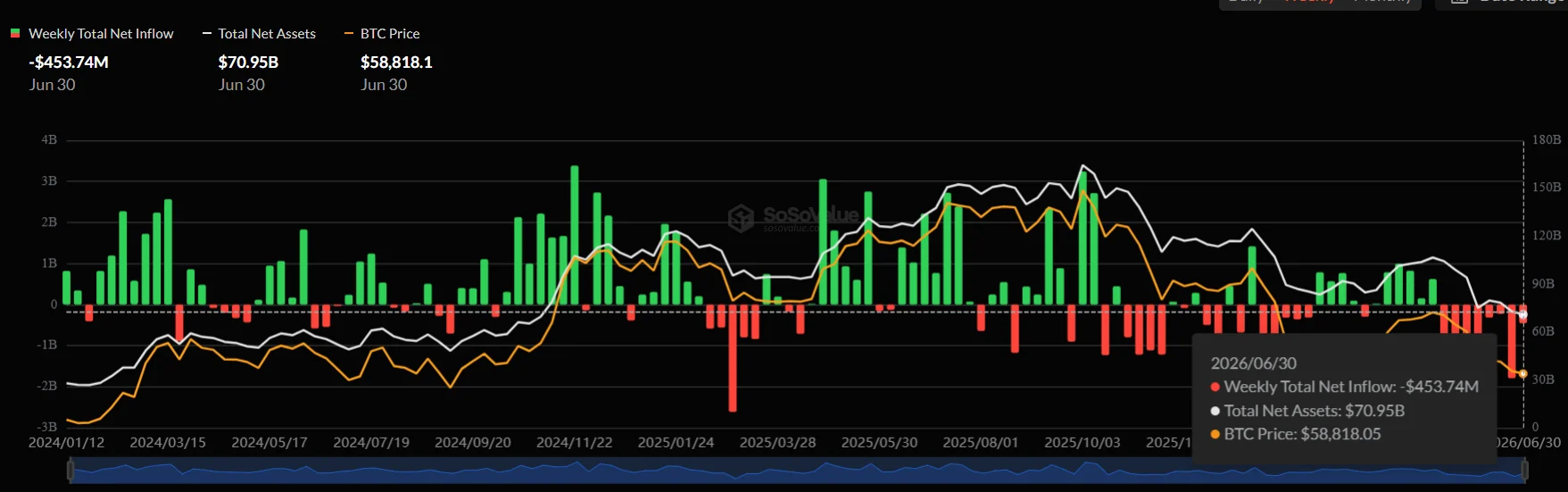
Throughout June, the 13 U.S.-registered funds collectively shed more than $4 billion. This represents the most substantial monthly withdrawal since these investment vehicles debuted in January 2024.
Cumulative ETF outflows from late April through the present have approached $6.7 billion. Legislative uncertainty surrounding the stalled CLARITY Act has compounded investor apprehension.
MicroStrategy, which holds more bitcoin than any other publicly traded corporation, successfully raised over $1 billion on Monday. However, management announced the proceeds would bolster liquid reserves instead of expanding the company’s cryptocurrency portfolio.
Compass Point analyst Ed Engel suggested this decision alleviated worries about the firm’s financial stability. “Crypto cycles historically end with a spectacular blow up and MSTR was becoming bears’ leading candidate,” he wrote.
Engel further observed that the current downturn differs from previous episodes. “This cycle hasn’t had any major insolvencies related to leverage or fraud,” he said.
Historical Data Suggests Potential Turning Point
Via social media, cryptocurrency analyst Ali Charts highlighted an uncommon on-chain metric. The analyst observed that 10.45 million bitcoin currently sit underwater, surpassing the 9.60 million coins held at a profit.
According to Ali Charts, this inversion has materialized exclusively during significant cycle nadirs—specifically in 2011, 2014, 2018, and 2020. Each previous occurrence preceded the emergence of a fresh bull market phase.
In a separate analysis, Barchart highlighted that bitcoin recently settled below its 200-week moving average for the first time since 2023. The commentary characterized this technical threshold as one that has historically presented favorable entry points.
Not all market commentators believe a floor is imminent. David Grider from Finality Capital Partners projects the bottom won’t materialize until autumn.
“I don’t think $40,000 or $45,000 would be unreasonable,” Grider told Yahoo Finance on Tuesday.
Get 3 Free Stock Ebooks
Discover top-performing stocks in AI, Crypto, and Technology with expert analysis.
- Top 10 AI Stocks - Leading AI companies
- Top 10 Crypto Stocks - Blockchain leaders
- Top 10 Tech Stocks - Tech giants



