



TLDR
- Bitcoin encountered resistance at $70,000 for the third consecutive attempt since February, retreating to approximately $67,600 during Asian trading Wednesday.
- Alternative cryptocurrencies like Solana, Cardano, and Dogecoin experienced steeper declines than Bitcoin across the weekly timeframe.
- Stock markets across Asia suffered significant losses, with South Korean equities recording their steepest two-day decline in sixteen years.
- Crude oil prices jumped approximately 4.7% amid ongoing disruptions in the Strait of Hormuz linked to the Iran situation.
- American stock index futures weakened, following Tuesday’s session where the S&P 500, Dow, and Nasdaq each declined nearly 1%.
Bitcoin’s attempt to breach the $70,000 threshold stalled once more, marking the third failed breakout since February’s market downturn, as the digital asset retreated to $67,600 throughout Wednesday’s Asian trading hours while escalating Middle East geopolitical concerns pressured global risk assets.
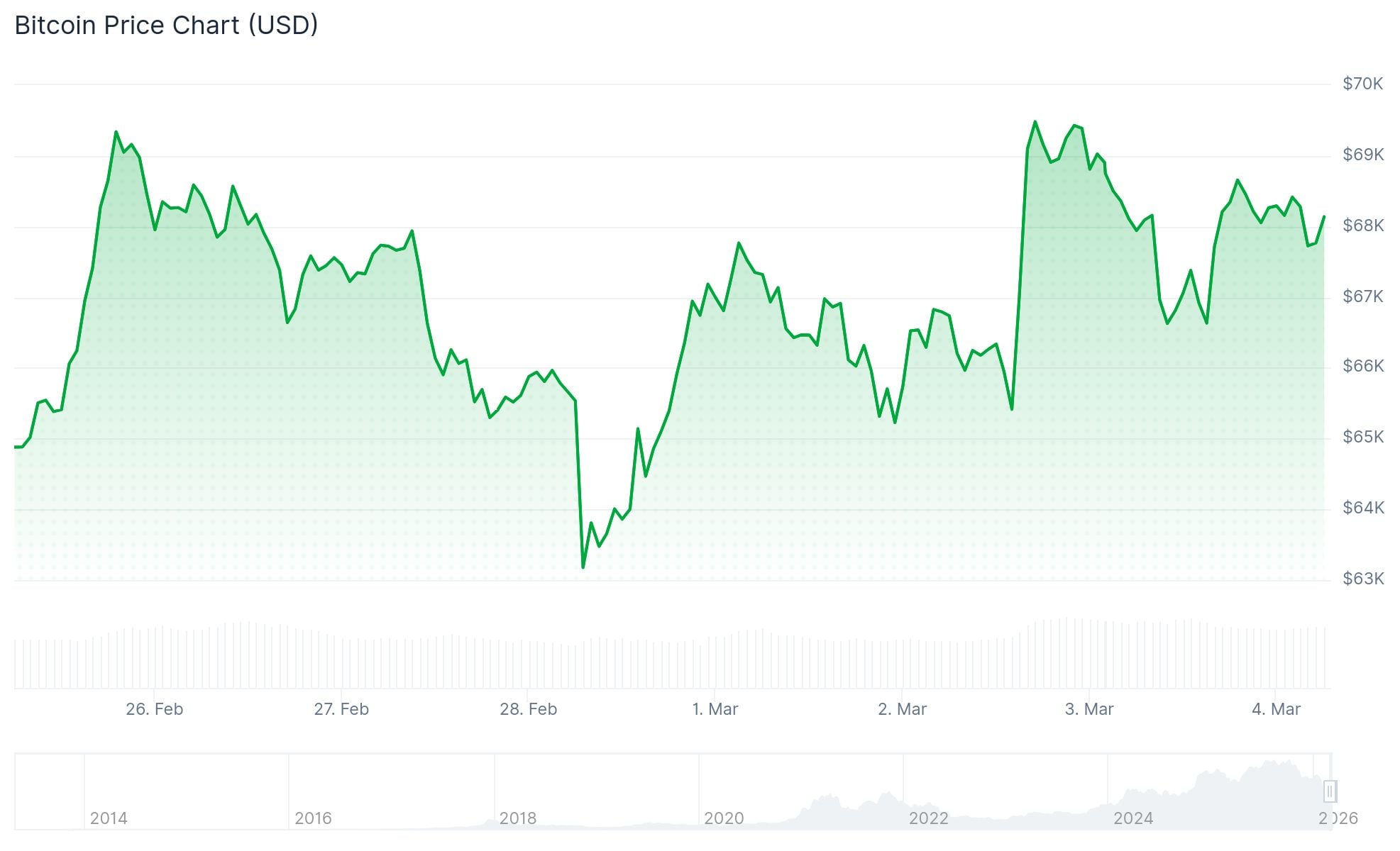
Bitcoin changed hands at $67,612 during Wednesday’s Asian morning session, recording a 0.7% decline across the previous 24-hour period. The leading cryptocurrency maintained a 3.4% weekly advance, preserving gains from its weekend rebound.
Ethereum decreased 2.2% to settle at $1,957, surrendering a portion of its recent upward momentum. The second-largest crypto asset held onto a 2.6% weekly gain. BNB emerged as a relative winner, climbing 5.2% across seven days to hit $629.
Alternative tokens faced more severe pressure. Dogecoin declined 2.9% over 24 hours and registered a 3.9% weekly loss. Cardano shed 4.2% in one day and dropped 3.5% across the seven-day window. Solana decreased 0.8% to $85.16, posting the weakest weekly performance among major tokens at -4.2%.
XRP demonstrated relative stability, declining just 1.3% to $1.35, while posting a modest 1.5% gain on the weekly chart.

Market observers at FxPro cautioned that continued rejection at range highs could push Bitcoin toward $63,000 as the subsequent target.
Wojciech Kaszycki, CSO at BTCS SA, characterized recent market behavior as following a “shock, flush, rebuild” framework. He emphasized that sustained ETF capital flows, rather than short-term price recovery, represent the critical indicator to monitor this week.
Asian Markets Take a Hit
Equity markets throughout Asia faced substantial selling pressure. South Korean stocks recorded their most severe two-day slide since the 2008 financial crisis. Technology shares within the MSCI Asia Pacific index tumbled 4%, dragging down Japanese, Taiwanese, and South Korean markets.
India’s rupee touched a historic low, connected to increased costs for petroleum imports. Precious metals gained ground, with gold advancing and pulling silver higher for the first time this week.
The Strait of Hormuz remains effectively blocked following weekend military actions. Brent crude surged 4.7% Wednesday despite Washington’s announcement of plans to provide tanker escort services through the waterway.
President Trump proposed an insurance mechanism for oil tankers via Truth Social without providing implementation details. Elevated energy costs contribute to inflation concerns, potentially delaying anticipated interest rate reductions.
US Stocks Also Under Pressure
American equity index futures weakened Tuesday evening. S&P 500 contracts dropped 0.5%, Nasdaq 100 futures fell 0.7%, while Dow futures edged up 0.4%.
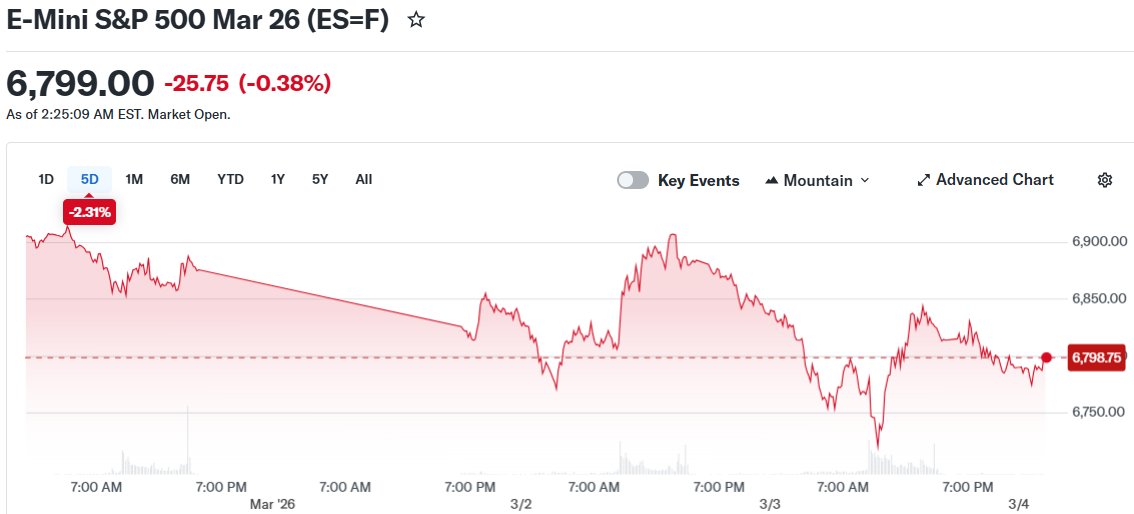
The S&P 500, Dow Jones Industrial Average, and Nasdaq Composite each concluded Tuesday’s session with approximately 1% losses, though all three indexes recovered significantly from their intraday lows.
Market participants now await Wednesday’s ADP private sector employment data for insights into labor market conditions. Corporate earnings announcements from Broadcom, Costco, and Alibaba are scheduled for release this week.
Bitget CEO Gracy Chen attributed Bitcoin’s current weakness partially to investor frustration with the asset class, particularly as gold, silver, and equity benchmarks recently achieved fresh all-time highs.
Get 3 Free Stock Ebooks
Discover top-performing stocks in AI, Crypto, and Technology with expert analysis.
- Top 10 AI Stocks - Leading AI companies
- Top 10 Crypto Stocks - Blockchain leaders
- Top 10 Tech Stocks - Tech giants



