



Key Highlights
- Bernstein confirms Bitcoin’s recent $60,000 level represents the cycle’s lowest point, with BTC now climbing toward $80,000
- More than 60% of all Bitcoin hasn’t changed hands in over twelve months, indicating robust hodler conviction
- Exchange-traded fund inflows from institutions and Strategy’s ongoing accumulation strategy are powering demand
- The global stablecoin market crossed the $300 billion threshold for the first time ever
- Tokenized traditional assets experienced 110% annual growth, reaching $345 billion in value
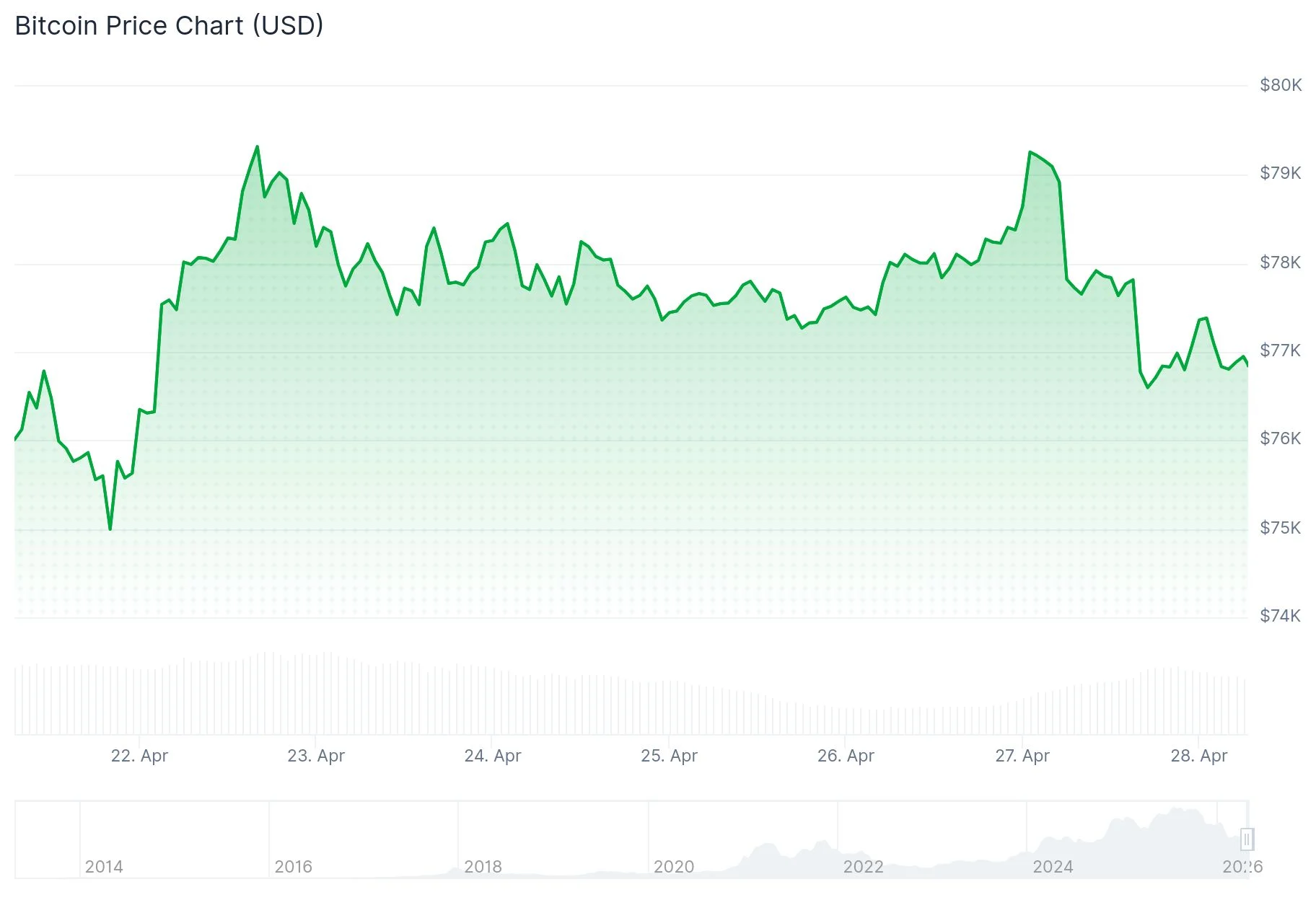
Bitcoin is mounting a significant push toward $80,000 following a new analysis from Bernstein that identifies the recent $60,000 level as the definitive bottom of this market cycle. According to the investment research firm, the cryptocurrency market is entering a bull phase that will surpass previous rallies in both duration and magnitude.
On April 27, a team of Bernstein researchers headed by Gautam Chhugani released their latest market assessment. The analysts emphasized that the current underlying factors supporting Bitcoin represent a fundamental shift from earlier market recoveries.
“The best days of crypto are ahead which will reflect in a higher and structurally longer crypto bull cycle,” Chhugani wrote in a note to clients.
Bernstein’s analysis identifies three primary catalysts behind what they characterize as substantial upside potential for digital assets. These include capital flows into institutional exchange-traded funds, Strategy’s corporate Bitcoin acquisition program, and the growing convergence between blockchain technology and conventional financial systems.
Over 60% of all Bitcoin’s circulating tokens remain dormant for more than a year. This metric demonstrates a substantial base of committed long-term investors, which constrains available selling pressure and has historically correlated with upward price momentum.
Wall Street Money Transforms Market Dynamics
Michael Saylor’s Strategy now controls 818,334 BTC in its treasury. The company’s STRC offering attracts yield-seeking institutional investors through its innovative Bitcoin exposure strategy.

Major financial institutions including Morgan Stanley and Charles Schwab have broadened Bitcoin accessibility for their clients. Morgan Stanley facilitated exposure through its Bitcoin ETF vehicle, while Schwab introduced direct spot trading capabilities, democratizing access for mainstream investors.
According to Bernstein’s assessment, these sustained institutional capital flows create a persistent demand foundation that previous market cycles lacked entirely.
Stablecoin Supply and Asset Tokenization Reach Record Levels
The worldwide stablecoin market capitalization exceeded $300 billion for the first time in history. Bernstein emphasizes this milestone represents genuine utility in digital dollar payments and international settlements rather than purely speculative activity.
Tokenization of traditional assets, spanning private credit instruments and United States Treasury securities, expanded 110% on an annual basis to reach $345 billion. This growth demonstrates that institutional adoption of blockchain infrastructure is spreading throughout conventional asset categories.
Emerging platforms such as Hyperliquid are witnessing heightened engagement with tokenized representations of equities and commodities including crude oil.
Regarding potential vulnerabilities, Bernstein identified quantum computing as a future consideration for blockchain security protocols. Nevertheless, the firm maintains that the cryptocurrency ecosystem has sufficient time to implement post-quantum cryptographic safeguards before this becomes an immediate threat.
Bitcoin currently trades near $80,000 as these market forces continue to develop.
Get 3 Free Stock Ebooks
Discover top-performing stocks in AI, Crypto, and Technology with expert analysis.
- Top 10 AI Stocks - Leading AI companies
- Top 10 Crypto Stocks - Blockchain leaders
- Top 10 Tech Stocks - Tech giants



