



TLDR
- Bitcoin hovers near $62,900, posting a 7.5% weekly decline while remaining trapped between $60,000 and $70,000
- Major altcoins suffer steeper losses — ETH, XRP, SOL, and DOGE each down between 8% and 11% over seven days
- Selling pressure in altcoin markets has reached its highest level in five years with minimal buying support
- Concerns about AI-driven market disruption are driving capital away from technology stocks and digital assets
- Stock index futures posted modest gains Tuesday following Monday’s losses exceeding 1% across major indices
Bitcoin slipped to approximately $62,900 during Tuesday’s trading session, marking a 2.1% daily decline and extending weekly losses to 7.5%. The leading cryptocurrency by market capitalization has remained confined within a $60,000 to $70,000 price corridor following a sharp correction on February 5.
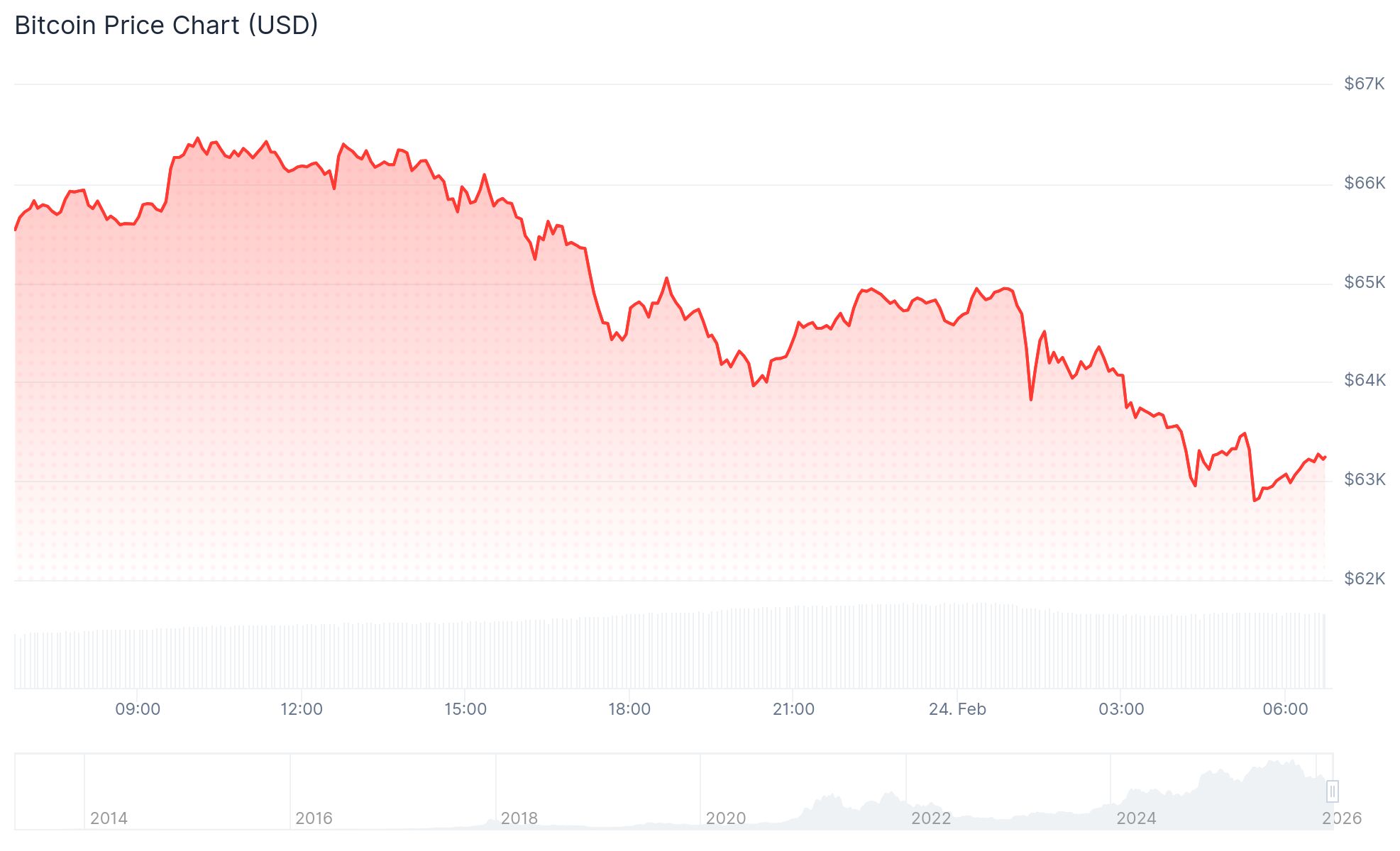
The broader altcoin market is experiencing more severe declines compared to bitcoin. Ethereum retreated to $1,829, reflecting an 8% weekly drop. XRP declined 10.8%, while Solana posted an 11.3% loss, and Dogecoin fell nearly 10%.
Blockchain analytics platform CryptoQuant reported that altcoin sell-side pressure has climbed to levels not observed in five years. This indicates current holders are liquidating positions into a market characterized by limited demand.
This pattern of sustained selling typically leads to gradual price erosion rather than dramatic crashes. The absence of sharp declines makes it challenging for bargain hunters to identify attractive entry points, further suppressing buying interest.
Alex Kuptsikevich, chief market analyst at FxPro, characterized bitcoin’s recent price action as a consolidation phase rather than a trend reversal. He highlighted the formation of a bearish pennant pattern visible on daily charts.

According to his analysis, a breakdown below the mid-$65,000 level would signal additional downside momentum. Conversely, a decisive move above $70,000 would invalidate the bearish technical structure.
Bitcoin currently trades 48% beneath its record high and sits 5.5% below its 2021 peak of $69,000. Extended consolidation within this range increasingly favors bearish market participants.
How AI Disruption Concerns Are Impacting Cryptocurrency Markets
A research report released by Citrini Research highlighted the emergence of an “AI scare trade” affecting multiple sectors. The analysis expressed concern that artificial intelligence advancements could significantly disrupt delivery services, payment processing platforms, and software companies.
The research note sparked widespread selling across technology-related equities. When risk sentiment deteriorates in traditional markets, cryptocurrencies typically experience correlated downward pressure, as both asset classes compete for the same pool of speculative capital.
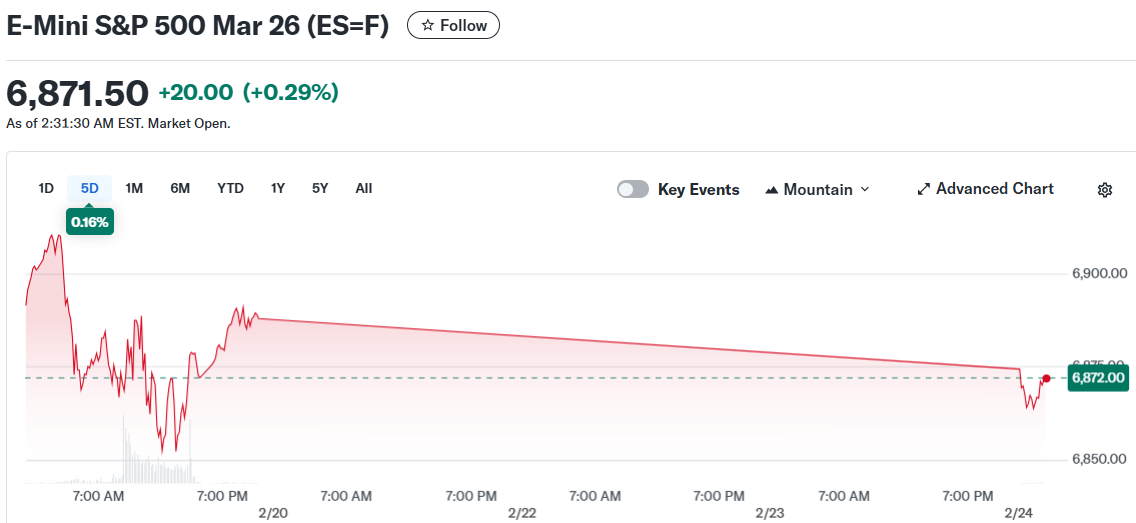
During Monday’s session, the Dow Jones Industrial Average posted significant losses, partially driven by a 13% collapse in IBM shares. Both the S&P 500 and Nasdaq composite declined more than 1%, pushing the S&P 500 back into negative territory on a year-to-date basis.
Equity Futures Show Tentative Rebound
US equity index futures demonstrated modest strength in early Tuesday trading. Dow futures advanced 0.1%, while S&P 500 futures gained 0.2%, and Nasdaq 100 futures climbed 0.3%.
The tentative recovery followed a reassessment by market participants of risks associated with AI-driven disruption and President Trump’s proposal to implement 15% global tariffs.
AI company Anthropic is scheduled to conduct a product announcement event Tuesday. Historical product launches from Anthropic have previously triggered sell-offs in cybersecurity and enterprise software stocks, and market analysts anticipate similar volatility potential.
Investors are also monitoring the release of consumer confidence data scheduled for Tuesday, alongside quarterly earnings from Home Depot. Wednesday’s calendar features results from Nvidia, Salesforce, and Snowflake.
Get 3 Free Stock Ebooks
Discover top-performing stocks in AI, Crypto, and Technology with expert analysis.
- Top 10 AI Stocks - Leading AI companies
- Top 10 Crypto Stocks - Blockchain leaders
- Top 10 Tech Stocks - Tech giants



