



Key Highlights
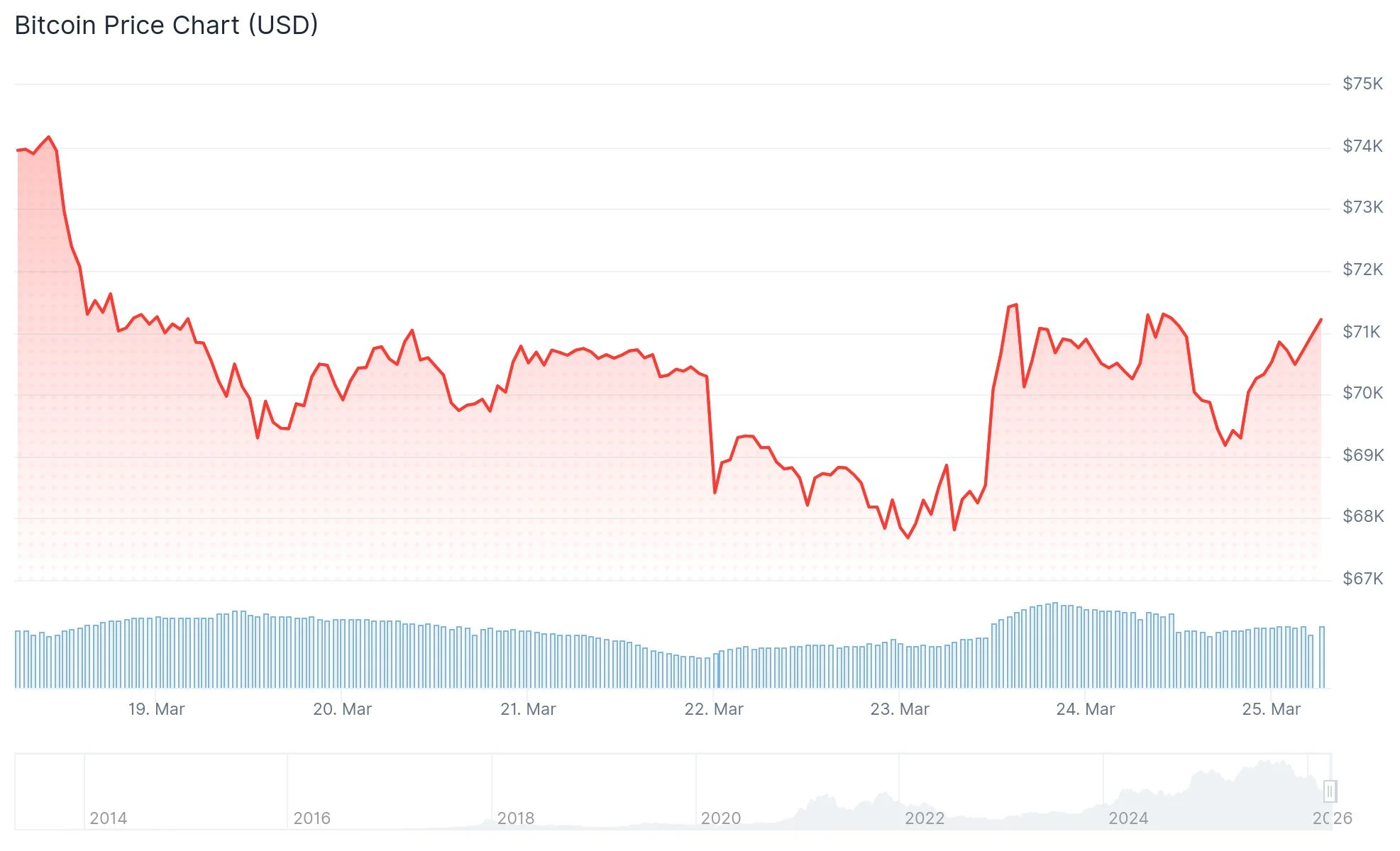
- BTC declined 0.4% to approximately $70,475 amid conflicting signals about potential U.S.-Iran peace negotiations.
- Bernstein’s research team believes the leading cryptocurrency has established a floor, viewing recent declines as emotional recalibration rather than structural weakness.
- Crude prices above the $85–$90 range are intensifying inflation concerns, driving capital toward safe havens and away from speculative assets including Bitcoin.
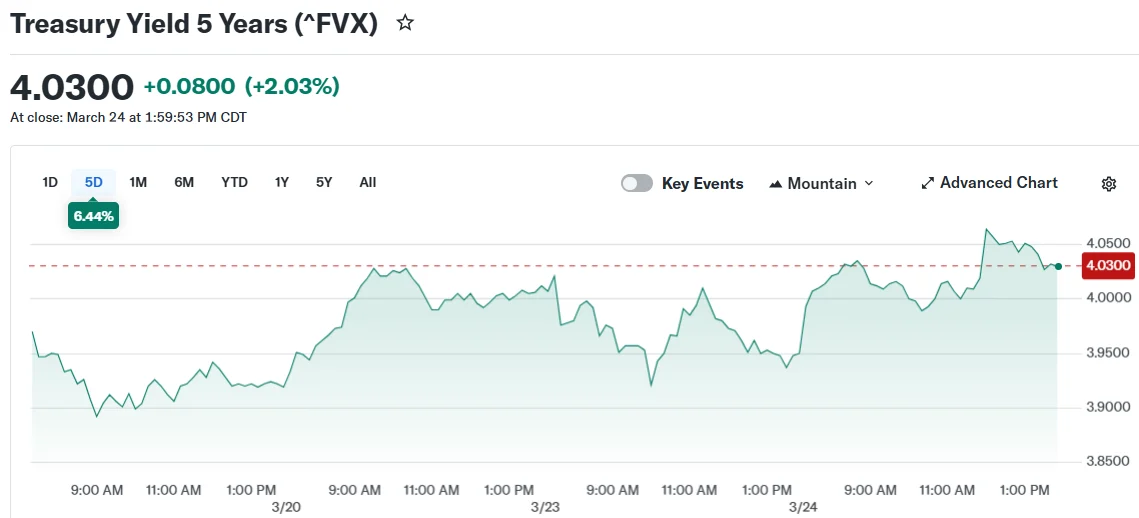
- The 5-year U.S. Treasury yield reached 4.10%, marking a nine-month peak, while July rate increase probability climbed to 20.5%.
- Since Iran tensions escalated in late February, Bitcoin has delivered 25% superior returns compared to gold, Bernstein reports.
The world’s largest cryptocurrency by market capitalization slid 0.4% during Tuesday’s trading session, settling near $70,475 after giving back gains from the prior day. The decline followed contradictory information regarding potential diplomatic resolution between Washington and Tehran.
Israel’s Channel 12 network indicated that American envoy Steve Witkoff alongside Jared Kushner were developing a cessation framework containing 15 specific provisions. Separately, The New York Times published reports suggesting the United States had transmitted an official diplomatic proposal to Iranian authorities.
However, Iran’s parliamentary leadership swiftly contradicted these accounts, characterizing the ceasefire reports as entirely fabricated. This diplomatic whiplash maintained markets in heightened reactive mode, with price action driven by speculation rather than verified developments.
[[EMBED_0]]
President Trump announced Monday his decision to postpone military action against Iranian energy facilities for five days, describing recent diplomatic exchanges as “very good and productive.” Nevertheless, crude oil benchmarks surged Tuesday as geopolitical ambiguity persisted.

Macroeconomic Headwinds Challenge Digital Assets
Crude oil breaching $90 per barrel has elevated inflation forecasts significantly. Fixed income derivatives markets revealed Federal Reserve tightening expectations for July skyrocketed from zero probability to 20.5% within a single week.
The 5-year Treasury note yield advanced to 4.10%, representing the highest reading in nine months. America’s benchmark equity index, the S&P 500, touched its weakest level in more than half a year Monday as institutional investors rotated heavily into cash equivalents.
Mega-cap technology companies such as Google, Meta, and IBM have experienced drawdowns exceeding 10% across the previous six-week period. Simultaneously, America’s sovereign debt burden surpassed $39 trillion, compounding household financial strain.
B2 Ventures founder Arthur Azizov observed: “There is a growing sense in the market that traditional assets are becoming more speculative than crypto, which is not a positive signal.”
Bernstein Declares Bitcoin Bottom Formation Complete
Notwithstanding current market pressures, Bernstein’s research division expressed conviction that Bitcoin has established its cyclical low. Analyst Gautam Chhugani and colleagues stated: “We believe Bitcoin has found its trough and is now heading higher.”
The investment firm characterized recent price weakness as emotional recalibration rather than evidence of deteriorating fundamentals. Their analysis emphasized Bitcoin’s 25% outperformance relative to gold since Middle Eastern tensions intensified during February’s final week.
Bernstein reaffirmed its outperform recommendation on Strategy, maintaining a $450 price objective. The Michael Saylor-led corporation controls approximately 3.6% of total Bitcoin circulation, representing holdings valued near $53.5 billion.
Decentralized prediction marketplace Polymarket shows traders broadly anticipating conflict resolution before June 2026.
[[EMBED_1]]
Bitcoin tested the $67,500 technical support zone during Monday’s session. Market technicians identify the $66,000 threshold as critical if inflation anxieties and monetary tightening fears intensify further.
Get 3 Free Stock Ebooks
Discover top-performing stocks in AI, Crypto, and Technology with expert analysis.
- Top 10 AI Stocks - Leading AI companies
- Top 10 Crypto Stocks - Blockchain leaders
- Top 10 Tech Stocks - Tech giants



