


Key Takeaways
- BAC shares declined approximately 1% in premarket hours despite surpassing analyst projections for both earnings per share and revenue
- Second-quarter EPS reached $1.21, representing a 36% increase from the prior year, exceeding the $1.13 Street forecast
- Total revenue climbed to $31.6 billion, marking a 15% annual increase and surpassing projections by 2.5%
- Equities trading division generated record-setting revenue of $3.6 billion, soaring 70%; investment banking fees rose 50%
- Quarterly net income increased 27% to $9.1 billion, with every business unit achieving double-digit expansion
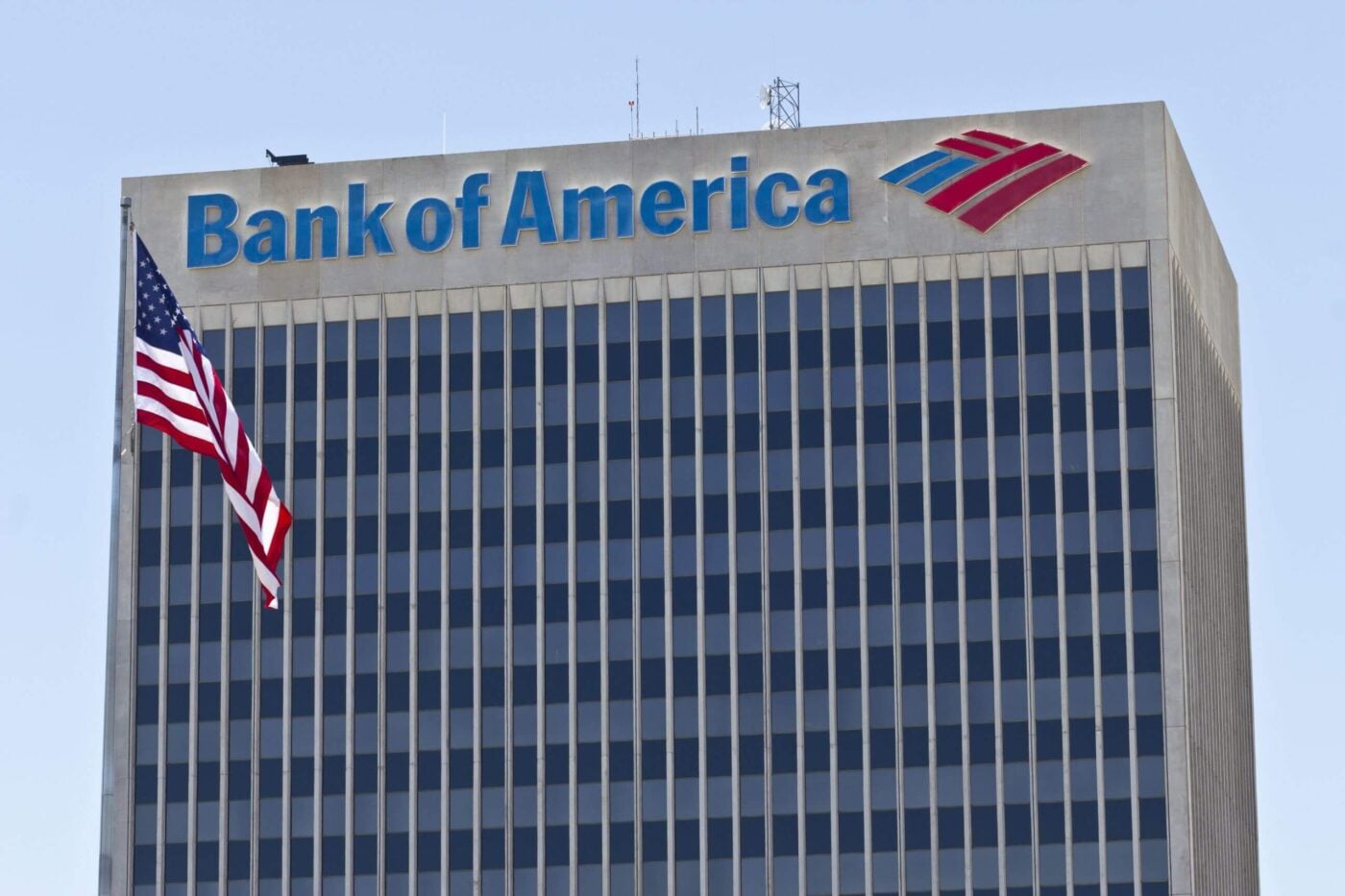
Shares of Bank of America dipped approximately 1% during premarket hours on Tuesday, July 14, despite the financial institution reporting what many analysts considered an exceptionally robust quarterly performance.
Bank of America Corporation, BAC
The bank’s diluted earnings per share for the second quarter registered at $1.21, marking a 36% year-over-year surge and substantially exceeding the analyst consensus estimate of $1.13. Total revenue expanded 15% from the previous year to reach $31.6 billion, outperforming Wall Street projections by roughly 2.5%.
The modest share price decline appeared to reflect a textbook “buy the rumor, sell the news” scenario — a common market response when strong financial results have already been anticipated and incorporated into stock valuations.
Quarterly net income totaled $9.1 billion, representing a 27% increase compared to the corresponding period in the prior year. The earnings per share growth exceeded the net income expansion rate due to continued share repurchase programs, though this was somewhat counterbalanced by equity-based employee compensation.

Chief Executive Officer Brian Moynihan characterized the results as among the institution’s most impressive quarterly performances. “With a robust economic environment as our backdrop, financially sound consumers and corporate clients continue choosing Bank of America for their spending, borrowing, and investment needs,” he stated.
Markets Division Achieves Historic Performance
The Global Markets business unit emerged as the quarter’s standout performer. Revenue from equities trading surged an impressive 70% to reach $3.6 billion — establishing a new company record — fueled by robust client engagement and strong performance across both derivatives and cash trading operations.
Revenue from fixed-income, currencies, and commodities (FICC) operations increased 9% to $3.5 billion. Total sales and trading revenue across all markets reached $7.1 billion, reflecting a 33% year-over-year jump. This achievement represented the division’s 17th consecutive quarter of annual revenue growth.
Investment banking fees (excluding internally-led transactions) surged 50% to $2.1 billion, with positive contributions from debt capital markets, advisory services, and equity underwriting activities.
Net interest income expanded 9% to $16.2 billion, supported by favorable margins between the bank’s lending rates and deposit costs.
Broad-Based Success Across Business Units
Each of BAC’s four primary business segments reported increased profitability. The Consumer Banking division generated $3.3 billion in net income on $11.3 billion in revenue. Global Wealth and Investment Management contributed $1.4 billion in net income, with total client assets reaching $4.9 trillion. Global Banking delivered $2.0 billion in earnings, while Global Markets added $2.6 billion to the bottom line.
Asset quality metrics also showed favorable trends. The credit loss provision decreased to $1.4 billion from $1.6 billion in the second quarter of 2025. The net charge-off ratio improved to 0.47% from 0.55% during the comparable year-ago period.
Return on average tangible common equity (ROTCE) registered at 17.03%, surpassing the 15.8% analyst consensus forecast and falling well within the bank’s stated target corridor of 16%-18%.
The efficiency ratio showed marked improvement, declining to 58.72% from 62.28% in the prior-year quarter. Oppenheimer analyst Chris Kotowski observed that with revenue advancing 14.6% while expenses grew only 8.4%, “operational efficiency metrics demonstrated strong performance across the board.”
During the quarter, the bank distributed $8 billion to shareholders via dividend payments and share repurchases. Book value per common share increased 7% to $39.34.
BAC released its earnings alongside JPMorgan Chase, Goldman Sachs, Wells Fargo, and Citigroup, which all reported their quarterly results during Tuesday’s premarket session.
Get 3 Free Stock Ebooks
Discover top-performing stocks in AI, Crypto, and Technology with expert analysis.
- Top 10 AI Stocks - Leading AI companies
- Top 10 Crypto Stocks - Blockchain leaders
- Top 10 Tech Stocks - Tech giants



