


Key Highlights
- The Consumer Price Index for air travel surged 20.7% compared to April 2025, accelerating from March’s 14.9% increase.
- Credit and debit card data from Bank of America reveals airline spending reached double-digit expansion rates in May.
- Most carriers reduced third-quarter domestic capacity plans, though American Airlines maintains aggressive 9.3% growth targets.
- United Airlines anticipates serving 53 million travelers during summer months; American projects 75 million passengers through early September.
- Aviation sector equities rallied midweek, with Allegiant Travel gaining 6.8% following a 4% decline in crude oil prices.
Shares of major U.S. carriers advanced on Wednesday following a significant retreat in crude [[LINK_START_1]]oil prices[[LINK_END_1]], which fell approximately 4%, while industry data confirmed sustained momentum in summer vacation travel. Bank of America unveiled compelling metrics indicating robust pricing power and consumer expenditure patterns as peak travel season approaches.
Airfare Inflation and Consumer Spending Accelerate
The cost of air travel has experienced dramatic escalation throughout 2026. According to the Consumer Price Index for Airline Fares, prices climbed 20.7% year-over-year during April, representing a notable acceleration from the prior month’s 14.9% annual increase. On a sequential basis, airfares advanced 6.3% from March to April.
The Producer Price Index for Air Passenger Services similarly demonstrated significant upward momentum, registering an 11.1% annual gain in April versus 8.1% recorded in March. Industry data from the Airline Reporting Corporation corroborated this trend, showing average ticket values increased 16.2% compared to the same period last year.
Proprietary transaction data from Bank of America’s payment network revealed that airline-related spending accelerated into double-digit growth territory during May. Notably, this expansion was primarily attributable to higher average transaction values rather than increased booking volumes alone.
During Bank of America’s recent Industrials, Transportation and Airlines conference, industry executives conveyed confidence in sustained demand fundamentals and pricing discipline. Nevertheless, carriers emphasized that capacity deployment for the latter half of 2026 remains contingent on fuel price trajectories.

Crude oil benchmarks have persistently traded above the $100-per-barrel threshold, maintaining pressure on operating expenses. Brent crude was trading near $104 on Tuesday before retreating Wednesday.
Carriers Trim Capacity Growth — American Airlines Remains the Exception
Industry-wide domestic capacity projections for the third quarter of 2026 have been reduced by approximately 200 basis points since mid-April, bringing the aggregate growth rate to 1.6%. A substantial portion of this contraction resulted from Spirit Airlines’ operational cessation, which eliminated 160 basis points from total capacity.
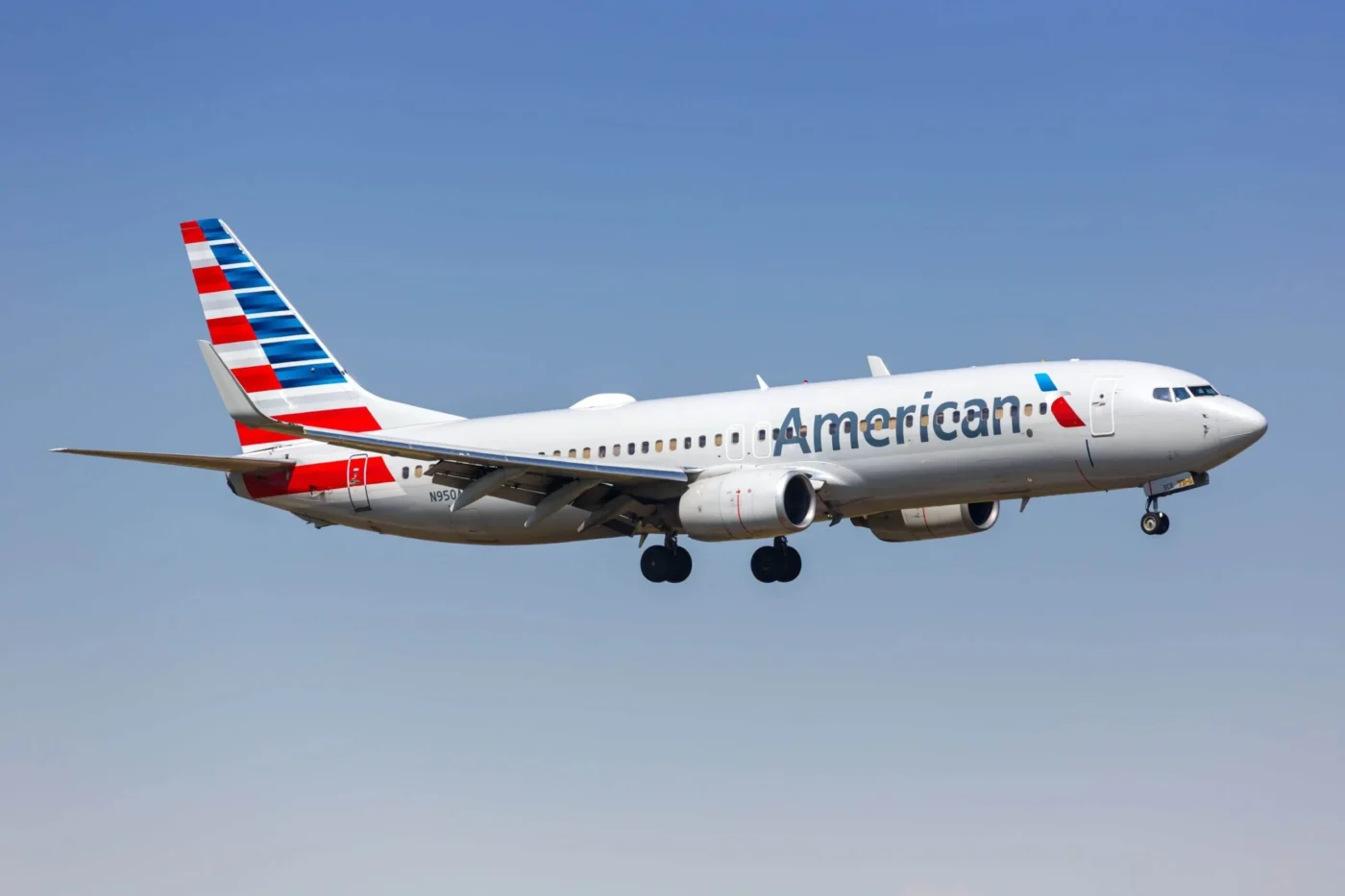
United Airlines substantially revised its expansion forecast downward from 9.4% to 5.2%, contributing an additional 80 basis points to the industry-wide reduction. American Airlines represents a notable outlier, maintaining ambitious 9.3% growth objectives that account for 190 basis points of total industry capacity expansion.
American Airlines Group Inc., AAL
Summer-period capacity is projected to remain essentially unchanged compared to last year, with additional reductions anticipated following the peak season. September’s projected 4.1% capacity growth significantly exceeds the flat trajectory expected from May through August, and industry analysts anticipate further downward revisions in upcoming weeks.
United Airlines projects serving over 53 million passengers between June and August, representing approximately 3 million additional travelers compared to summer 2025. [[LINK_START_2]]American Airlines[[LINK_END_2]] expects to transport roughly 75 million customers across approximately 750,000 flight operations between May 21 and September 8, commemorating what the carrier characterizes as its “centennial summer.” Delta Air Lines reported that domestic demand remains resilient despite elevated fare levels.
United Airlines also highlighted that reservations in North American cities hosting World Cup matches during the Group Stage have surged nearly 20%, though carriers broadly acknowledged they haven’t yet observed widespread travel impacts from the tournament.
Regarding international travel patterns, U.S. outbound tourism continues outpacing inbound arrivals. Excluding Middle Eastern markets, outbound travel has increased 3.7% year-over-year while inbound travel has declined 3.8%.
The U.S. Global Jets ETF advanced 3.3% during Wednesday morning trading. Allegiant Travel commanded sector performance with a 6.8% gain, followed by Frontier Group up 5.9%, United Airlines climbing 5.9%, Republic Airways rising 5.6%, Alaska Air advancing 4.9%, and JetBlue increasing 4.4%.
Get 3 Free Stock Ebooks
Discover top-performing stocks in AI, Crypto, and Technology with expert analysis.
- Top 10 AI Stocks - Leading AI companies
- Top 10 Crypto Stocks - Blockchain leaders
- Top 10 Tech Stocks - Tech giants



