


TLDR
- Nasdaq 100 futures plunged up to 2.6% during Tuesday’s premarket session
- AI researcher and Nobel laureate John Jumper departed Alphabet’s Google to join rival startup Anthropic
- South Korean KOSPI index crashed 10%, with Samsung Electronics and SK Hynix sliding over 10%
- Bitcoin declined 2% to approximately $62,883 amid widespread risk-averse market behavior
- Earnings reports from FedEx and AI chipmaker Cerebras Systems expected Tuesday, followed by Micron on Wednesday
Technology equities are bracing for another challenging trading day Tuesday following a Nobel laureate’s surprising career move and mounting anxiety surrounding artificial intelligence chip demand that unsettled investors worldwide.
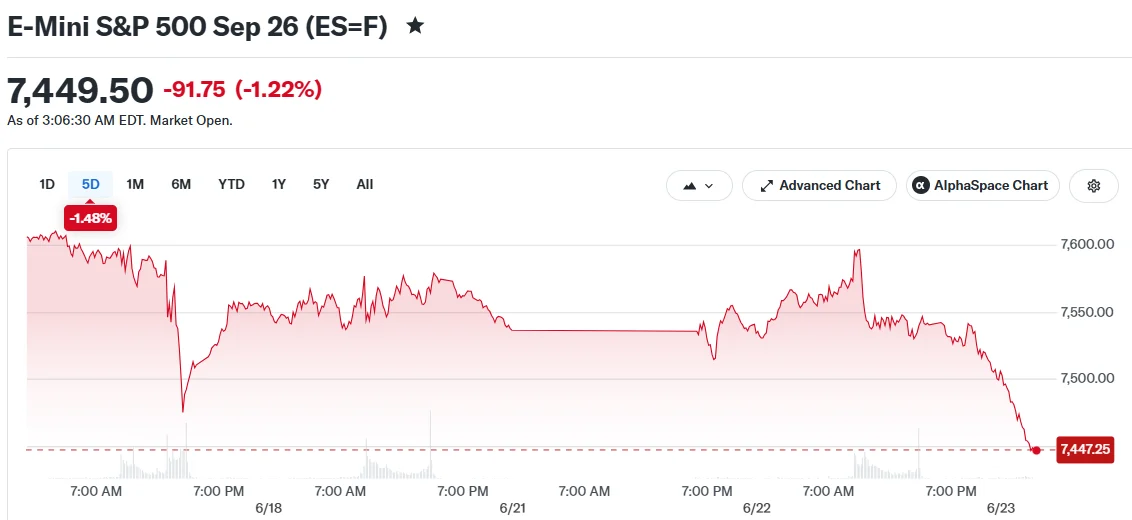
Futures for the Nasdaq 100 plummeted as much as 2.6% during premarket hours. The S&P 500 futures declined 1.5%, while Dow Jones Industrial Average futures retreated approximately 350 points, representing a 0.7% decline.
The market turbulence comes on the heels of a punishing Monday session for mega-cap tech companies. The primary catalyst: Nobel Prize recipient and AI scientist John Jumper revealed his decision to depart Alphabet‘s Google division and join artificial intelligence startup Anthropic. This announcement pressured Alphabet’s stock price downward.
Jumper earned recognition for his groundbreaking contributions to protein structure prediction research. His move to a competing AI laboratory alarmed market participants who closely monitor elite talent movements as indicators of shifting momentum within the artificial intelligence sector.
South Korean Semiconductor Stocks Amplify Market Distress
The technology sector’s challenges extended well beyond American borders. South Korea’s KOSPI Composite index tumbled 10% Tuesday, marking one of its most dramatic single-day declines in recent history.

Memory chip manufacturers Samsung Electronics and SK Hynix each suffered losses exceeding 10%. Market observers pay particularly close attention to these corporations as barometers of AI hardware demand, given their role as suppliers of memory components utilized in AI server infrastructure.
Their precipitous decline intensified skepticism about whether artificial intelligence infrastructure investments will maintain the trajectory financial markets had anticipated. This apprehension subsequently rippled into US technology futures, dampening sentiment ahead of the American trading session.
SpaceX, which trades on secondary exchanges through a special purpose vehicle structure, experienced its third consecutive day of losses.
Market Focus Shifts to Corporate Results and Inflation Metrics
Tuesday’s calendar features two highly anticipated earnings announcements. FedEx is scheduled to report financial results alongside Cerebras Systems, the artificial intelligence chip manufacturer that completed its initial public offering in May. This marks Cerebras’ debut quarterly report as a publicly traded entity.
Market participants are simultaneously positioning for Micron’s Wednesday earnings release. As a memory chip producer, Micron’s financial performance will serve as a critical benchmark for assessing whether AI-driven chip demand remains resilient following the Korean market selloff.
The Federal Reserve’s favored inflation indicator, the PCE index for May, arrives Thursday. Trading desks are already exhibiting nervousness regarding the potential for multiple interest rate increases during 2026.
Diplomatic negotiations between the US and Iran progressed in the background. Crude oil quotations declined on optimism that an agreement might restore supply routes through the Strait of Hormuz. Brent crude retreated 1.9% to $76.45 per barrel.
Bitcoin slipped 2% to roughly $62,883, tracking the broader risk-aversion sentiment permeating financial markets. The 10-year Treasury yield decreased 3 basis points to 4.48%, while the dollar climbed to a one-year peak against a basket of major currencies, propelled by safe-haven flows and expectations of elevated US interest rates.
With both Cerebras and Micron scheduled to report earnings this week, the coming 48 hours could fundamentally alter investor sentiment toward the AI investment thesis as summer approaches.
Get 3 Free Stock Ebooks
Discover top-performing stocks in AI, Crypto, and Technology with expert analysis.
- Top 10 AI Stocks - Leading AI companies
- Top 10 Crypto Stocks - Blockchain leaders
- Top 10 Tech Stocks - Tech giants



