



Key Takeaways
- President Trump declined Iran’s proposal for a seven-day ceasefire linked to reopening the Strait of Hormuz.
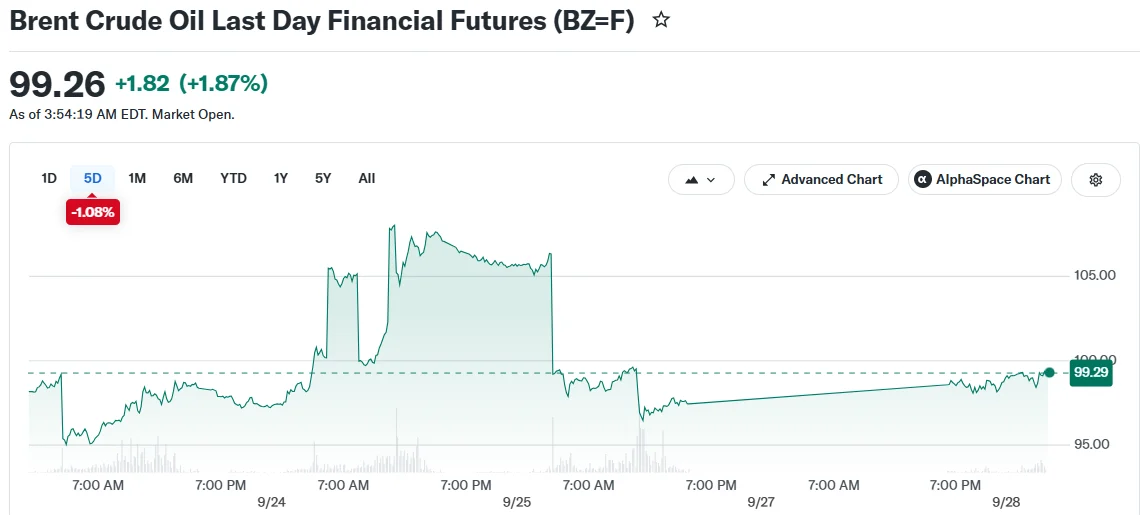
- Brent crude climbed nearly 3% to surpass $107 per barrel, marking an 18% monthly increase.
- Tehran maintains its position, demanding sanction relief and an end to the US naval blockade.
- Global bond yields surged, with a worldwide bond index exceeding 4% for the first time in over sixteen years.
- Market participants are closely monitoring the Federal Reserve’s upcoming late-October policy meeting, with increasing expectations of another rate increase.
Energy markets experienced significant upward movement on Monday following President Donald Trump’s decision to reject a diplomatic proposal from Iran that would have led to the reopening of the Strait of Hormuz within a week’s time.
Speaking to the press at the White House, Trump declared, “I reject their proposal,” emphasizing that the terms presented were insufficient to meet American interests.
Tehran’s Conditions for Agreement
The Iranian proposal outlined a temporary cessation of hostilities. However, Tehran demanded that Washington lift its maritime blockade, reduce military operations in the region, and eliminate economic sanctions targeting Iranian petroleum exports.
Following the rejection, Iranian officials reaffirmed their stance, indicating no willingness to modify their requirements for any potential agreement.
In remarks to Axios, Trump indicated optimism that negotiations would continue in the near future. “They want to make a deal, but it is not the deal that I want to make,” he stated in an interview released on Sunday.
Qatar continues to serve as an intermediary facilitating communication between the two nations. Sources reported to Axios that indirect diplomatic discussions between Washington and Tehran could potentially commence as soon as Monday.

Market Response to Diplomatic Breakdown
Brent crude futures climbed 2.8% to reach $107.27 per barrel during Monday morning trading. West Texas Intermediate crude advanced nearly 2%, settling at $94.13 per barrel.
Monthly gains for Brent have reached 18%. Prices had temporarily declined more than 2% on Friday following initial reports of the ceasefire proposal.
The Strait of Hormuz typically facilitates the passage of approximately one-fifth of global oil and natural gas supplies. Maritime traffic through this critical waterway has declined substantially since tensions escalated.
Compounding market concerns, Iranian-supported Houthi militants have intensified military operations in Yemen. Saudi Arabia reported intercepting two ballistic missiles and two unmanned aerial vehicles during the weekend.
Diesel fuel prices across Europe and the United States have reached unprecedented levels. Reduced fuel availability from Middle Eastern and Russian sources continues to fuel the surge.
Despite ongoing tensions, Trump noted a positive development, stating that more than 20 million barrels of crude oil successfully passed through the strait during the weekend.
Global equity markets displayed varied responses. Seoul’s market declined 2.7% upon reopening following a holiday break, while exchanges in Tokyo, Shanghai, and Mumbai also registered losses.
Conversely, Hong Kong, Sydney, and Singapore posted positive returns. European markets in London, Paris, and Frankfurt opened with gains as well.
Government bond yields also experienced upward pressure. According to Bloomberg data, a global bond yield benchmark crossed the 4% threshold last week for the first time since 2007.
Elevated crude prices intensify worries about inflationary pressures. This development increases scrutiny on the Federal Reserve as its policy meeting scheduled for late October approaches.
Data from CME’s FedWatch tool indicates greater than 65% probability of a consecutive interest rate increase. Market participants are also anticipating the Fed’s preferred inflation metric and employment data expected to be released this week.
Stephen Innes, analyst at Quintex Intel, observed that geopolitical tensions have intensified following the rejection. He noted that crude prices have advanced while Asian equity markets have weakened in response.
Innes suggested that markets continue to anticipate eventual resumption of negotiations between both parties. He predicted they may engage in public posturing before returning to formal discussions.
Currently, Iran has not modified its negotiating position. While Trump has suggested talks could resume within days, no formal meeting has been scheduled.
Get 3 Free Stock Ebooks
Discover top-performing stocks in AI, Crypto, and Technology with expert analysis.
- Top 10 AI Stocks - Leading AI companies
- Top 10 Crypto Stocks - Blockchain leaders
- Top 10 Tech Stocks - Tech giants



