


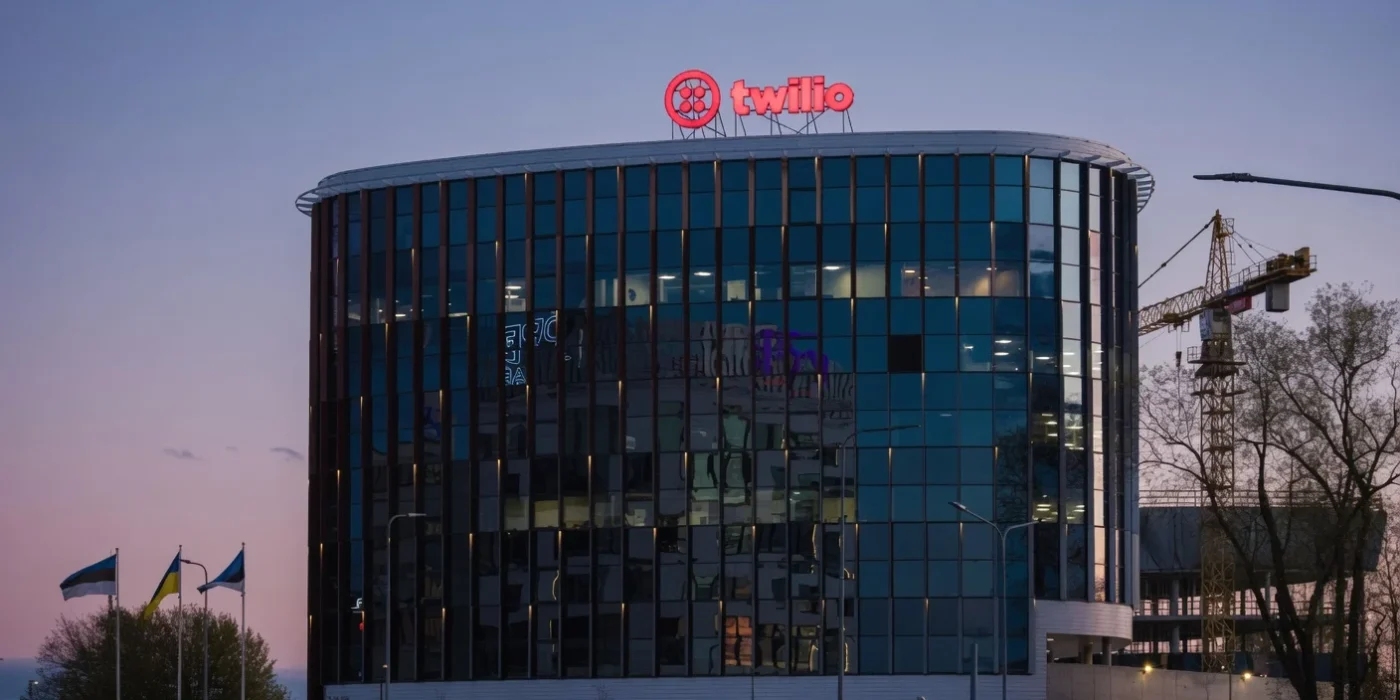
Key Takeaways
- HSBC cut Twilio’s rating to Reduce from Hold with a $211 price target.
- Shares declined up to 4% in premarket hours after the downgrade announcement.
- Analyst questions whether Meta’s Muse launch will deliver meaningful revenue to Twilio.
- HSBC argues Meta retains high-value AI voice operations internally, leaving Twilio with low-margin tasks.
- Competing views persist as Morgan Stanley and Stifel maintain optimistic outlooks on AI opportunities.
Shares of Twilio tumbled up to 4% during Friday’s premarket session after HSBC issued a downgrade on the cloud communications platform provider.
HSBC’s Sameer Lam downgraded the stock to Reduce from Hold while maintaining a $211 price target, suggesting considerable downside from current trading levels.
The downgrade directly contradicts one of 2026’s most popular AI-related investment themes. Shares of Twilio soared approximately 30% following Meta Platforms’ September 8, 2026 debut of its Muse AI agent.
Market participants anticipated Muse would generate substantial new volumes of messaging, voice calls, and verification requests flowing through Twilio’s infrastructure. HSBC contends this optimism has exceeded what the reality will deliver.

The Case for Skepticism
Lam’s thesis revolves around which portions of Muse interactions generate the highest margins. His analysis suggests Meta’s proprietary AI voice technology retains the most lucrative elements internally.
This leaves Twilio servicing predominantly lower-margin functions such as phone number routing and standard SMS verification rather than premium AI-powered communication services.
The analyst also highlighted intense competition in this segment. Rivals including Bandwidth and Sinch provide comparable connectivity solutions, and Meta maintains flexibility to distribute traffic across multiple vendors or directly through wholesale carriers.
“We view the rising AI-agent traffic will benefit the industry, but it does not guarantee Twilio captures disproportionate economics,” Lam wrote in his note to clients.
Wall Street Remains Divided
HSBC’s perspective contrasts sharply with other major investment banks. Morgan Stanley previously identified Twilio as among the prime beneficiaries of increased communications volume driven by Muse.
Stifel maintains its bullish stance as well, preserving a Buy rating on the stock. The firm views consumer-facing AI agents as a significant long-term catalyst for Twilio’s growth trajectory, despite acknowledging minimal near-term impact on third-quarter results.
Investors now face conflicting narratives regarding the same equity. One perspective positions Twilio as an immediate beneficiary of the AI agent revolution. The alternative argues the company receives credit for revenue growth that may fail to materialize.
Friday’s broader equity market performance wasn’t a contributing factor. The S&P 500 advanced 0.3%, the Dow Jones gained 0.3%, and the Nasdaq Composite rose 0.6%, indicating Twilio’s decline reflected company-specific concerns rather than market-wide weakness.
Twilio’s 52-week trading range spans from $98.44 to $304.75. Friday’s intraday peak had already reached that upper bound before the downgrade emerged, illustrating how dramatically AI-related optimism has propelled the stock over twelve months.
The company’s upcoming earnings release is slated for October 29, 2026. That report will provide investors their initial concrete evidence of whether Muse-driven demand is translating into actual revenue growth, or if HSBC’s cautionary stance proves justified.
Get 3 Free Stock Ebooks
Discover top-performing stocks in AI, Crypto, and Technology with expert analysis.
- Top 10 AI Stocks - Leading AI companies
- Top 10 Crypto Stocks - Blockchain leaders
- Top 10 Tech Stocks - Tech giants



