


Key Points
- Federal officials are exploring international partnerships to expand dollar-backed stablecoins in foreign markets.
- Multiple government agencies may collaborate to boost digital dollar adoption worldwide.
- Stablecoin providers currently maintain approximately $200 billion in U.S. government securities.
- Expanded stablecoin usage may drive higher demand for short-dated U.S. Treasury instruments.
- International financial institutions caution that dollar stablecoins may amplify capital flight in developing nations.
Federal policymakers are exploring how dollar-backed stablecoins could strengthen American currency influence abroad as the Trump administration pursues enhanced global dollar adoption. According to Bloomberg, government representatives are discussing partnerships with companies to facilitate digital dollar distribution across international territories. This initiative may generate additional demand for U.S. government securities.
Washington Eyes Digital Currency Partnerships for International Markets
The Treasury Department, State Department and U.S. International Development Finance Corporation may participate in this coordinated initiative. Authorities have yet to finalize organizational frameworks. The program aims to broaden international access to dollar-pegged digital currencies.
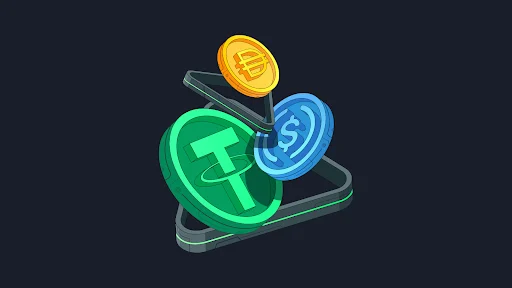
Stablecoins maintain value alignment with the U.S. dollar while facilitating transactions through blockchain infrastructure. USDT and USDC lead market share in this category. Their expansion has drawn scrutiny to the reserve assets backing their redemption guarantees.
American regulatory frameworks mandate that licensed stablecoin operators maintain reserves comprising cash equivalents and short-maturity Treasury instruments. This requirement establishes a direct correlation between stablecoin expansion and federal debt absorption. Ongoing discussions regarding European stablecoin reserve rules have emphasized liquid collateral requirements.
Treasury Secretary Scott Bessent has expressed support for dollar-backed stablecoins as tools reinforcing currency dominance. Stablecoin operators currently manage roughly $200 billion in U.S. sovereign debt, positioning the sector among significant Treasury stakeholders.
Blockchain Payment Systems Expand Beyond Cryptocurrency Exchanges
Stablecoins currently facilitate cryptocurrency trading activities, peer-to-peer transfers and international remittances. Their applications may broaden as banking institutions experiment with blockchain-based settlement systems. Financial enterprises are investigating digital bank currencies for accelerated transaction processing. Traditional institutions are simultaneously evaluating advanced settlement mechanisms.

Expanded adoption of dollar-denominated tokens could enhance U.S. currency accessibility beyond conventional banking infrastructure. A recent Canadian tokenized deposit project demonstrates how banks are evaluating alternative pathways for cross-border fund movement.
The International Monetary Fund and Bank for International Settlements have issued warnings that foreign-currency stablecoins may strain economies experiencing external balance vulnerabilities. During periods of financial turbulence, individuals could rapidly convert holdings into dollar tokens, accelerating capital departure and diminishing local currency demand.
American regulatory bodies are positioning themselves for broader blockchain finance integration as tokenized markets move closer to mainstream trading. Accelerated settlement capabilities may democratize access to dollar-denominated instruments while heightening requirements for reserve standards, transfer protocols and supervisory frameworks.
Get 3 Free Stock Ebooks
Discover top-performing stocks in AI, Crypto, and Technology with expert analysis.
- Top 10 AI Stocks - Leading AI companies
- Top 10 Crypto Stocks - Blockchain leaders
- Top 10 Tech Stocks - Tech giants



