


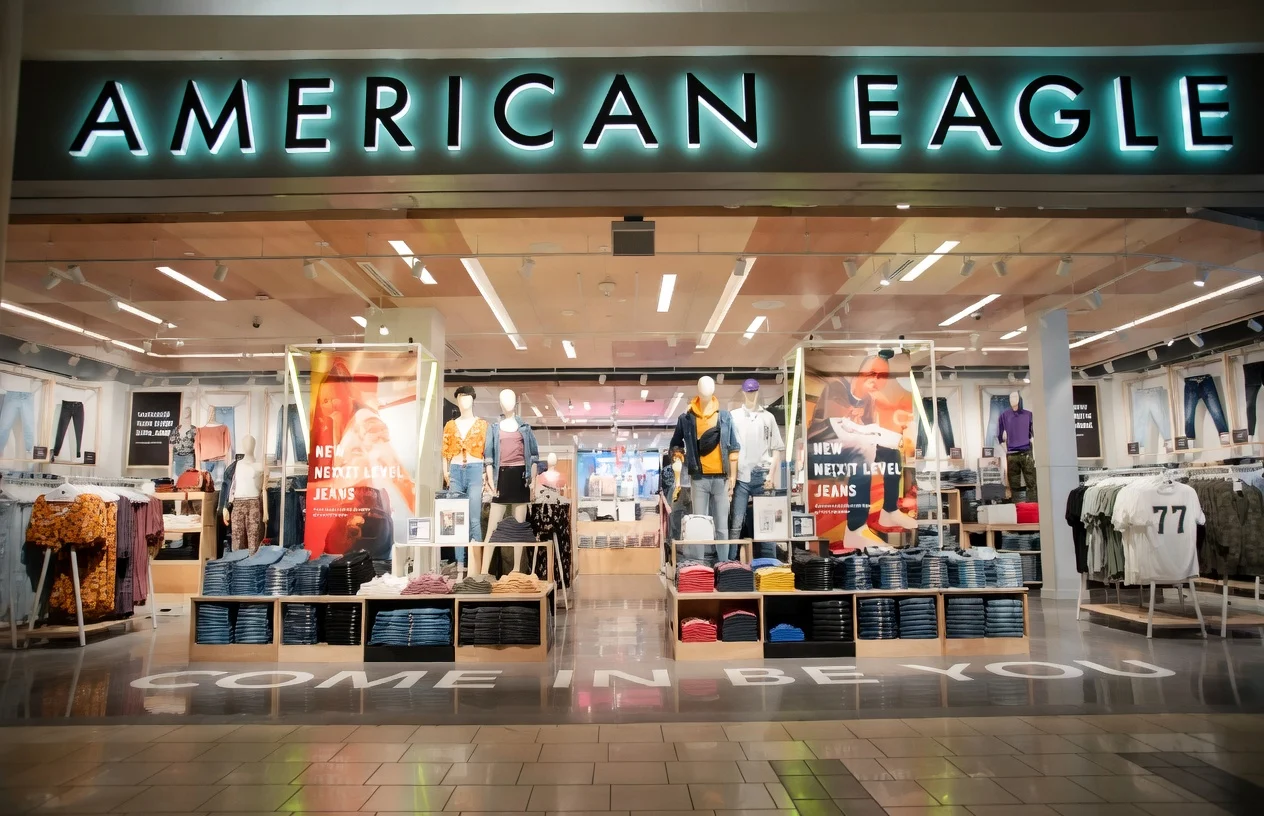
Key Takeaways
- Shares of AEO dropped approximately 12% during premarket hours following second-quarter comparable sales figures that underperformed Wall Street projections.
- The company’s comparable sales increased 6%, trailing the 7% consensus estimate, while the flagship American Eagle brand posted a 1% decline in same-store sales.
- The Aerie division delivered impressive results with 25% revenue growth year-over-year and 19% comparable sales gains, though this couldn’t compensate for main brand struggles.
- A non-recurring $196 million federal tariff reimbursement significantly boosted operating profit, though executives cautioned this benefit won’t recur.
- The retailer increased its full-year operating income outlook to $540M-$550M from $390M-$410M, primarily attributable to the tariff reimbursement.
Shares of American Eagle Outfitters (AEO) tumbled approximately 12% in Thursday’s premarket session after the apparel retailer delivered fiscal second-quarter performance that revealed comparable sales lagging behind analyst expectations.
American Eagle Outfitters, Inc., AEO
The shares had concluded Wednesday’s trading session at $16.89, already showing a 1.9% decline. Year-to-date, the stock has depreciated 36%.
The company delivered earnings per share of 79 cents, significantly exceeding the analyst consensus of 22 cents. Revenue reached $1.38 billion, slightly surpassing the $1.37 billion projection, representing an 8% increase compared to the previous year.
The disappointment that triggered the selloff centered on comparable sales performance. Overall comps advanced 6% during the quarter that concluded August 1, falling short of the 6.7% Wall Street estimate.

The flagship American Eagle brand emerged as the primary concern. Same-store sales for this division contracted 1%, reflecting ongoing challenges with inconsistent customer demand, especially within the women’s denim category.
Aerie Delivers Strong Performance
The Aerie intimates and activewear division stood out as the company’s standout performer. This segment achieved 25% year-over-year revenue expansion and delivered 19% comparable sales growth. CEO Jay Schottenstein highlighted four consecutive quarters of expansion in the men’s category as encouraging, while recognizing the necessity for “greater consistency in the women’s business.”
Notwithstanding Aerie’s robust performance, merchandise margins contracted by 3.3 percentage points across the company, primarily due to aggressive promotional activity at the American Eagle brand aimed at clearing older inventory. An abrupt fashion trend shift toward low-rise denim styles resulted in stagnant merchandise inventory.
Inventory expenses rose 14% during the quarter, incorporating costs associated with additional tariffs.
Impact of Tariff Reimbursement
A substantial portion of the earnings outperformance stemmed from a $196 million federal tariff reimbursement collected during the quarter. Operating profit more than doubled, climbing to $211 million compared to $103 million in the prior-year period.
Leadership emphasized that virtually all reimbursement funds have been received, indicating this windfall is not expected to materialize in subsequent quarters.
Nevertheless, AEO elevated its full-year operating income projection to $540M-$550M, compared to the prior range of $390M-$410M. Third-quarter guidance also received an upward revision.
American Eagle’s forward price-to-earnings ratio currently stands at 9.38, while Abercrombie trades at 11.47. Competitors Abercrombie and Gap both increased their annual forecasts during the previous month.
Third Bridge analyst Patrick Ricciardi observed that American Eagle possesses a “less-clear brand voice and merchandising strategy,” positioning it unfavorably against competitors such as Levi’s and Abercrombie within the denim market segment.
The company maintained its annual comparable sales forecast unchanged despite exceeding revenue expectations in Q2.
Third-quarter gross margins are projected to remain flat, indicating that promotional activity will persist as the brand addresses surplus inventory levels.
Get 3 Free Stock Ebooks
Discover top-performing stocks in AI, Crypto, and Technology with expert analysis.
- Top 10 AI Stocks - Leading AI companies
- Top 10 Crypto Stocks - Blockchain leaders
- Top 10 Tech Stocks - Tech giants



