


Key Takeaways
- Casey’s (CASY) shares plummeted 10% following fiscal Q1 earnings despite surpassing both earnings and revenue projections.
- Earnings per share reached $7.37, exceeding the analyst estimate of $6.78; revenue totaled $5.68B versus the anticipated $5.56B.
- Same-store inside sales climbed only 3.2% year-over-year, while fuel same-store gallon volume declined 0.3%.
- Operational costs jumped 8% to reach $754.1 million, fueled by expanded store footprint, credit card processing fees, and wage inflation.
- Company leadership maintained existing fiscal 2027 projections without any upward revisions, likely triggering investor frustration.
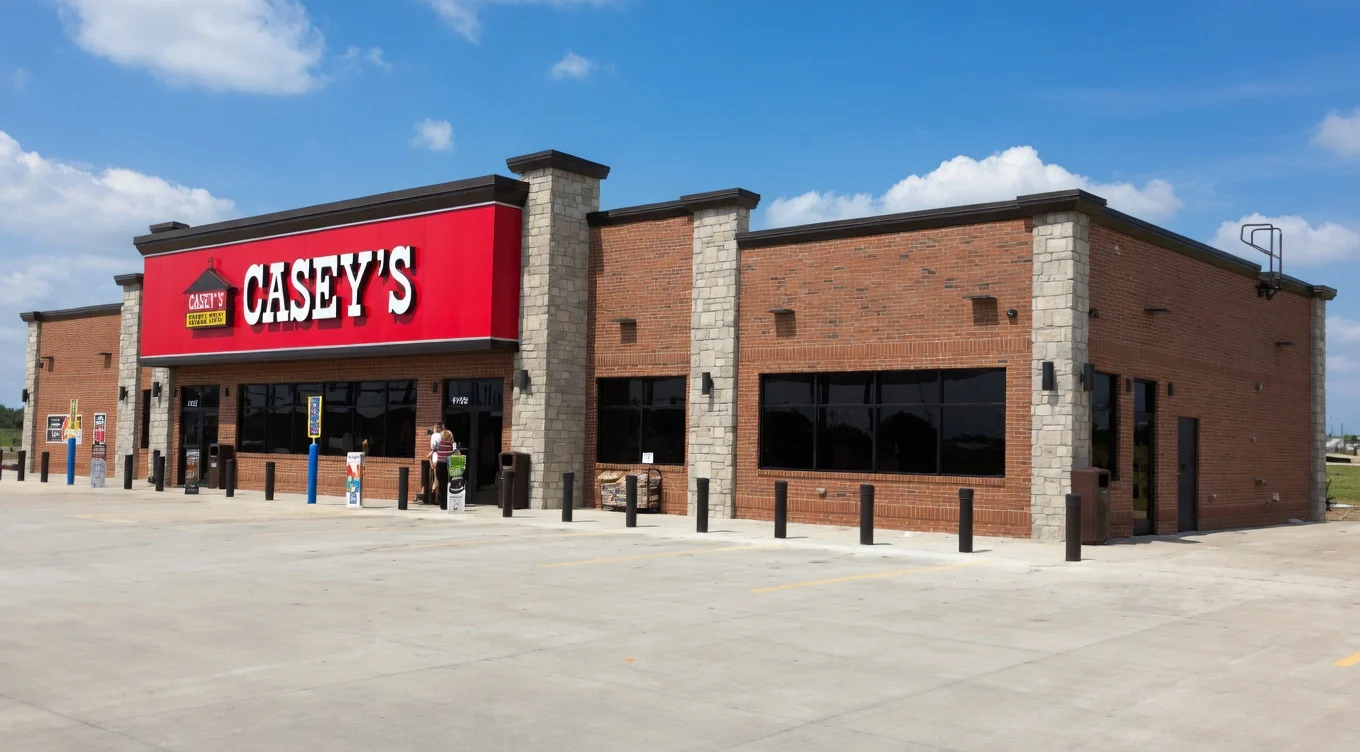
Shares of Casey’s General Stores (CASY) tumbled approximately 10% on Monday following the release of fiscal first quarter earnings that exceeded analyst expectations across key metrics, yet failed to satisfy market participants looking for more aggressive forward guidance.
Casey’s General Stores, Inc., CASY
The convenience store operator’s shares settled at $733.49 prior to the post-market decline. The significant downturn occurred despite the company surpassing analyst projections for both profitability and total sales.
The Iowa-based retailer delivered earnings per share of $7.37 for the period, significantly outperforming the analyst range of $6.68 to $6.78. Total revenue reached $5.68 billion, exceeding expectations that ranged from $5.56 billion to $5.57 billion.
Net profit for the quarter totaled $273.72 million, representing a 27.1% increase from the $215.36 million recorded in the same period last year. Diluted earnings per share soared 27.7% year-over-year from the previous $5.77.

Overall revenue climbed 24.3% versus the prior year period, propelled primarily by a substantial 36.3% increase in retail fuel sales.
Areas of Concern in the Report
Same-store inside sales advanced a modest 3.2% on a year-over-year basis. Fuel same-store gallon volumes edged down 0.3% compared to the previous year.
Prepared food and dispensed beverage same-store sales climbed 4.8%, with pizza leading category performance. Grocery and general merchandise same-store sales expanded 2.7%, supported by strong non-alcoholic beverage demand.
Operating costs escalated 8% to $754.1 million during the quarter. Casey’s cited the increase to an expanded store base, elevated credit card transaction fees, and higher employee compensation expenses.
Company management elected to maintain its existing fiscal 2027 outlook without adjustment. This decision appears to have been the primary driver behind investor disappointment.
The unchanged fiscal 2027 forecast projects same-store sales expansion of 2% to 5%, fuel gallon same-store sales ranging from negative 1% to positive 1%, and earnings growth between 8% to 10%.
Expansion Momentum Remains Strong
Casey’s total location count stood at 2,959 stores at the conclusion of July, up from 2,944 at April’s end, representing a net gain of 15 locations during the quarter. The organization aims to launch at least 120 new locations throughout fiscal 2027.
Approximately 71% of its store base operates in communities with fewer than 20,000 residents. The company currently operates 240 locations featuring car wash facilities and has deployed 294 electric vehicle charging stations across 68 stores spanning 14 states.
Casey’s preserved its quarterly dividend at $0.65 per share, scheduled for distribution on November 13 to shareholders of record as of November 1.
Prior to the quarterly report, CASY had already declined 14% during the preceding month following a robust upward trajectory. The stock remains up 35.51% over the trailing twelve-month period.
The 15 Wall Street analysts providing coverage on CASY maintain a consensus Moderate Buy rating, comprising 10 Buy recommendations and five Hold ratings issued within the past three months.
The consensus price target of $931.46 suggests approximately 27% potential upside from present levels, although these targets are subject to revision following the latest earnings disclosure.
Casey’s experienced 10 upward EPS estimate revisions and 3 downward adjustments during the 90-day window preceding the quarterly report.
Get 3 Free Stock Ebooks
Discover top-performing stocks in AI, Crypto, and Technology with expert analysis.
- Top 10 AI Stocks - Leading AI companies
- Top 10 Crypto Stocks - Blockchain leaders
- Top 10 Tech Stocks - Tech giants



