


Key Takeaways
- Goldman Sachs projects Brent crude could surge to $120 per barrel amid escalating Middle East maritime disruptions
- Alternative scenario suggests prices may drop to $80 if regional supply routes stabilize
- Bank advises investors to favor natural gas and diesel positions over crude oil futures
- Brent crude currently hovers around $97.55, reflecting a daily gain exceeding 1%
- Chinese demand patterns expected to moderate crude prices but not gas or diesel markets
Goldman Sachs analysts have issued a stark warning that crude oil prices may skyrocket to $120 per barrel should maritime attacks in the Middle East continue their upward trajectory. Conversely, the investment bank projects prices could retreat to $80 if tensions ease and regional export volumes stabilize.
During a Bloomberg TV interview conducted over the weekend, Daan Struyven, who serves as Goldman’s co-head of global commodities research, emphasized that recent developments demonstrate genuine concerns about expanding shipping disruptions throughout the region.
The escalating tensions revolve around the Strait of Hormuz, a critical chokepoint responsible for a substantial portion of worldwide petroleum shipments. Recent days have witnessed US military operations targeting Iranian oil tankers, while Tehran has declared a newly restricted maritime zone adjacent to this strategic waterway.
According to reports, American naval assets continue enforcing a blockade around Iranian harbors. These forces simultaneously provide escort services for tankers departing from other oil-exporting countries in the vicinity.
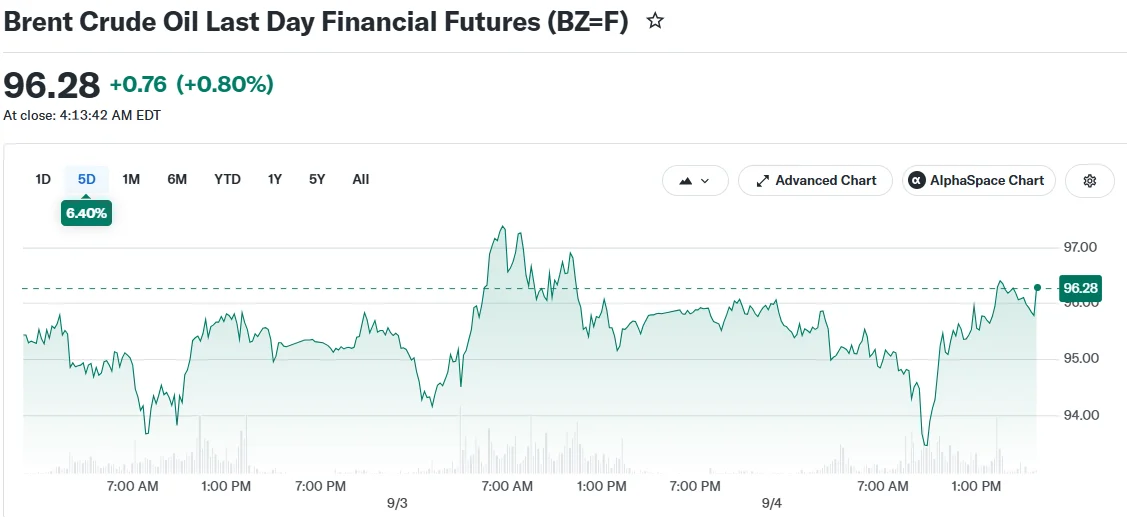
Petroleum markets have rallied to their strongest position since July. Brent crude registered at $97.55 per barrel with a 1.32% advance, while West Texas Intermediate climbed to $92.64, reflecting a 1.28% increase.

Investment Strategy Favors Natural Gas and Diesel
Goldman Sachs isn’t advising clients to pile into crude oil contracts directly. The firm instead advocates for establishing long positions in global natural gas markets and refined petroleum products, particularly diesel fuel.
According to Struyven, supply disruptions affecting these commodities typically prove more dramatic than those impacting crude markets. Diesel valuations have surged more than 100% year-to-date, while natural gas has similarly outperformed crude during this timeframe.
The protracted conflict, now extending beyond six months, has elevated energy commodity prices across the board. Nevertheless, refined products and natural gas have demonstrated substantially stronger gains compared to crude oil benchmarks.
Goldman’s tactical approach indicates the firm believes investors can achieve superior returns through these alternative energy markets rather than concentrating solely on conventional oil futures contracts.
Beijing’s Influence on Global Oil Dynamics
Struyven characterized China as a probable stabilizing element within crude oil markets. When prices escalate, Chinese authorities typically reduce import volumes, effectively creating a ceiling for crude appreciation.
Goldman’s analysis indicates this dampening effect won’t extend to natural gas or refined petroleum products. This dynamic leaves those markets particularly vulnerable to sharp price increases should regional hostilities persist.
The $120 price projection constitutes Goldman’s bullish scenario rather than their baseline expectation. Reaching this level requires sustained intensification of shipping attacks and continued disruption of regional supply flows.
Currently, petroleum markets maintain a heightened state of alert. As events surrounding the Strait of Hormuz continue unfolding, market participants closely monitor developments for indicators of either intensifying conflict or diplomatic resolution.
Get 3 Free Stock Ebooks
Discover top-performing stocks in AI, Crypto, and Technology with expert analysis.
- Top 10 AI Stocks - Leading AI companies
- Top 10 Crypto Stocks - Blockchain leaders
- Top 10 Tech Stocks - Tech giants



