


Key Highlights
- SpaceX successfully launched its 80th Starlink mission of 2026 this past Sunday, placing 27 satellites into low-Earth orbit from California’s Vandenberg Space Force Base.
- The aerospace giant is transitioning away from Falcon 9 toward Starship, with all Florida-based Starlink missions now operating exclusively on the newer rocket system.
- Q2 financial results showed revenue reaching $7.81 billion, representing a 92% year-over-year increase, while EPS of -$0.09 surpassed analyst projections of -$0.26.
- K5 Global Advisor LLC established a massive $6.59 billion stake in SPCX during the second quarter, now representing the firm’s only disclosed equity position.
- Shares settled at $147.95 last Friday, while Wall Street’s consensus price target stands at $221.20 with a “Moderate Buy” recommendation.
SpaceX achieved another milestone on Sunday by executing its 80th Starlink deployment of 2026, launching 27 satellites into low-Earth orbit from Vandenberg Space Force Base located in California. The mission utilized a Falcon 9 booster as the company moves steadily toward a significant operational transformation in satellite deployment.
SPCX shares concluded Friday’s trading session at $147.95, marking a 3% weekly gain. The stock has traded within a 52-week range spanning from $104.83 to $225.64.
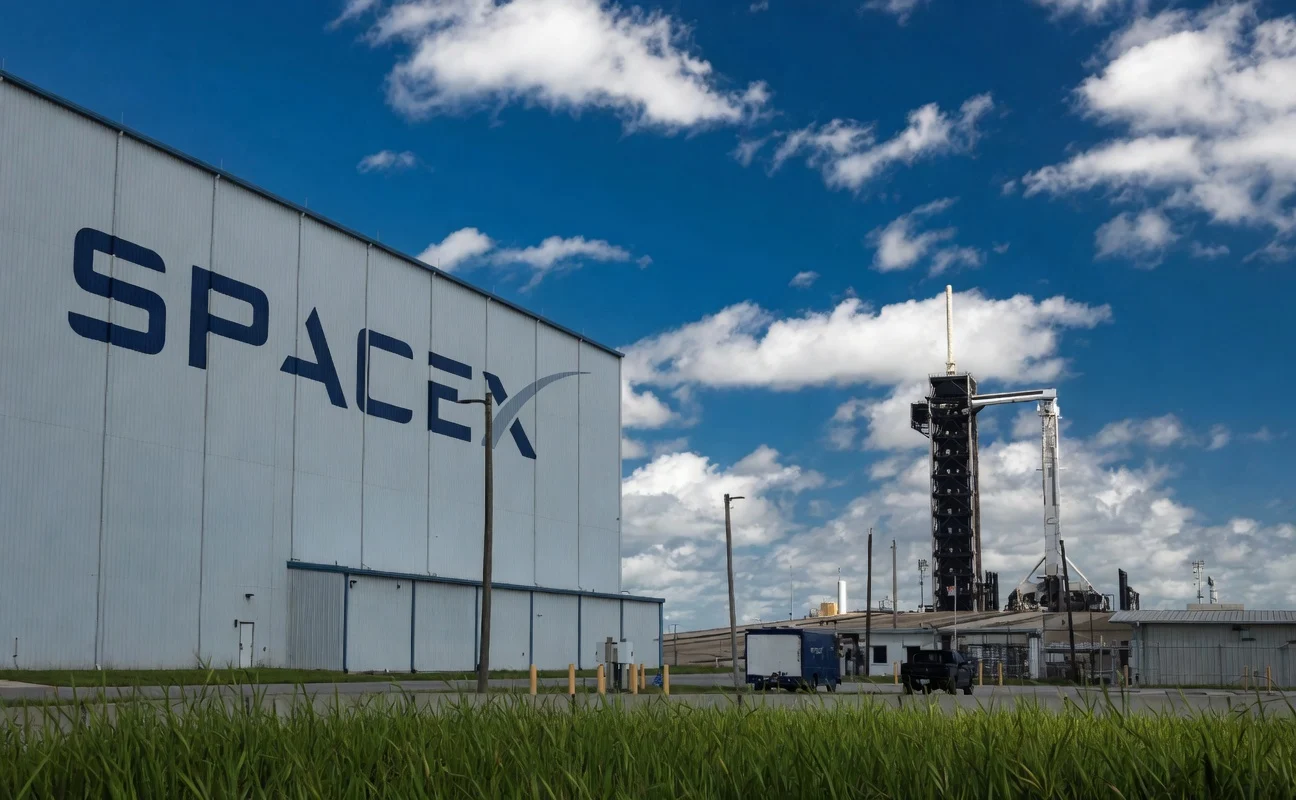
Space Exploration Technologies Corp., SPCX
SpaceX is methodically replacing Falcon 9 operations with its significantly larger Starship vehicle. Kiko Dontchev, SpaceX’s Vice President of Launch Operations, announced last month that Falcon 9 has conducted its last Starlink deployment from Florida facilities.
“From here on, Starlink missions out of Florida will fly on Starship. The West Coast team will continue regularly launching Starlink from Vandenberg,” Dontchev wrote on X.
This strategic pivot extends beyond mere logistics. Starship offers complete reusability, enhanced payload capacity, and operates on liquid methane rather than kerosene fuel, potentially delivering substantial reductions in launch expenses.

Recent regulatory filings reveal SpaceX has submitted documentation for its 14th Starship test flight, indicating a possible launch window beginning September 15.
Quarterly Results Exceed Expectations
SpaceX delivered Q2 revenue totaling $7.81 billion, reflecting a 91.9% year-over-year expansion. Earnings per share registered at -$0.09, significantly outperforming the analyst consensus estimate of -$0.26.
These figures benefited from accelerating Starlink subscriber growth, increasing connectivity demand, and burgeoning AI-compute revenue streams. Wall Street forecasts full-year EPS at -$0.15.
Even with ongoing losses, institutional appetite for the stock has intensified. K5 Global Advisor LLC revealed a substantial new $6.59 billion SPCX position acquired during Q2, accounting for roughly 0.30% of the company’s shares. SPCX now constitutes K5’s entire reported equity portfolio.
Additional institutions established positions during the second quarter. Hyperion Asset Management initiated a stake valued at $201 million, Bond Capital Management contributed $180 million, and Value Aligned Research Advisors acquired $100 million in shares.
Wall Street Outlook and Potential Headwinds
The average analyst price target for SPCX currently sits at $221.20. Bank of America maintains a buy rating alongside a $235 target. Clear Str elevated the stock to strong buy status in July.
However, sentiment isn’t uniformly positive. Piper Sandler reduced its target from $156 down to $140 and maintained a neutral stance following the Q2 report. Current analyst ratings break down to two strong buy, 25 buy, eight hold, and seven sell recommendations.
A potential short-term challenge emerges from a scheduled share unlock on September 9, which may introduce additional selling pressure from company insiders and early-stage investors.
Additionally, SpaceX deployed $18.4 billion in capital during a single quarter, with $15.8 billion allocated toward AI infrastructure investments. The company continues operating at a GAAP loss, prompting some analysts to question whether current valuations have already incorporated much of the anticipated long-term expansion.
Technical indicators show the stock’s 50-day moving average at $136.15, while the company commands an approximate market capitalization of $1.93 trillion.
Get 3 Free Stock Ebooks
Discover top-performing stocks in AI, Crypto, and Technology with expert analysis.
- Top 10 AI Stocks - Leading AI companies
- Top 10 Crypto Stocks - Blockchain leaders
- Top 10 Tech Stocks - Tech giants



