


Key Takeaways
- Gas prices across Europe have surged more than 4%, pushing above €74 per megawatt-hour for the first time in three years
- Following US military strikes on oil tankers, Iran intends to establish a restricted zone near the Strait of Hormuz
- Approximately 20% of the world’s LNG shipments pass through the Strait of Hormuz, predominantly from Qatari suppliers
- Gas reserves in Europe stand at only 62% of capacity, falling 17 percentage points short of the historical five-year average
- Market expectations point to the ECB implementing a 25-basis-point rate increase this week amid inflation reaching 3.3%
Natural gas prices across European markets experienced a sharp rally Monday, climbing to heights last observed in late 2023. The Dutch TTF front-month futures contract, which serves as the continental benchmark, advanced to approximately €73.80 per megawatt-hour, approaching the previous week’s summit of €74.32.
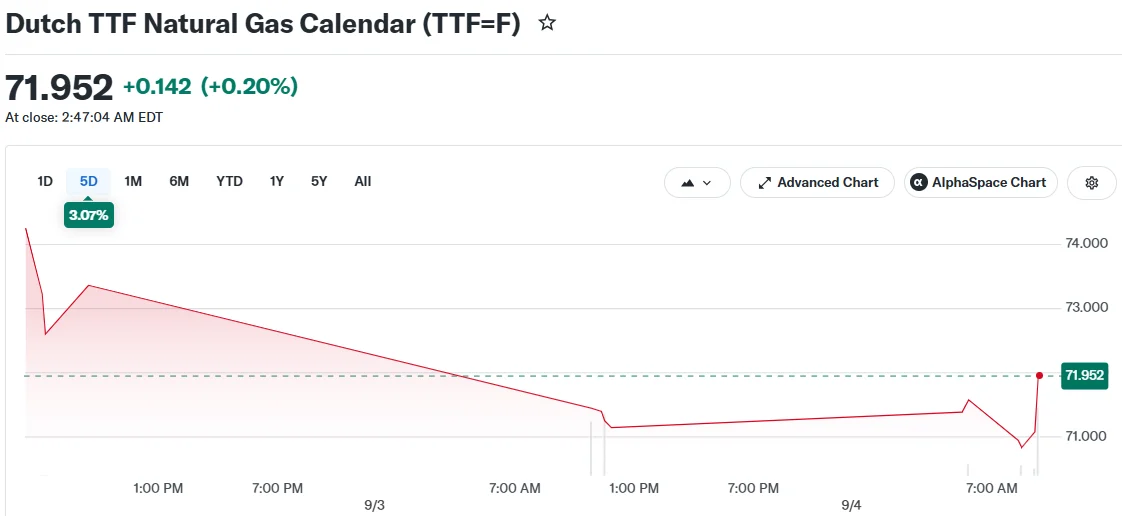
Meanwhile, Britain’s wholesale gas market saw prices increase by 2%, hovering around 182.50 pence per therm—nearly matching the 2023 peak of 183.95 pence.
These price movements reflect growing anxiety over intensifying military confrontations between Washington and Tehran in Persian Gulf waters.
Middle East Crisis Puts Global LNG Routes at Risk
Tehran has revealed intentions to establish a restricted navigation zone adjacent to the Strait of Hormuz within the next several days. The announcement follows weekend operations by American forces that struck and incapacitated three Iranian oil tankers.
US military officials justified the operations as a response to Iranian ballistic missile attacks targeting two American Navy vessels operating in regional waters.

This narrow waterway facilitates the passage of approximately 20% of worldwide liquefied natural gas volumes, with Qatari exports representing the bulk of this traffic. Should navigation through this strategic chokepoint be compromised, European markets would lose access to a critical supply artery.
Energy companies across the continent now find themselves in fierce competition with Asian purchasers for available LNG cargoes originating from Atlantic basin suppliers to compensate for potential losses.
Market participants remain vigilant as the tit-for-tat military engagements continue without apparent resolution.
Depleted Storage Levels Compound European Energy Woes
The geopolitical crisis arrives at an inopportune moment for the continent’s energy sector. Current inventory levels in underground storage facilities stand at merely 62% of maximum capacity, significantly below the typical five-year seasonal benchmark by approximately 17 percentage points.
Unusually high temperatures throughout Southern European regions during summer months drove up electricity demand from gas-fired generation. Additionally, scheduled maintenance operations on Norwegian pipeline infrastructure and postponed LNG cargo arrivals from Qatar hampered replenishment efforts throughout August.
Should liquefied natural gas deliveries face interruption during autumn months, energy analysts caution that the continent could experience severe price escalations and potentially mandatory consumption restrictions during peak winter demand periods.
Brent crude oil remains elevated above $90 per barrel, further intensifying pressure on overall energy expenditures.
Central Bank Policy Decision Looms
Escalating energy costs are contributing to accelerating inflation throughout the eurozone. Consumer price increases hit 3.3% in August, with energy components jumping 14.3% on an annual comparison basis.
The European Central Bank convenes Thursday for its scheduled policy meeting. Financial markets have essentially priced in a certainty that President Christine Lagarde will announce a 25-basis-point interest rate elevation.
Elevated energy expenses are compressing margins for industrial operators and straining household budgets throughout the continent, complicating monetary policy deliberations for the central bank.
The convergence of insufficient storage capacity, supply chain vulnerabilities, and accelerating inflation has placed European energy markets in a precarious position as winter approaches.
Get 3 Free Stock Ebooks
Discover top-performing stocks in AI, Crypto, and Technology with expert analysis.
- Top 10 AI Stocks - Leading AI companies
- Top 10 Crypto Stocks - Blockchain leaders
- Top 10 Tech Stocks - Tech giants



