



Key Takeaways
- August payrolls surged to 162,000—triple economist projections—yet equities declined on heightened rate hike concerns
- S&P 500 declined 0.5% Friday, closing the week unchanged; Dow dropped 0.7%
- Probability of Federal Reserve rate increase on September 16 jumped to 58-60% following employment figures
- Brent crude climbed nearly 1.5% to $97.60 per barrel, marking a 35% rise since late February, with diesel reaching unprecedented levels
- Lululemon Athletica stock plummeted 18% following a 9% decline in comparable store sales during Q2
August witnessed the U.S. economy generating 162,000 new positions, approximately triple the consensus forecast from economists. Unemployment remained unchanged at 4.1%, while labor force participation climbed to 61.6%, marking its first increase in nearly a year.
The broader underemployment metric decreased to 7.7%, reaching its lowest point since June 2025.
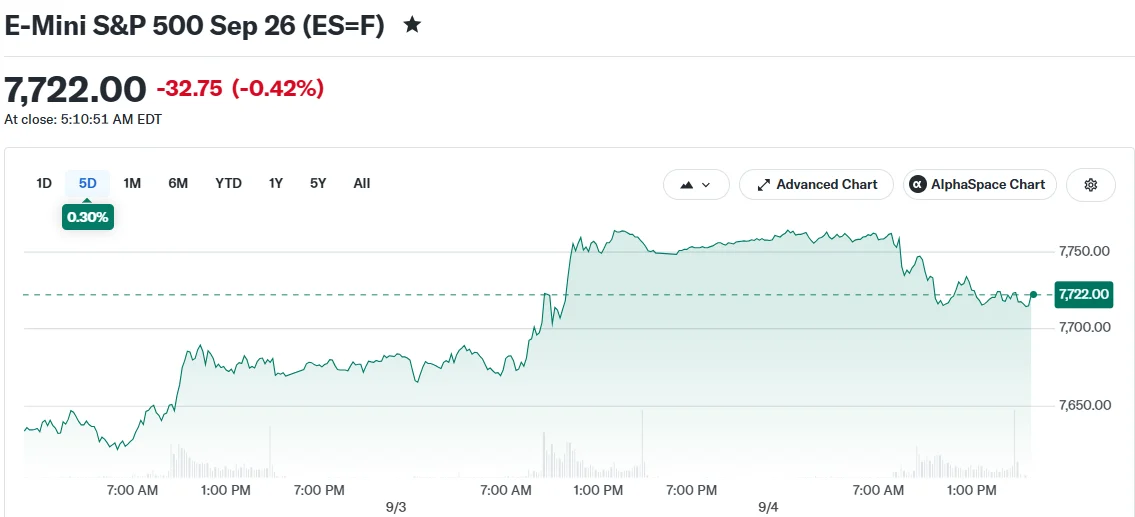
However, equity markets responded negatively to the robust figures. Friday saw the S&P 500 decline 0.5%, the Dow Jones Industrial Average retreat 0.7%, and the Nasdaq Composite finish the week modestly positive. Overall, the S&P 500 concluded the week essentially flat.
The market’s negative response drew criticism from President Donald Trump, who took to Truth Social to label the reaction “crazy” considering what he characterized as exceptional economic performance.
The primary anxiety weighing on markets centers on inflation. Robust employment figures increase the likelihood of Federal Reserve monetary tightening. According to CME FedWatch tool data, the probability of a rate increase at the September 16 Federal Open Market Committee gathering rose from 50% to 60% following the payrolls release.

Market participants are now focused intently on Wednesday’s consumer price index announcement. Analyst consensus anticipates an annual inflation reading of 3.4%. Should the actual figure exceed expectations, a rate hike is widely viewed as virtually guaranteed.
“We need inflation to cooperate, even more so after this report than we did before,” said Mike Dickson, head of research at Horizon.
Escalating Energy Costs and International Conflicts Intensify Pressure
Geopolitical instability is compounding inflationary pressures. Monday saw Brent crude futures increase nearly 1.5% to $97.60 per barrel, representing a seven-week peak. Oil prices have climbed approximately 35% since the end of February, with diesel costs establishing new records last week.
Middle Eastern tensions are driving much of this movement. U.S. military operations targeted three Iranian oil tankers, while Iran’s Islamic Revolutionary Guard Corps fired ballistic missiles toward two U.S. Navy vessels. Tehran has indicated plans to declare a restricted maritime zone near the strategically vital Strait of Hormuz.
Escalating energy expenses are prompting central banks worldwide to consider monetary tightening. The European Central Bank is anticipated to increase rates to 2.75% this Thursday. Financial markets are pricing in a 75% probability that the Bank of Japan will implement a rate hike at its September 18 policy meeting.
European equity indexes fell 0.3% Monday, while S&P 500 futures slipped 0.1% and Nasdaq futures rose 0.3% during subdued U.S. holiday trading sessions.
Political instability across Europe contributed additional uncertainty. Germany’s far-right AfD party secured victory in Saxony-Anhalt state elections, marking the first occasion a far-right party has governed a German state since the conclusion of World War Two.
Lululemon Athletica emerged as the week’s most significant corporate development. The company’s stock tumbled 18% after reporting a 9% contraction in comparable store sales for the second quarter. Market analysts attributed part of the weakness to a prolonged CEO succession process.
With corporate earnings season concluded, market direction will be determined primarily by economic indicators and Federal Reserve communications through mid-October.
Get 3 Free Stock Ebooks
Discover top-performing stocks in AI, Crypto, and Technology with expert analysis.
- Top 10 AI Stocks - Leading AI companies
- Top 10 Crypto Stocks - Blockchain leaders
- Top 10 Tech Stocks - Tech giants



