


Key Takeaways
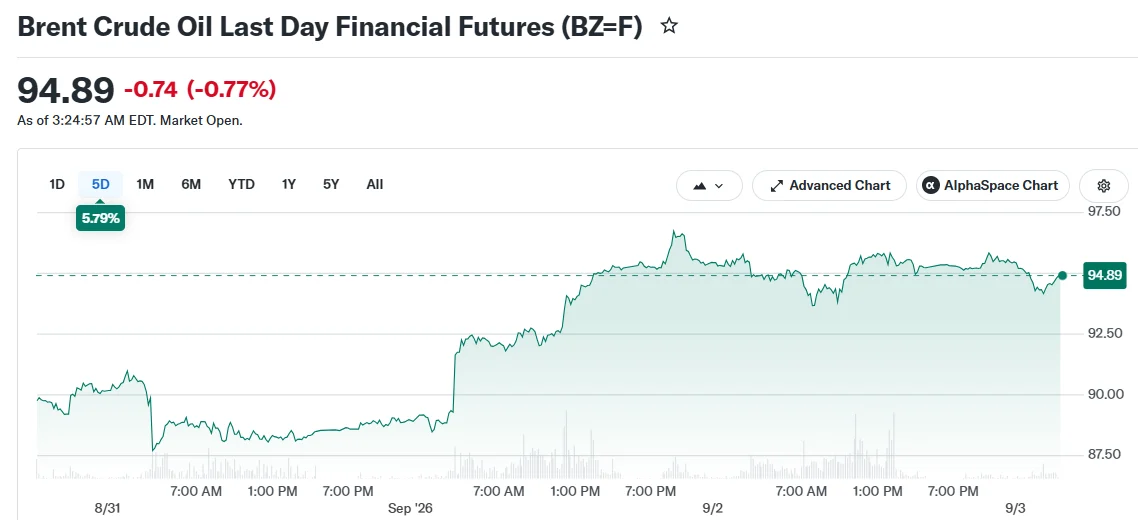
- Brent crude declined 1.5% to $94.22 per barrel while WTI decreased 1.4% to $89.78 following a three-session surge
- President Trump indicated the U.S. military operations against Iran would be limited in duration
- Energy Secretary reported 17 million barrels transited the Strait of Hormuz on Monday, marking the highest volume since hostilities disrupted shipping
- Vessel traffic through the strait continues to fluctuate significantly, with just four commodity ships passing Tuesday compared to a 10-day average of 13
- Commercial crude inventories in the U.S. decreased by 4.5 million barrels, marking the first drawdown in five weeks
Oil prices retreated Thursday following three consecutive days of increases, after President Donald Trump indicated that the current U.S. military operations against Iran would not be prolonged.
Brent crude futures declined 1.5% to settle at $94.22 per barrel. West Texas Intermediate decreased 1.4% to close at $89.78 per barrel. Both benchmarks had reached five-week peaks during their recent upward trajectory.
The recent price surge had been fueled by concerns that escalating U.S.-Iran hostilities could threaten oil supplies from the Middle East. American forces conducted strikes on Iran’s southern coastline Wednesday, prompting Tehran to retaliate with drone and missile attacks targeting U.S. military installations throughout the region.
The exchange represented the most significant military confrontation between the nations since July.
Presidential Remarks Temper Supply Concerns
Responding to questions about the duration of American military operations, Trump stated “I don’t think too long,” while noting that “we’re prepared to do another one.” These remarks helped alleviate immediate concerns about supply disruptions in global markets.

Trump further disclosed that U.S. forces had targeted Iranian radar installations, missile systems, and infrastructure associated with mine-laying operations near the Strait of Hormuz.
The Strait of Hormuz represents a critical chokepoint for global oil shipments. Energy Secretary Chris Wright reported that 17 million barrels of crude transited the waterway Monday, representing the highest daily volume since military conflict began disrupting normal flows.
However, shipping patterns remain erratic. Preliminary tracking data indicated only four commodity vessels passed through the strait Tuesday, substantially below the 10-day average of approximately 13 transits.
Storage Levels and OPEC+ Developments
Commercial crude inventories in the United States fell by 4.5 million barrels during the previous week. The drawdown represented the first decline in five weeks and contradicted analyst projections for a modest increase.
Gasoline inventories decreased by 1.2 million barrels. Distillate stocks, encompassing diesel fuel and heating oil, increased by approximately 800,000 barrels.
Crude prices have climbed more than 30% since U.S.-Iran military operations commenced in late February. Refined petroleum products such as diesel have experienced even steeper price appreciation.
Market participants are monitoring OPEC+, which is anticipated to maintain its October production strategy at Sunday’s scheduled meeting. The cartel had previously increased September output allocations by 188,000 barrels per day as part of a planned reversal of previous production curtailments.
A peace agreement reached in June between Washington and Tehran in Islamabad has failed, with neither party demonstrating willingness to resume diplomatic negotiations since then.
Dennis Kissler from BOK Financial Securities noted that renewed peace discussions could rapidly deflate prices, though he observed that both nations appear to be seeking a pathway to de-escalation.
Get 3 Free Stock Ebooks
Discover top-performing stocks in AI, Crypto, and Technology with expert analysis.
- Top 10 AI Stocks - Leading AI companies
- Top 10 Crypto Stocks - Blockchain leaders
- Top 10 Tech Stocks - Tech giants



