


Key Takeaways
- Gold prices have declined for four consecutive trading sessions, reaching a three-week low around $4,327 per ounce
- An appreciating U.S. dollar and climbing Treasury yields are weighing heavily on the precious metal
- Market participants are now assigning a 70% probability to a Federal Reserve rate increase at the mid-September policy meeting
- Recent U.S. military action against Iran has elevated oil prices, intensifying inflation worries
- The yellow metal has breached its 200-day moving average, a critical technical support level
Gold has continued its downward trajectory this week, reaching its weakest point in over three weeks as the greenback gains strength and market participants increasingly anticipate a Federal Reserve rate adjustment.
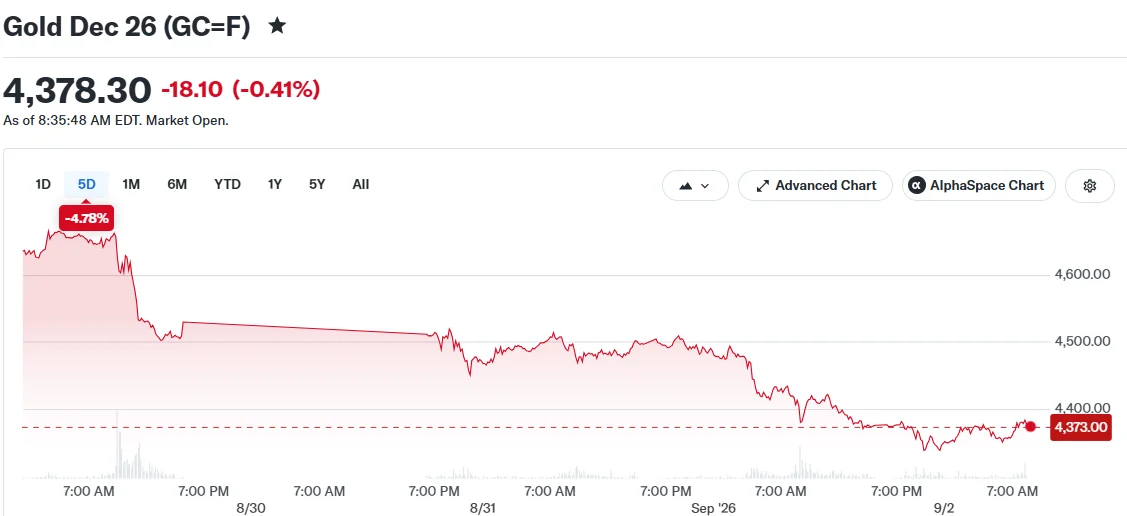
Currently, spot gold is trading near $4,327 per ounce, while futures contracts declined 0.5% to settle at $4,373. The precious metal has shed approximately 6% over the course of the week.
Rising Rate Expectations Dampen Gold Appeal
Multiple factors are converging to create headwinds for gold. Federal Reserve Chair Kevin Warsh struck a notably hawkish tone during his Jackson Hole speech last week, suggesting that interest rates may need to remain elevated for an extended period.
Fed Governor Michael Barr reinforced these concerns in remarks made Tuesday. He emphasized that monetary policymakers must stand ready to implement rate increases should inflation fail to moderate, pointing out that price growth has exceeded the central bank’s 2% objective for over five years.
According to CME’s FedWatch tool, financial markets are now attaching a 70% likelihood to a rate hike occurring at the Federal Open Market Committee gathering scheduled for September 15-16.

Rising interest rates typically weigh on gold prices. Because the metal generates no income, its appeal diminishes when fixed-income instruments and deposit accounts provide more competitive returns.
Geopolitical Conflict Drives Energy Costs Higher
New U.S. military operations targeting Iran on Tuesday introduced an additional source of market anxiety. Iran announced retaliatory measures, representing a significant escalation following approximately one month of comparative stability.
Brent crude traded around $94 per barrel while U.S. crude prices remained just under $90. Market participants are monitoring whether sustained hostilities might interrupt oil shipments through the Strait of Hormuz.
Elevated oil prices contribute directly to inflationary pressures. This dynamic complicates the Federal Reserve’s ability to maintain current rates or implement cuts, thereby sustaining downward pressure on gold.
The U.S. Dollar Index advanced 0.1% to reach 99.73. A strengthening dollar increases the cost of gold for international buyers using alternative currencies, potentially reducing demand.
Treasury Selloff Intensifies Headwinds
Yields across global fixed-income markets have also risen. Thirty-year U.S. Treasury yields climbed above 5.28%, returning to levels observed before Treasury Secretary Scott Bessent unveiled expanded bond repurchase programs on August 19.
That announcement had initially propelled gold approximately 10% higher in August, marking its strongest monthly advance since January. The rally reflected anxiety surrounding escalating sovereign debt levels and currency devaluation—commonly referred to as the debasement trade.
Gold has also fallen beneath its 200-day moving average during the current week, a threshold that technical analysts monitor closely as an indicator of sustained price momentum.
Market strategists at Sucden Financial indicated that Friday’s U.S. nonfarm payrolls release will likely dictate gold’s near-term direction. Weaker employment figures could attract renewed buying interest, whereas another robust labor market reading might push yields higher and prolong gold’s selloff.
Get 3 Free Stock Ebooks
Discover top-performing stocks in AI, Crypto, and Technology with expert analysis.
- Top 10 AI Stocks - Leading AI companies
- Top 10 Crypto Stocks - Blockchain leaders
- Top 10 Tech Stocks - Tech giants



