


Key Highlights
- Nvidia’s Wednesday earnings report comes under intense scrutiny after share price declines followed its previous three quarterly announcements
- Bitcoin surged beyond $70,000 for the first time since late May, fueled by regulatory optimism and Treasury buyback initiatives
- Wednesday brings the PCE inflation report, a critical metric that may shape the Federal Reserve’s September policy stance
- Treasury bond repurchase operations are clashing with Fed objectives, as the central bank prefers elevated yields for policy tightening
- Major earnings releases this week feature CrowdStrike, Salesforce, Dollar General, Ulta Beauty, and Marvell Technology
Wall Street turns its attention to Nvidia’s second-quarter financial results scheduled for Wednesday, with considerable anticipation building among market participants. The chipmaker’s shares experienced declines following each of its most recent three earnings announcements.
During the previous quarter, Nvidia surpassed analyst projections. The company posted an 85% year-over-year revenue increase, while data center revenue nearly doubled. CEO Jensen Huang characterized demand as having “gone parabolic.”
Recent months have brought significant developments for the semiconductor giant. Huang unveiled a new processor optimized for on-device AI agents. The company also advanced chip distribution efforts in China while securing agreements related to AI data center funding.
Market implications are substantial. Wedbush analysis indicates that for every dollar Nvidia generates in revenue, the wider technology ecosystem experiences $8 to $10 in additional spending.
In a Friday research note, HSBC analyst Frank Lee proposed that Nvidia’s strategic evolution may center on establishing itself as the leading force in open-source AI development, potentially expanding its reach to millions of developers and government entities worldwide.

Bitcoin Reclaims $70,000 Threshold
Bitcoin surged past the $70,000 mark last week, reaching this level for the first time since the final days of May. The rally emerged after an extended period of sideways price action.
Multiple catalysts contributed to the price appreciation. President Trump revived initiatives aimed at advancing cryptocurrency regulation. Additionally, the Treasury Department revealed plans to expand purchases of longer-dated government securities, a decision that catalyzed upward movement in digital asset prices.
Market attention also focused on the US national debt surpassing $40 trillion, a milestone that traditionally supports Bitcoin valuations as investors seek alternative stores of value.
Bernstein strategist Gautam Chhugani noted Bitcoin’s historical tendency to respond favorably to liquidity expansion cycles. The sustainability of this current upward trajectory remains uncertain.
Monetary Policy Divergence Between Fed and Treasury
The Treasury Department’s bond repurchase initiative caught markets off guard last week and is generating conflict with Federal Reserve policy objectives. Fed Chair Kevin Warsh has indicated preference for elevated yields as a mechanism to restrict financial conditions without implementing rate increases. The Treasury’s buyback operations produce the contrary effect, applying downward pressure on yields.
“We have the Fed and the Treasury basically working in sort of opposite directions,” said Wil Stith, senior bond portfolio manager at Wilmington Trust.
The 30-year Treasury yield reached heights unseen since 2007 before the buyback announcement temporarily reversed the move.
Wednesday delivers the PCE price index, the Federal Reserve’s favored inflation gauge. June’s reading showed a 3.7% year-over-year increase. An upside surprise could intensify expectations for a September rate increase.
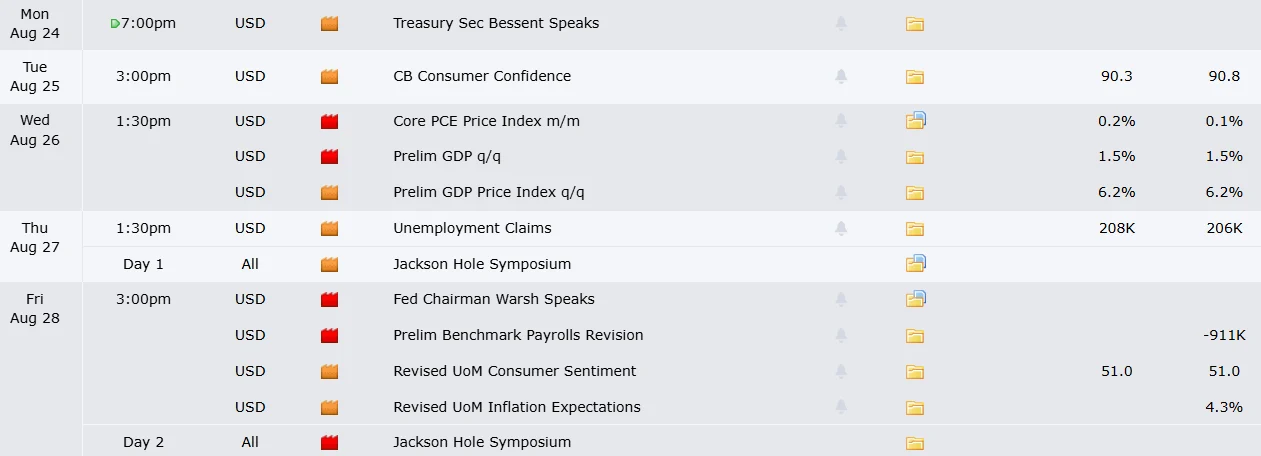
Fed Chair Warsh is scheduled to address the Jackson Hole Symposium on Friday, potentially providing additional insight into the central bank’s policy trajectory.
Retail sector earnings from Dollar General, Dollar Tree, Gap, and Ulta Beauty arrive this week alongside Marvell Technology, offering valuable perspectives on consumer health and AI semiconductor demand trends.
Get 3 Free Stock Ebooks
Discover top-performing stocks in AI, Crypto, and Technology with expert analysis.
- Top 10 AI Stocks - Leading AI companies
- Top 10 Crypto Stocks - Blockchain leaders
- Top 10 Tech Stocks - Tech giants



