



Quick Overview
- A security breach in The Sandbox’s Base network implementation enabled an attacker to create approximately 14.9 billion unbacked SAND tokens
- Real financial damage totaled roughly 14.75 million SAND extracted from Ethereum, generating proceeds of approximately $675,000 (80 ETH) for the exploiter
- The project immediately suspended bridge operations on Base and BNB Smart Chain as a containment measure
- Major South Korean cryptocurrency platforms Upbit and Bithumb froze SAND deposit and withdrawal functionality
- SAND tokens on Ethereum and Polygon networks remained secure, with no individual user wallets breached
On August 22, 2026, a malicious actor obtained unauthorized minting privileges on The Sandbox’s SAND token contract operating on Base, which utilizes a Layer Zero Omnichain Fungible Token architecture designed for inter-chain token transfers.
The exploiter weaponized an “approveAndCall” mechanism to commandeer LayerZero delegate authorization. This vulnerability enabled the creation of tokens on Base without corresponding collateral from the authentic, locked SAND reserves maintained on Ethereum.
Blockchain security company Blockaid detected the ongoing exploit in real-time. PeckShield independently verified that approximately 14.9 billion SAND tokens were generated across two wallet addresses, a quantity dramatically exceeding the token’s complete 3 billion supply on Ethereum’s primary network.
The widely circulated $49 billion figure represents a theoretical valuation calculated by multiplying SAND’s market price against those unbacked tokens. This number doesn’t reflect actual stolen assets. It vastly exceeds available market liquidity and represents an unrealizable sum.
The genuine economic impact was considerably more modest. BlockWatchdog documented that approximately 14.75 million SAND was extracted from the Ethereum OFT Adapter within sixty seconds, yielding realized profits of roughly 80 ETH, valued at approximately $675,000.

According to The Sandbox, the breach impacted under 0.01% of SAND’s 3 billion token circulation when calculated on a direct basis.
Response Strategy From The Sandbox Team
The development team immediately deactivated bridge functionality connecting Base and BNB Smart Chain, rendering tokens stranded on these networks immobile and unredeemable. The project’s multisignature wallet also reset the LayerZero peer configurations for Ethereum and BNB Smart Chain, effectively quarantining Base.
The team issued urgent warnings advising users against purchasing, selling, or exchanging SAND on Base or BNB networks due to contaminated liquidity pools. SAND holdings on Ethereum and Polygon were verified as secure. The SAND collateral locked on Ethereum supporting cross-chain tokens remained completely intact.
South Korean trading platforms responded swiftly. Upbit published a trading advisory while Bithumb completely suspended SAND deposit and withdrawal operations following blockchain monitoring alerts about the security breach.
The Sandbox, operating as an Animoca Brands subsidiary that secured $93 million in funding during 2021, announced plans to capture a pre-incident snapshot and develop compensation mechanisms for eligible users affected by compromised liquidity pools.
A comprehensive technical analysis is forthcoming. As of this writing, the development team has not released a complete public disclosure regarding the fundamental vulnerability.
SAND experienced an approximate 10% intraday decline immediately following the incident but recovered to show only a 0.8% decrease across the full 24-hour trading period.
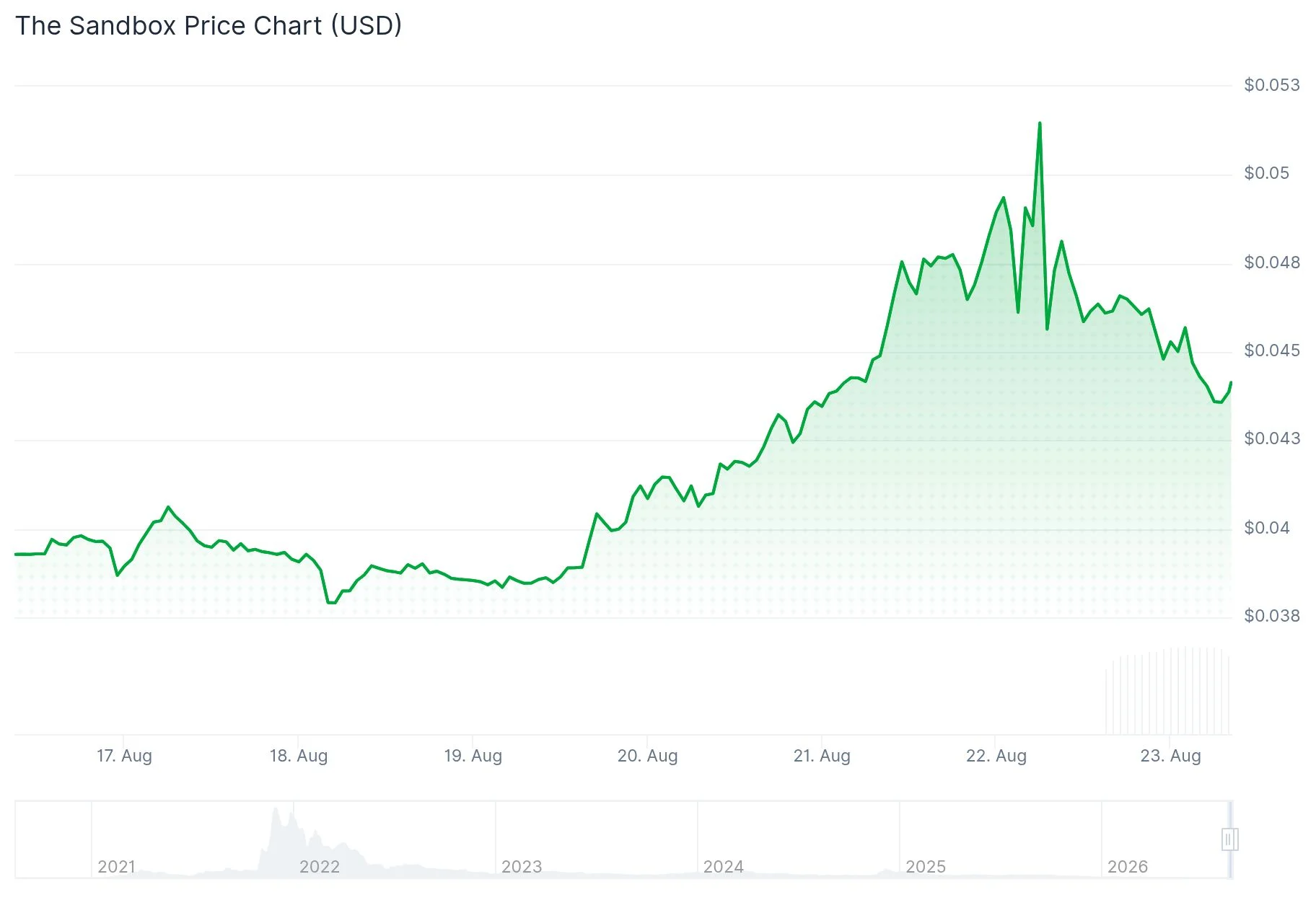
This security breach underscores a recognized structural vulnerability inherent in cross-chain token architectures. While minting tokens on secondary blockchains doesn’t generate additional supply on Ethereum, unbacked tokens can nevertheless infiltrate exchanges and exert downward price pressure.
Market participants should track announcements from Upbit and Bithumb regarding trading restoration timelines and remain vigilant for The Sandbox’s official remediation or token burn strategy.
Get 3 Free Stock Ebooks
Discover top-performing stocks in AI, Crypto, and Technology with expert analysis.
- Top 10 AI Stocks - Leading AI companies
- Top 10 Crypto Stocks - Blockchain leaders
- Top 10 Tech Stocks - Tech giants



