


Key Takeaways
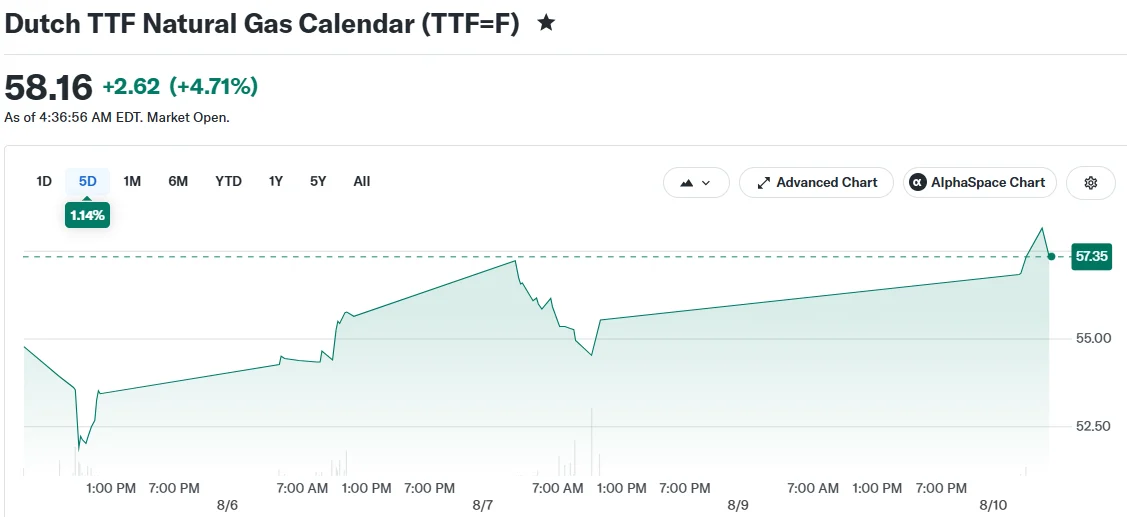
- Dutch natural gas futures climbed more than 2% Monday, reaching approximately €56.90/MWh with a 2.9% gain
- Negotiations between Iran and Oman regarding Strait of Hormuz shipping routes remain incomplete
- Iran has stated full reopening of the strategic waterway depends on meeting additional U.S. demands
- European gas storage facilities currently hold around 56% capacity, below typical mid-August levels
- Tight supply conditions persist as European buyers compete with Asian markets for available LNG shipments
European natural gas markets experienced an upward swing Monday following dimmed prospects for a rapid resolution to Strait of Hormuz transportation challenges. Front-month Dutch futures advanced 2.9% to settle near €56.90 per megawatt-hour, while British wholesale prices gained 2.6% to reach 139.50 pence per therm.
The upward movement followed mixed signals from Tehran regarding negotiations with Oman over alternative shipping corridors through the strait. While Iranian officials indicated an agreement was near completion, they simultaneously introduced new prerequisites that delayed full operational resumption. Iranian leadership stated the passage would remain restricted until Washington addressed supplementary conditions, while categorically rejecting bilateral discussions with U.S. representatives.
This diplomatic uncertainty prevented energy markets from securing the supply stability many participants had anticipated.
Critical LNG Transit Route Remains Constrained
The Strait of Hormuz serves as a vital corridor for Middle Eastern liquefied natural gas exports. Ongoing transportation restrictions have delayed shipments from significant producers including Qatar. These constraints arrive at a particularly challenging moment as European nations work to replenish gas reserves.
European Union storage infrastructure stands at approximately 56% capacity as mid-August approaches. This figure represents a considerable shortfall compared to historical benchmarks for this calendar period. Market observers indicate this deficit amplifies vulnerability ahead of the winter heating period.

Elevated summer temperatures throughout southern European regions have complicated matters further. Increased heat has driven air conditioning consumption upward, diverting natural gas toward immediate electricity generation rather than long-term storage accumulation.
Transatlantic Battle for Available LNG Supplies
European energy companies find themselves in direct competition with Asian purchasers for accessible spot market LNG shipments. This rivalry maintains upward pressure on pricing and complicates efforts by European utilities to establish adequate pre-winter inventory levels.
Market specialists indicate trading will continue responding sharply to developments in the trilateral Iran-Oman-U.S. diplomatic process. Absent a comprehensive agreement and complete strait reopening, supply volatility appears likely to persist.
Iranian officials emphasized they haven’t abandoned negotiations entirely, though acknowledged advancement remains gradual. No specific timeframe was provided regarding potential conclusion of discussions.
Dutch gas contracts had declined throughout the previous week before Monday’s reversal. The recovery pushed valuations back above the €56 per megawatt-hour threshold, a benchmark closely monitored by market participants.
Currently, European energy markets are incorporating expectations that Hormuz-related disruptions will extend through the immediate future.
Get 3 Free Stock Ebooks
Discover top-performing stocks in AI, Crypto, and Technology with expert analysis.
- Top 10 AI Stocks - Leading AI companies
- Top 10 Crypto Stocks - Blockchain leaders
- Top 10 Tech Stocks - Tech giants



