


Key Highlights
- Wednesday brings July CPI figures, with forecasts pointing to 0.2% increases in headline and core inflation metrics
- Federal Reserve autonomy questions resurface following White House actions regarding Governor Lisa Cook
- Earnings season continues with reports from AI infrastructure players Nebius, CoreWeave, and Cerebras
- Friday delivers retail sales figures and consumer confidence readings to cap off an event-heavy week
- The S&P 500 reached new all-time peaks Friday following employment data that calmed interest rate worries
Investors prepare for an action-packed week as crucial inflation reports, Federal Reserve controversies, and earnings from artificial intelligence infrastructure providers converge on the financial calendar.
Friday saw the S&P 500 hit fresh record territory, climbing 0.6% during the session. Over the full week, the Nasdaq surged 5.2%, while the S&P 500 jumped 3.6% and the Dow advanced 3%. These gains marked the strongest weekly performance for all three major indices since April.
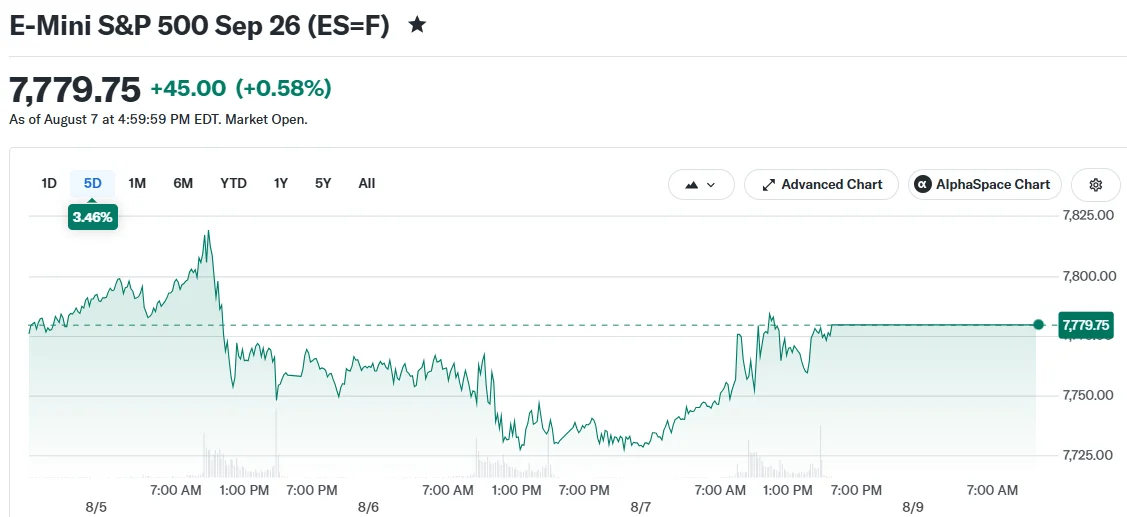
Friday’s employment figures served as the driving force, alleviating market anxieties about imminent Federal Reserve interest rate increases.
Key Inflation Metrics Headline the Week
Wednesday morning at 8:30 a.m. ET brings the July Consumer Price Index release. Economic forecasters anticipate both headline and core measurements will register 0.2% gains.
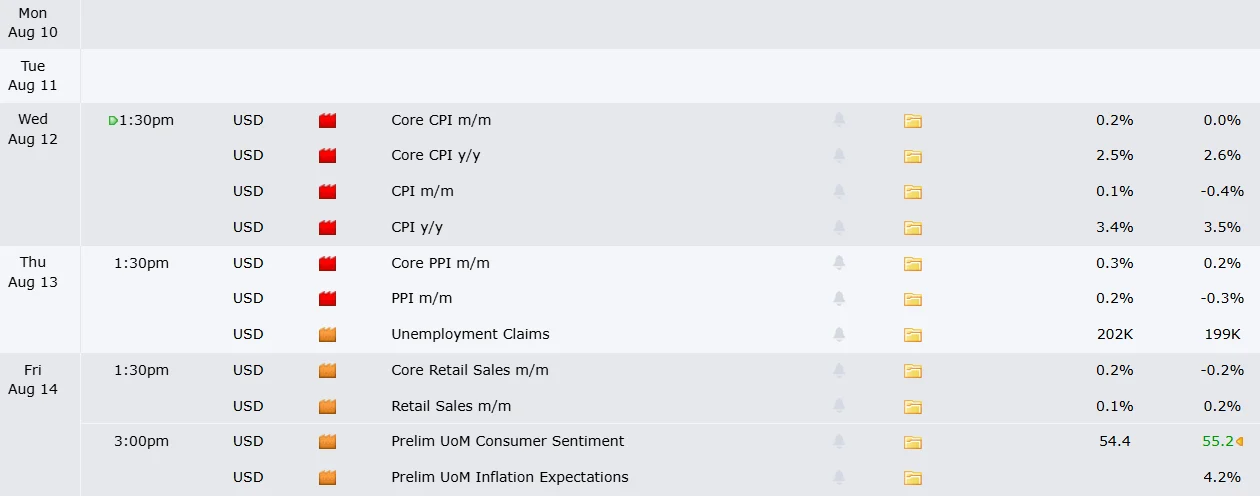
While June witnessed a CPI decline, the economic landscape has shifted considerably. Middle Eastern conflicts have interrupted oil transit through critical maritime routes, elevating energy costs.

Thursday features the Producer Price Index release, measuring inflation at the wholesale level. After jumping in May, PPI retreated in June. Wholesale price increases often foreshadow consumer price movements.
Bank of America economist Stephen Juneau characterized the previous month’s CPI drop as likely temporary, suggesting that an in-line reading would bolster arguments for a September rate increase.
The week concludes Friday with retail sales figures and the University of Michigan’s consumer sentiment index. June consumer expenditures rose a modest 0.2%, while the personal savings rate dropped to its lowest point in four years.
Central Bank Autonomy Questions Resurface
Two late-week developments thrust Federal Reserve independence concerns back into the headlines.
The White House delivered correspondence indicating the president was “considering” the removal of Fed Governor Lisa Cook. This action follows a late June Supreme Court ruling.
Additionally, White House National Economic Council Director Kevin Hassett publicly stated that potential Fed Chair candidate Kevin Warsh and the president “talk about the economy all the time.” Such frequent dialogue between a president and Federal Reserve official is atypical and raises central bank independence concerns.
Fixed income markets are paying close attention. Last week’s bond yield increases already signaled what some analysts interpreted as emerging credibility concerns surrounding the Fed.
AI Infrastructure Earnings Provide Market Test
Three artificial intelligence infrastructure firms deliver quarterly results this week. Nebius Group has surged 122% year to date. CoreWeave has climbed 25%. Cerebras Systems has declined 35% following its public debut.
These divergent stock performances demonstrate that artificial intelligence investment excitement doesn’t benefit all players uniformly. This week’s earnings releases will provide better clarity on which companies are succeeding and which are struggling.
Both CoreWeave and Nebius joined the Nasdaq 100 during the summer months, with Nvidia holding stakes in each company. Cerebras exceeded analyst expectations in its inaugural quarterly disclosure as a publicly traded entity in June.
Super Micro Computer delivers its report Tuesday, following preliminary results that highlighted profit margin expansion and an unprecedented order backlog.
Applied Materials closes out the week Thursday, completing an important earnings period for the semiconductor and AI hardware sectors.
Get 3 Free Stock Ebooks
Discover top-performing stocks in AI, Crypto, and Technology with expert analysis.
- Top 10 AI Stocks - Leading AI companies
- Top 10 Crypto Stocks - Blockchain leaders
- Top 10 Tech Stocks - Tech giants



