


Key Points
- Natural gas futures in Europe reached four-month peaks on Friday, with TTF hub contracts gaining 0.4%
- The market is experiencing its fourth consecutive weekly advance — the most sustained rally since May of last year
- Norway’s Equinor has cautioned that Europe won’t achieve its 80% storage goal ahead of the heating season
- Current underground gas reserves stand at approximately 54%, marking the second-weakest level in a decade and a half
- Military operations in Iran and Houthi interference are constraining LNG shipments via the Strait of Hormuz
Natural gas wholesale prices across Europe maintained elevated positions near four-month peaks on Friday, cementing a fourth straight week of upward momentum.
The front-month Dutch TTF contract, serving as the continent’s primary pricing benchmark, advanced 0.4%, while Britain’s corresponding futures contract climbed 0.3%. This week alone has witnessed an approximately 8% increase in gas valuations, contributing to a dramatic surge exceeding 42% throughout July.
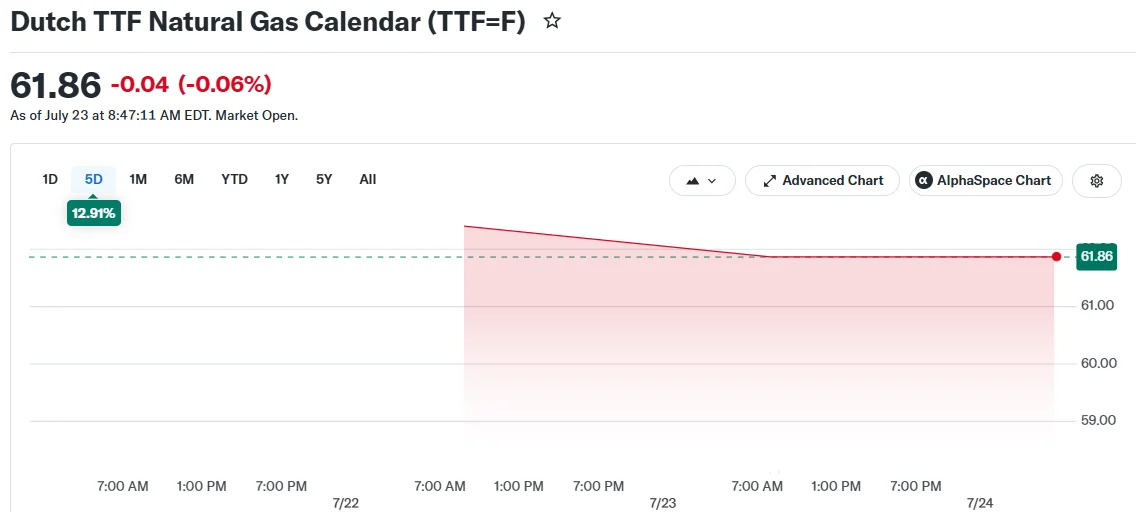
This extended four-week advance represents the most prolonged period of consecutive gains European gas markets have experienced since May 2024.
Underground Reserves Hit Critical Lows Not Seen in 15 Years
Earlier in the week, Equinor — the continent’s predominant domestic natural gas provider — delivered sobering projections indicating that storage facilities throughout Europe currently hold approximately 54% of total capacity. This figure falls significantly short of the five-year seasonal norm and represents the second-weakest position recorded over the past fifteen years.
The Norwegian energy giant’s top executive stated that achieving the established objective of filling subterranean storage facilities to 80% capacity before winter arrives appears increasingly improbable. This benchmark was established specifically to provide a buffer against potential supply interruptions during periods of peak demand.

Entering the winter months with inadequate reserves amplifies market vulnerability to dramatic price volatility should weather conditions turn severe.
Persian Gulf Tensions Constricting Worldwide LNG Availability
American military forces conducted their thirteenth successive evening of airstrikes targeting Iranian positions this week. President Donald Trump issued stern warnings to both Tehran and its Houthi proxies operating from Yemen, threatening intensified military responses should assaults on commercial vessels traversing the Red Sea corridor persist.
The ongoing regional instability has severely hampered tanker navigation through the strategically vital Strait of Hormuz, effectively severing a substantial portion of liquefied natural gas exports originating from Persian Gulf terminals.
As Middle Eastern supply channels constrict, Asian energy purchasers have begun offering premium prices for available LNG shipments, successfully outcompeting European utility companies. This bidding war is diverting crucial cargo deliveries away from European regasification facilities during a period of critical need.
Unseasonably warm temperatures blanketing the continent have simultaneously driven electricity consumption higher for air conditioning purposes, compounding the strain on available gas reserves.
Monetary Policy Adjustments Face Uncertainty
Escalating energy expenditures are contributing significantly to wider inflationary dynamics throughout European economies.
Financial markets are progressively incorporating expectations that elevated utility costs may force central banking authorities to postpone anticipated interest rate reductions. Monetary policymakers may find themselves obligated to maintain restrictive lending conditions for extended periods should energy-linked inflation remain stubbornly high.
The convergence of supply chain disruptions, insufficient storage accumulation, and robust consumption patterns offers market participants scant justification to anticipate near-term price relief.
The TTF futures contract continues trading in proximity to its highest valuations since March, and absent any imminent diplomatic breakthrough addressing Middle Eastern hostilities, the energy cost trajectory facing European households and businesses entering the autumn season remains decidedly uncertain.
Get 3 Free Stock Ebooks
Discover top-performing stocks in AI, Crypto, and Technology with expert analysis.
- Top 10 AI Stocks - Leading AI companies
- Top 10 Crypto Stocks - Blockchain leaders
- Top 10 Tech Stocks - Tech giants



