


Key Takeaways
- After extensive negotiations, President Trump has accepted ethics provisions within the CLARITY Act
- The ethics component restricts how government officials, including the president, may financially benefit from cryptocurrency holdings during their tenure
- Senate Democrats successfully negotiated enhanced consumer protection measures into the legislation
- A Senate vote must occur by early August; upon passage, the legislation returns to the House before presidential approval
- Coinbase executive Ryan VanGrack commended the consumer safeguards incorporated by Democratic lawmakers
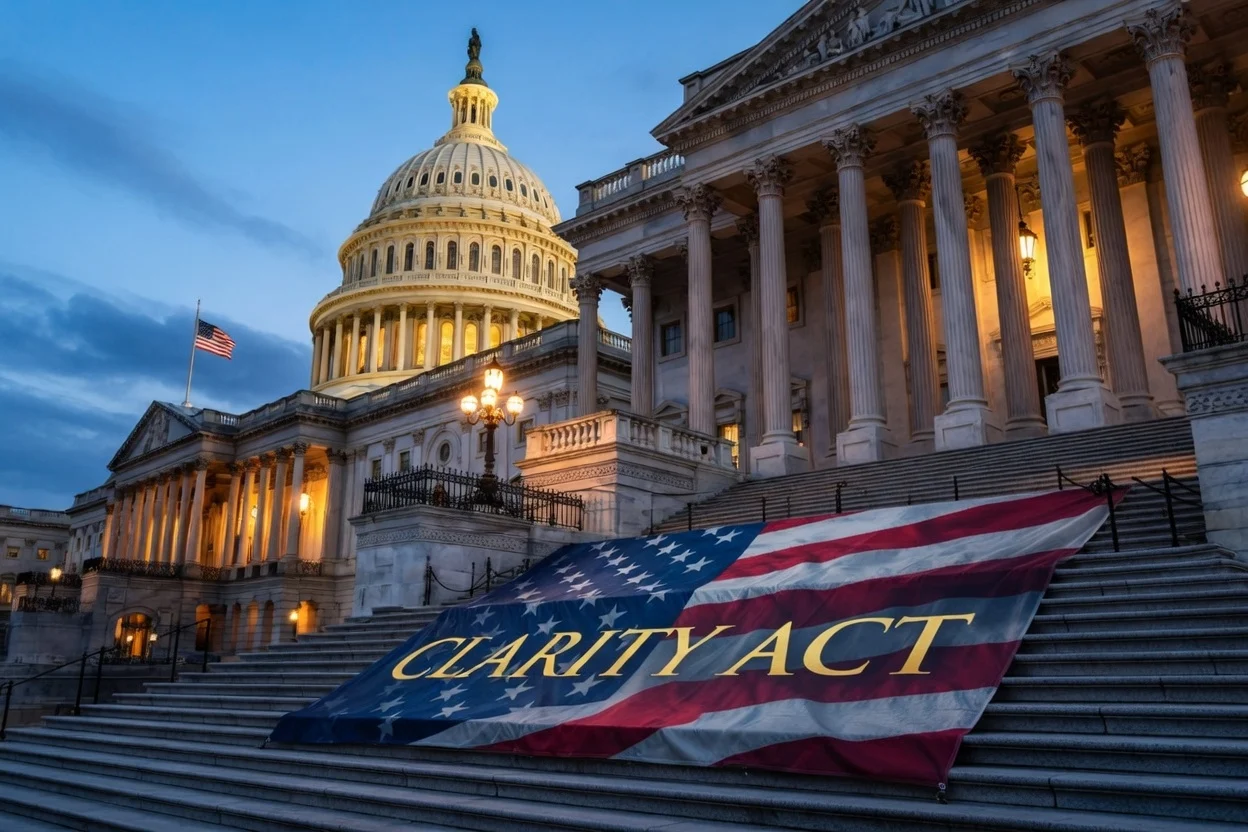
President Trump has consented to an ethics component within the Digital Asset Market Clarity Act, advancing what could become the nation’s most significant cryptocurrency legislation toward a crucial Senate vote.
According to an industry insider who spoke with The Block on Monday night, consensus was achieved regarding the ethics component following extended discussions between White House representatives and Democratic congressional members.
The component establishes restrictions on how presidents, vice presidents, congressional representatives, and additional federal employees may generate income from cryptocurrency assets during their service.
The controversy primarily centered on Trump’s memecoin ventures and his family’s enterprise, World Liberty Financial. Financial statements disclosed last month revealed Trump earned substantial sums connected to these endeavors, which amplified the discussion surrounding ethics regulations.
The ethics question represented the final significant obstacle preventing the bill’s advancement. The breakthrough followed a July 16 conference involving Trump, Republican Senators Bernie Moreno and Cynthia Lummis, alongside White House crypto advisor Patrick Witt.
Understanding the CLARITY Act’s Framework
The legislation would establish federal oversight of the cryptocurrency sector for the first time in U.S. history. It would distribute regulatory authority over digital asset markets between the Securities and Exchange Commission and, with broader scope, the Commodity Futures Trading Commission.

The complete bill language is anticipated within days. Senate members face an early August deadline for voting. Following Senate approval, the legislation must return to the House of Representatives before reaching the president for signature.
Enhanced Consumer Safeguards Secured by Democrats
Coinbase vice chair Ryan VanGrack told CNBC on Monday that Democratic legislators leveraged negotiation opportunities to strengthen consumer protection provisions within the bill.
“Ultimately, this legislation prioritizes customer protections,” VanGrack stated. “Democrats strategically utilized this moment to ensure customers remain the primary focus of this bill.”
Democratic Senators convened privately last Wednesday to evaluate their positions. As of Monday evening, the finalized bill language remained unpublished and no floor vote had been officially scheduled.
Last week, Trump urged senators to approve the CLARITY Act following Senator Lindsey Graham’s passing, asserting that Graham had championed the legislation.
Patrick Witt, the White House’s crypto advisor, had originally intended to depart this week for National Guard obligations but confirmed Monday that his training was delayed. Meanwhile, his deputy, Harry Jung, announced plans to vacate the position within two weeks.
According to one source, the extended timeline before releasing the bill text may actually improve prospects for bipartisan passage.
Get 3 Free Stock Ebooks
Discover top-performing stocks in AI, Crypto, and Technology with expert analysis.
- Top 10 AI Stocks - Leading AI companies
- Top 10 Crypto Stocks - Blockchain leaders
- Top 10 Tech Stocks - Tech giants



