



Key Highlights
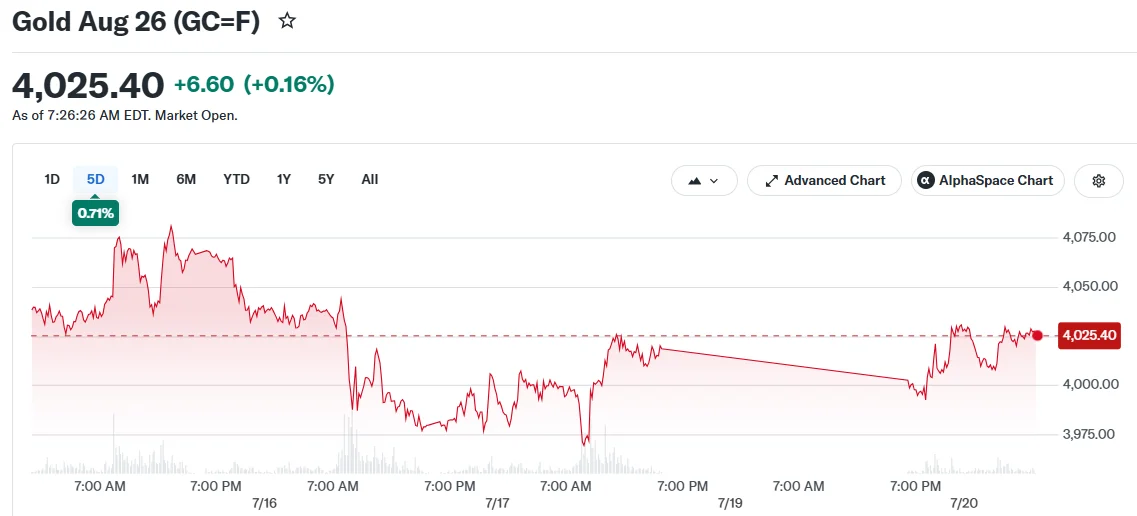
- Precious metal gained 0.2% Monday, reaching approximately $4,024 per ounce following a weekly decline exceeding 2%
- Escalating hostilities between Washington and Tehran, featuring an assault on Kuwaiti oil infrastructure
- Brent crude surpassed the $90 per barrel threshold, sparking concerns about inflation driven by energy costs
- Probability of Federal Reserve rate increase at July 29 policy meeting temporarily surged to 40% before retreating to roughly 10%
- ANZ strategists anticipate the central bank will maintain current rates, projecting gold stabilization in the $3,800–$4,000 corridor
The yellow metal continues trading around the $4,000 threshold as market participants weigh escalating global tensions against the possibility of elevated borrowing costs that could dampen demand for the safe-haven asset.
Spot gold advanced 0.2% during Monday’s session, settling at $4,024.09 per ounce. Gold futures contracts similarly appreciated, reaching $4,028.32. These gains followed a weekly decline of more than 2% in the precious metal.
Other precious metals also demonstrated strength, with silver climbing 1.8% to settle at $56.97 per ounce. Platinum registered a modest 0.2% increase, reaching $1,598.45.
Escalating Regional Tensions Propel Energy Prices
Hostilities between Washington and Tehran intensified during the weekend period. A significant assault targeted critical petroleum infrastructure in Kuwait, while additional strikes affected maritime traffic navigating the Strait of Hormuz, a vital channel for worldwide energy shipments.
Tehran officials declared the ceasefire arrangement with Washington had effectively collapsed. The ongoing confrontation has now entered its fifth month, maintaining continuous pressure on worldwide energy markets.

Brent crude surged past the $90 per barrel level following these developments before moderating somewhat. Rising petroleum costs fuel apprehension that price pressures could persist longer than market participants anticipated.
Notwithstanding heightened tensions, certain indications suggest diplomatic channels remain viable. Secretary of State Marco Rubio stated Washington continues entertaining dialogue possibilities with Tehran. Iranian Foreign Minister Abbas Araghchi similarly indicated negotiations might commence following the achievement of “strategic gains.”
Central Bank Policy Trajectory Pressures Bullion
The primary headwind confronting gold currently stems from the Federal Reserve’s monetary policy direction. Elevated petroleum prices could sustain inflation above the central bank’s 2% objective, potentially compelling officials to maintain restrictive rates for an extended duration.
Higher borrowing costs typically strengthen the dollar and lift Treasury yields, diminishing the appeal of non-yielding instruments like gold for portfolio managers.
Market-implied probabilities for a Federal Reserve rate increase at the July 29 policy gathering temporarily spiked to 40% during the previous week as regional hostilities intensified. These odds have subsequently retreated to approximately 10%.
ANZ strategists maintain the threshold for additional monetary tightening remains elevated. They project the Federal Reserve will disregard elevated energy costs unless they trigger widespread inflationary pressures throughout the broader economy.
ANZ additionally forecasts gold will discover support within the $3,800 to $4,000 corridor as rate increase expectations diminish.
Gold has remained confined to a tight trading band surrounding $4,000 during recent weeks. The metal declined 14% throughout the second quarter, marking its steepest quarterly retreat since 2013, as monetary policy concerns consistently overshadowed safe-haven appeal.
Latest domestic inflation metrics and employment figures have indicated certain economic softening, though markets await clarity on whether energy expenditures alter that trajectory before the Federal Reserve’s upcoming July 29 policy assembly.
Get 3 Free Stock Ebooks
Discover top-performing stocks in AI, Crypto, and Technology with expert analysis.
- Top 10 AI Stocks - Leading AI companies
- Top 10 Crypto Stocks - Blockchain leaders
- Top 10 Tech Stocks - Tech giants



