


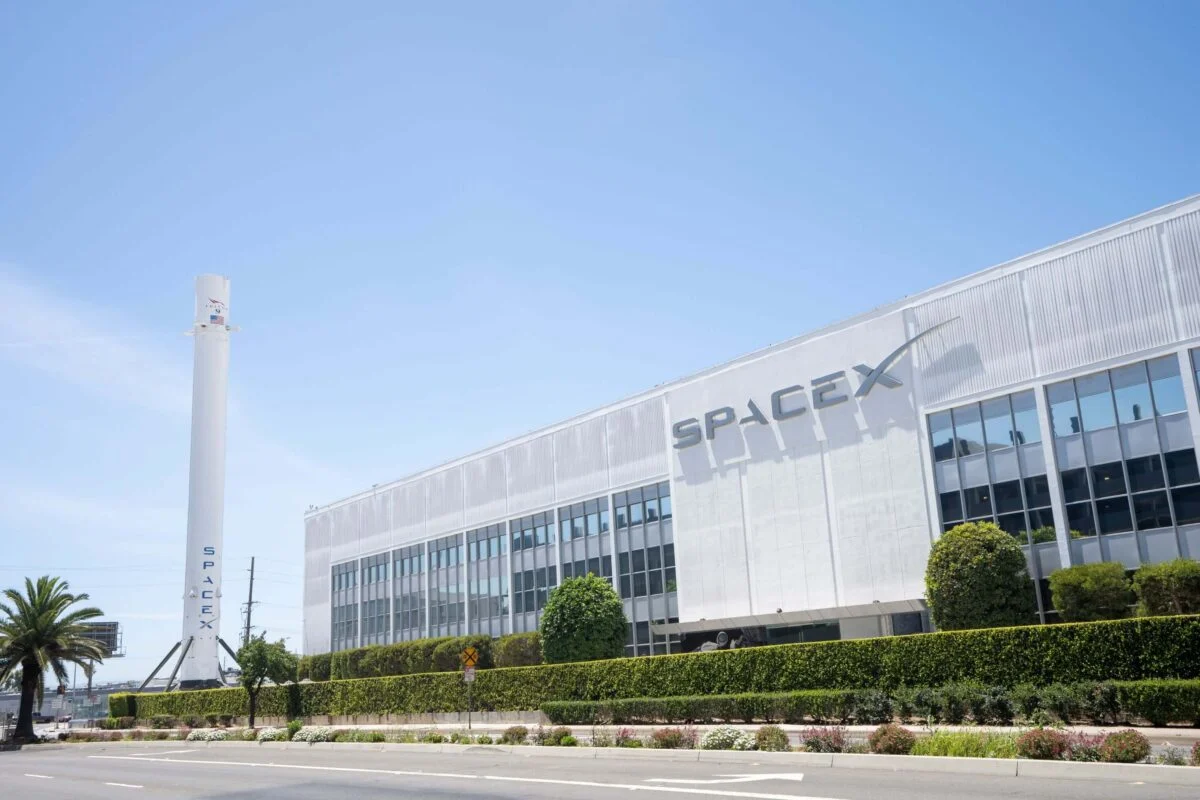
Key Takeaways
- SPCX shares declined approximately 4.8% Friday, falling beneath $125 and dipping under the company’s initial public offering price
- The company canceled Starship’s thirteenth test flight following ignition failures in two Raptor engines
- Elon Musk announced engine replacement plans, targeting an early next week launch window
- Market capitalization has plummeted more than $1 trillion from its June high of $2.64 trillion
- Wall Street analysts emphasize the importance of a successful Flight 13 before the company’s inaugural earnings report in August
Shares of Space Exploration Technologies Corp. tumbled as much as 4.8% during Friday’s trading session, reaching a new post-IPO bottom under $125 per share. The decline positions the stock approximately $10 beneath its initial offering price from the previous month, marking it as a failed debut.
Space Exploration Technologies Corp., SPCX
The downturn came after the company called off Starship’s thirteenth test flight, which was canceled mere moments before scheduled liftoff from the Texas launch facility Thursday evening.
An ignition failure affecting two Raptor engines on the Super Heavy booster triggered the automated cancellation protocol. Company founder Elon Musk addressed the situation via social media platforms, indicating plans to remove and swap out the problematic engines.
“To be confident of a good flight, 2 Raptors will be removed and replaced,” Musk stated online. “Most probable launch timing is early next week.”
This launch cancellation represents SpaceX’s most significant challenge since completing its June public offering. The firm’s valuation has plunged from its June 16 zenith of $2.64 trillion to approximately $1.65 trillion at Friday’s market opening — representing nearly $1 trillion in erased value.

Notably, the twelfth Starship test mission conducted in May encountered similar propulsion difficulties and prompted Federal Aviation Administration scrutiny. Engine dependability continues to emerge as a persistent concern.
The Strategic Importance of Starship
Starship represents a cornerstone of SpaceX’s most ambitious initiatives. The vehicle stands alone as the only operational rocket with the capacity to deploy Musk’s advanced V2 Mobile and V3 Starlink satellites into orbital positions.
Additionally, NASA has selected Starship as the designated spacecraft for lunar astronaut missions through the Artemis program’s Human Landing System agreement.
Wall Street’s Perspective
Myles Walton from Wolfe Research indicated that a flawless Flight 13 execution would strengthen investor sentiment ahead of SpaceX’s maiden earnings announcement, anticipated for early August.
Walton also highlighted a potential share dilution issue. Approximately 1.2 billion additional shares are scheduled to enter the tradable market in August.
“Getting a clean Flight 13 will be important to have into that potential supply influx, particularly given the persistent stock fade in recent weeks,” Walton noted.
The equity has experienced steady deterioration since achieving its post-IPO peak, crossing below its offering price earlier in the week before Friday’s session compounded the losses.
Despite the selloff, certain market observers suggest the market response may be excessive. Brief postponements to address engine replacements represent standard procedures in aerospace development — and potentially demonstrate superior safety protocols compared to proceeding with questionable hardware.
Shares were changing hands around $124.80 during midday Friday trading, within a 52-week trading band of $122.14 to $225.64.
Get 3 Free Stock Ebooks
Discover top-performing stocks in AI, Crypto, and Technology with expert analysis.
- Top 10 AI Stocks - Leading AI companies
- Top 10 Crypto Stocks - Blockchain leaders
- Top 10 Tech Stocks - Tech giants



