



Key Takeaways
- Technology-heavy Nasdaq 100 futures decreased 0.6%, S&P 500 futures declined 0.2%, Dow futures gained 0.2%
- Taiwan Semiconductor reported strong Q2 results but cautioned on pricing, triggering semiconductor sector weakness
- Both UnitedHealth and GE Aerospace surpassed second-quarter profit forecasts
- Geopolitical uncertainty persists following Wednesday’s US military action against Iran
- Key economic indicators including retail sales and unemployment claims scheduled for 8:30 a.m. ET release
Equity futures showed divergent movements Thursday morning as enthusiasm surrounding artificial intelligence investments waned for the second consecutive trading day, creating headwinds for technology shares before market opening.
The Nasdaq 100 futures contract retreated 0.6%, accompanied by a 0.2% decline in S&P 500 futures. In contrast, Dow Jones Industrial Average futures posted modest strength with a 0.2% advance, equivalent to approximately 104 points.
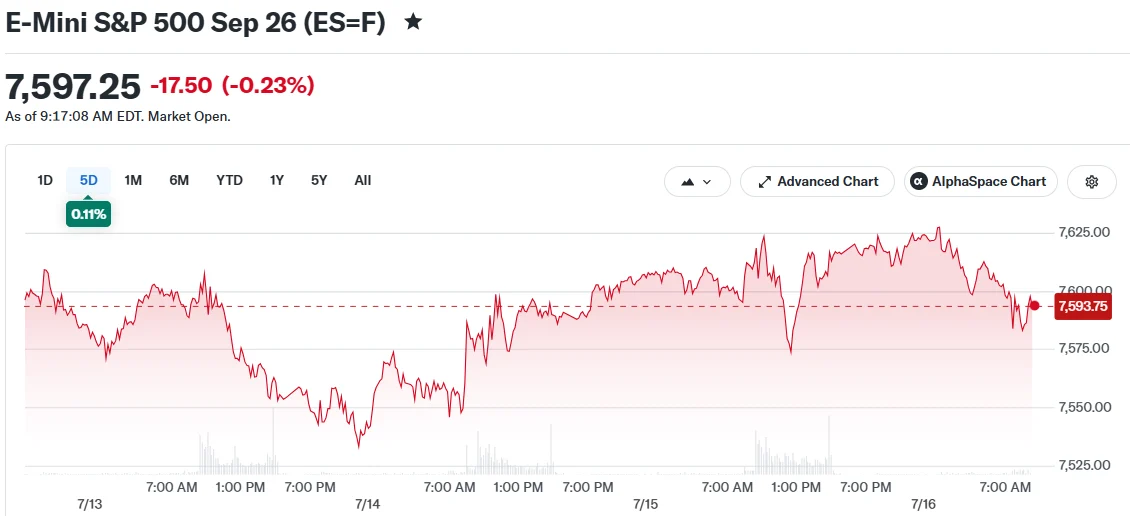
Wednesday’s session saw positive momentum across all three benchmark indices, supported by wholesale inflation figures that came in below analyst estimates. However, that optimism is now facing scrutiny as market participants reassess the sustainability of artificial intelligence-driven market gains.
Semiconductor Sector Faces Headwinds Following TSMC Report
Taiwan Semiconductor Manufacturing Company disclosed record-breaking revenue for the second quarter while simultaneously increasing its full-year capital expenditure forecast. However, the announcement failed to boost investor sentiment, with shares declining during pre-market hours.
The chipmaking giant’s indication of forthcoming price increases triggered concern among investors already monitoring elevated semiconductor valuations. The chip sector has experienced consecutive sessions of selling pressure.

Market sentiment has oscillated between risk appetite and risk aversion as questions emerge regarding the duration of AI-related capital expenditures justifying present equity valuations.
Mark Haefele, Chief Investment Officer at UBS Global Wealth Management, maintained a constructive outlook. “Corporate earnings should continue driving market performance through year-end,” he noted, projecting another robust reporting period in upcoming weeks.
UnitedHealth exceeded second-quarter projections, mirroring GE Aerospace’s performance, with both companies releasing results before Thursday’s opening bell. Netflix is scheduled to announce results following market close.
Geopolitical Developments Contribute to Market Volatility
Oil markets displayed weakness Thursday morning. Brent crude decreased 0.6% to reach $84.37 per barrel, while West Texas Intermediate declined 0.2% to settle at $79.50 per barrel.
Market participants are monitoring developments in the Strait of Hormuz following Wednesday’s US military operations targeting Iran. According to Wall Street Journal reporting, President Trump received briefings on potential escalation scenarios, including expanded aerial campaigns and possible deployment of ground forces.
Currency markets showed stability with the dollar index maintaining levels against major trading partners. The benchmark 10-year Treasury yield climbed two basis points to reach 4.57%.
Regarding economic releases, retail sales data alongside weekly initial jobless claims figures are scheduled for 8:30 a.m. ET publication. These indicators could influence trading patterns during afternoon hours.
Netflix results following market close will serve as an important barometer for consumer spending patterns and streaming service demand trends.
The current earnings season has commenced positively, with market analysts suggesting that strong corporate performance from industry leaders could prevent extended equity market declines.
Notwithstanding morning weakness in futures contracts, strategists indicate the underlying macroeconomic environment continues supporting equity market stability overall.
Get 3 Free Stock Ebooks
Discover top-performing stocks in AI, Crypto, and Technology with expert analysis.
- Top 10 AI Stocks - Leading AI companies
- Top 10 Crypto Stocks - Blockchain leaders
- Top 10 Tech Stocks - Tech giants



