


Key Takeaways
- An updated draft of the Digital Asset Market Clarity Act may be unveiled within days
- Democratic backing remains absent, primarily due to disagreements over ethics requirements for government officials involved in crypto
- Three critical matters await resolution: protections for developers, exemptions from anti-money laundering rules, and stablecoin reward programs
- CFTC leadership cautions that regulatory agencies might craft crypto policies independently if lawmakers fail to deliver
- Congress faces a compressed timeline — only several weeks in July and early August — to advance the legislation
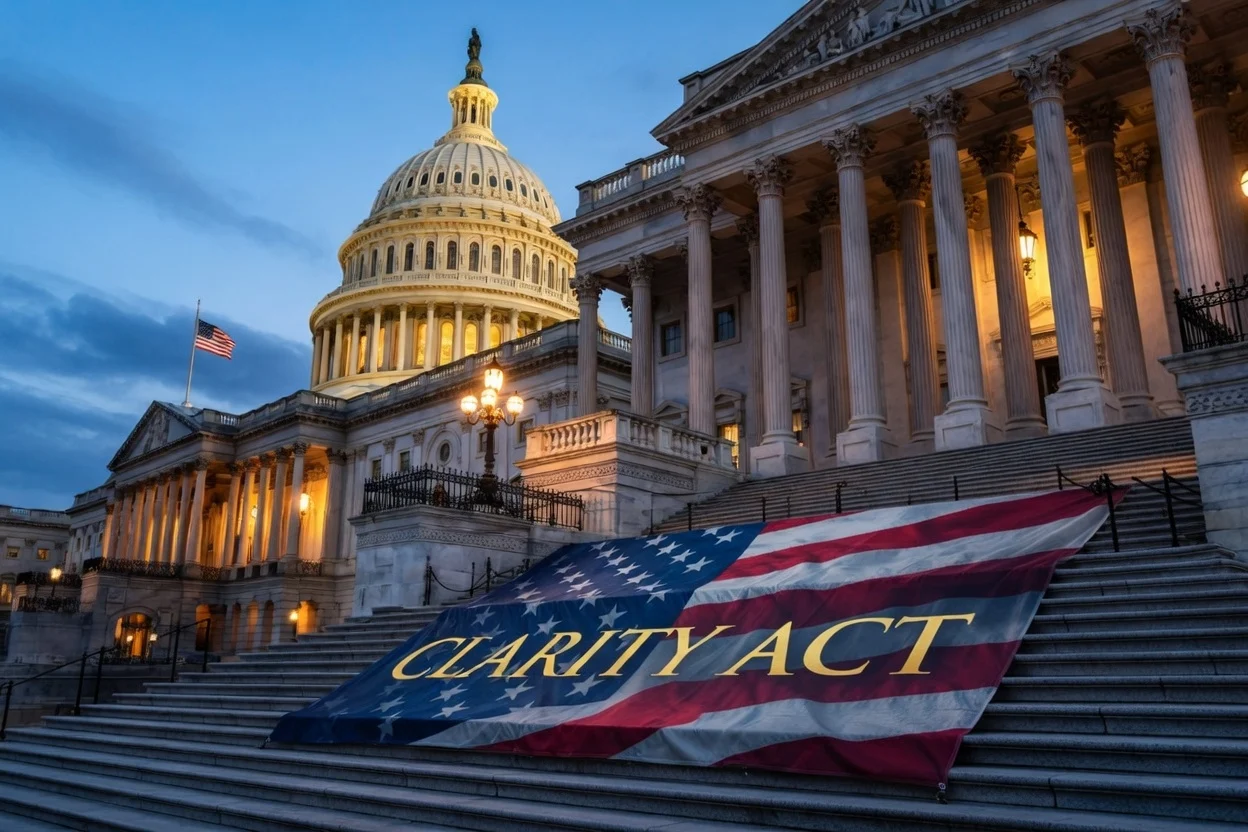
Sources close to ongoing discussions indicate that a revised edition of the Digital Asset Market Clarity Act may emerge as soon as next week. The legislation seeks to establish a thorough regulatory structure for digital assets across the United States.
LATEST: 🇺🇸 A new CLARITY Act draft could drop as soon as next week, but Democrats have not signed on as the Senate races to act before its August recess, CoinDesk reports. https://t.co/0Z5ILMAq82 pic.twitter.com/JZhRr7PfZF
— CoinMarketCap (@CoinMarketCap) July 10, 2026
The consolidated document brings together contributions from both the Senate Banking Committee and the Agriculture Committee. Insiders suggest it contains over 70 pages of additional material, with heightened emphasis on safeguarding consumers.
Despite these developments, the legislation continues to lack crucial Democratic backing needed for passage. Senate rules require 60 affirmative votes to move the bill forward, necessitating significant Democratic participation.
The central point of contention centers on ethics regulations. Democratic lawmakers are pushing to prohibit high-ranking government officials — including the president — from maintaining financial connections to cryptocurrency businesses. Negotiators have yet to find common ground.
Various potential solutions have been proposed, including granting state attorneys general authority to pursue legal action over ethics breaches. Nevertheless, meaningful advancement on this matter has remained elusive.
Three Critical Disputes Remain Unresolved
Apart from ethics concerns, three additional conflicts continue to stall the legislation.

The first centers on the Blockchain Regulatory Certainty Act, a provision designed to shield non-custodial software developers from being designated as money transmitters. Senator Ron Wyden advocates for retaining this provision, while certain law enforcement agencies are requesting modifications.
The second matter involves Section 604, which would provide exemptions for specific software developers and infrastructure operators from money transmitter regulations. Opponents argue this provision could compromise anti-money laundering enforcement capabilities.
The third disagreement concerns stablecoin reward programs. Legislative negotiators are wrestling with whether platforms such as Coinbase should have permission to provide customers with rewards on stablecoin deposits, which the distinct GENIUS Act presently forbids.
The White House also responded this week to Democratic assertions that it was obstructing appointments to the Securities and Exchange Commission and Commodity Futures Trading Commission. Administration officials clarified they had requested Democratic suggestions but received none.
There is bipartisan consensus that both agencies should have complete leadership teams installed before significant cryptocurrency regulations advance.
Senator Cynthia Lummis characterized this moment as “likely our last chance to get real legislation for digital assets on the books before 2030.” CFTC Chair Michael Selig cautioned that without congressional action, regulatory agencies might assume responsibility for drafting all cryptocurrency rules independently.
The Senate reconvenes following recess on July 14. A vote on the Senate floor could potentially occur during the week beginning July 20. Following Senate action, the legislation would still require House of Representatives approval and presidential authorization.
The broader cryptocurrency market posted gains of 1% on Thursday, with total market capitalization reaching approximately $2.2 trillion.
Get 3 Free Stock Ebooks
Discover top-performing stocks in AI, Crypto, and Technology with expert analysis.
- Top 10 AI Stocks - Leading AI companies
- Top 10 Crypto Stocks - Blockchain leaders
- Top 10 Tech Stocks - Tech giants



