



TLDR
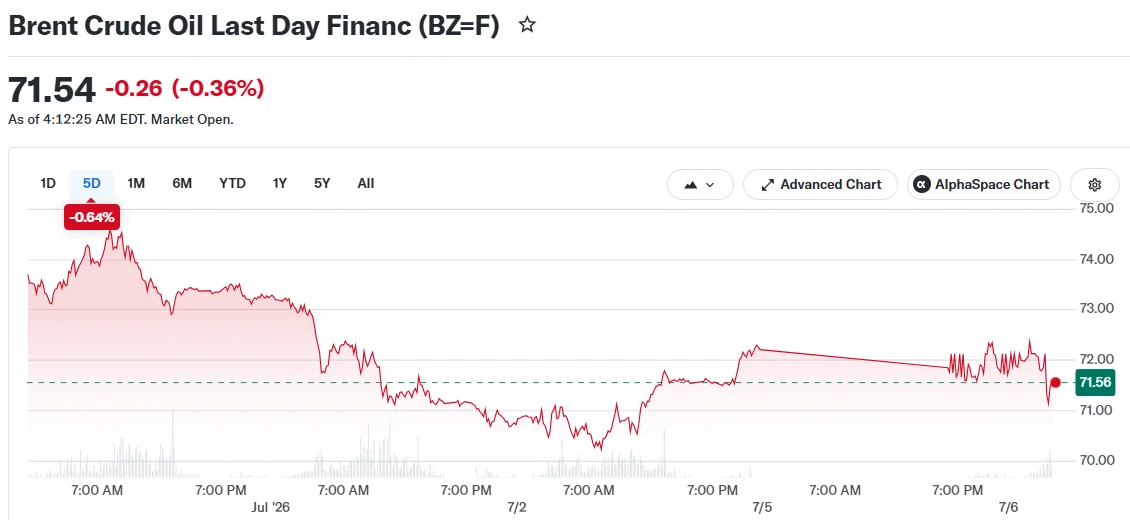
- Brent crude decreased more than 1% to reach $71.10 per barrel on Monday
- OPEC+ members approved a production increase of 188,000 barrels daily starting in August
- Maritime traffic through the Strait of Hormuz shows signs of normalization following US-Iran peace agreement
- Analysts project global oil consumption will decline by 1.5 million barrels per day in 2026
- Citigroup analysts warn Brent could drop to $60 per barrel before year-end
Crude oil markets experienced notable declines on Monday following OPEC+ confirmation of additional production increases and continued normalization of shipping activity through a critical Middle Eastern maritime chokepoint.
Brent crude declined by $1.02, representing a 1.41% decrease, settling at $71.10 per barrel. US West Texas Intermediate retreated 80 cents to close at $67.89. Both major benchmarks have faced sustained downward pressure throughout recent weeks.
The oil-producing alliance led primarily by Saudi Arabia and Russia reached consensus on Sunday to elevate combined production quotas by 188,000 barrels daily beginning in August. This decision continues a pattern of similar production expansions already scheduled for June and July.
The cartel has been systematically reversing production restrictions implemented during previous years. Seven principal member states endorsed the most recent production adjustment.
Hormuz Shipping Slowly Coming Back Online
The Strait of Hormuz experienced significant disruptions to tanker operations throughout the US-Israeli military conflict with Iran. These complications limited actual production volumes from critical exporters including Saudi Arabia, Kuwait, and Iraq, effectively rendering portions of OPEC+ production increases theoretical rather than practical.

Petroleum and natural gas shipments along a US-secured maritime corridor within the waterway demonstrated signs of recovery on Sunday. One day prior, multiple vessels executed unexplained course reversals within the protected corridor before continuing their original trajectories.
Crude oil exports from Gulf nations surged by more than 3 million barrels in June compared to May figures, surpassing 10 million barrels daily. Despite this increase, total volumes remain approximately 40% beneath pre-conflict benchmarks.
Brent crude experienced a dramatic 30% collapse during the second quarter following the announcement of an interim peace framework between Washington and Tehran, establishing conditions for gradual restoration of Hormuz shipping operations.
Supply Climbing as Demand Falls
ANZ Bank currently forecasts global oil demand will decrease by 1.5 million barrels per day throughout 2026. Year-over-year consumption declines could potentially reach 4 million barrels daily during Q2 according to preliminary data analysis.
PVM market analysts observed that producers continue “selling into a falling market, offering little hope of an imminent price recovery.”
Abu Dhabi National Oil Company has liquidated approximately 16 million barrels of crude at increasingly steep discounts through spot market tenders since June, indicating a substantial increase in available supply volumes.
Russian western port shipments achieved record-high levels in June and are anticipated to maintain similar volumes throughout July. Ukrainian drone attacks targeting Russian refining facilities have compelled Moscow to redirect crude oil toward export markets rather than domestic processing.
Market structure indicators are displaying increasingly bearish signals. Timespreads for both Brent and Dubai crude have shifted into contango configuration, where near-term contracts trade at discounts relative to longer-dated futures. Numerous physical crude varieties are also trading beneath their respective benchmark valuations.
Citigroup analysts have identified the potential for Brent crude to decline toward $60 per barrel before year-end should current supply expansion and demand deterioration trends persist.
Get 3 Free Stock Ebooks
Discover top-performing stocks in AI, Crypto, and Technology with expert analysis.
- Top 10 AI Stocks - Leading AI companies
- Top 10 Crypto Stocks - Blockchain leaders
- Top 10 Tech Stocks - Tech giants



