


Key Highlights
- Bitcoin leads the rankings with its limited supply model and expanding institutional acceptance
- Ethereum dominates smart contract platforms and powers the largest DeFi ecosystem globally
- Solana gains traction with exceptional transaction speeds and minimal network costs
- Chainlink provides critical infrastructure by bridging blockchain networks with external data sources
- Sui presents a higher-volatility investment opportunity within the mid-cap sector
Market experts have identified five digital currencies that stand out as compelling long-term holdings as we move deeper into the second half of 2026. These selections prioritize underlying technology, practical applications, and sustainable adoption trends over speculative price movements.
Bitcoin
The leading cryptocurrency by market capitalization continues to command the top position among long-term investment recommendations. With a permanently fixed maximum supply of 21 million units, [[LINK_START_1]]Bitcoin[[LINK_END_1]] represents the most supply-constrained major digital currency available.
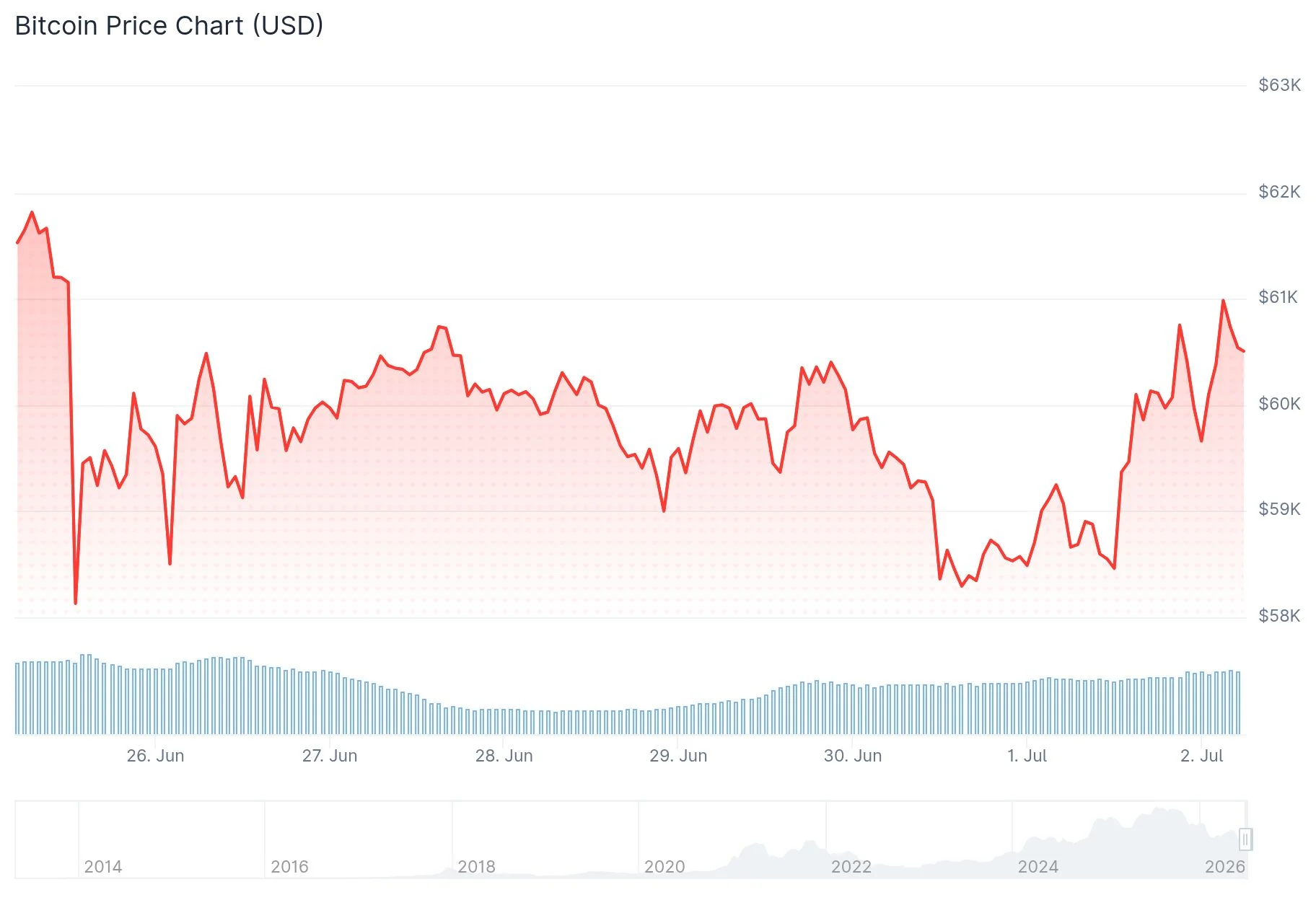
The introduction of exchange-traded funds dedicated to Bitcoin has simplified institutional access to the asset. Additionally, an increasing number of corporations have added Bitcoin to their balance sheets, further integrating it into traditional financial systems.
Market analysts characterize Bitcoin as presenting the most favorable risk-to-reward profile within the digital asset space. It’s viewed as an essential cornerstone for any diversified cryptocurrency portfolio with a long-term horizon.
Experts recommend allocating 35 percent of a crypto portfolio to Bitcoin, representing the highest weighting among the five featured assets.

Ethereum
[[LINK_START_3]]Ethereum[[LINK_END_3]] functions as the foundational infrastructure for much of the cryptocurrency sector. The platform enables thousands of decentralized applications and maintains the industry’s most extensive decentralized finance network.
Multi-billion dollar stablecoin systems operate on Ethereum’s infrastructure. The network is also experiencing growing adoption in the tokenization of traditional assets, including government bonds and property holdings.
While facing competition from more recently launched platforms, Ethereum continues to draw developers in numbers that few competitors can replicate. This sustained developer engagement represents a primary factor in its enduring strategic importance.
The recommended portfolio weighting for Ethereum stands at 25 percent for investors pursuing long-term positions.
Solana
[[LINK_START_4]]Solana[[LINK_END_4]] earns recognition for its superior processing capabilities and economical transaction costs. These technical advantages have driven user adoption across multiple sectors including decentralized finance protocols, digital collectibles, payment systems, and mainstream applications.
Recent months have witnessed expansion in both stablecoin transactions and trading volumes on Solana’s decentralized exchanges. Institutional participants have also demonstrated heightened interest in the platform.
Analysts suggest a 20 percent allocation to Solana, positioning it as a high-velocity blockchain with a robust and developing application ecosystem.
Chainlink
Chainlink occupies a specialized niche compared to the other selections. Instead of pursuing transaction volume market share, it delivers critical infrastructure enabling smart contracts to interact with off-chain information sources.
Its decentralized oracle system is considered fundamental to the functioning of decentralized finance applications. The platform’s Cross-Chain Interoperability Protocol has attracted institutional attention, particularly from entities exploring asset tokenization initiatives.
Portfolio Construction Strategy
The recommended allocation framework distributes investments as follows: 35 percent Bitcoin, 25 percent Ethereum, 20 percent Solana, 10 percent Chainlink, and 10 percent Sui.
This diversification approach aims to achieve equilibrium between the stability offered by established assets and the expansion potential available from emerging platforms.
Sui completes the selection as the highest-risk component. Built using the Move programming language, it prioritizes performance and throughput for applications spanning gaming, decentralized finance, and consumer-facing services.
While its application environment continues developing, experts acknowledge Sui carries elevated risk compared to more mature cryptocurrencies. However, they also recognize its potential for superior returns should user adoption accelerate.
No individual asset is positioned as a certain success. The analysis stresses that combining cryptocurrencies with solid fundamentals and demonstrated practical utility may enhance long-term portfolio performance.
Cryptocurrency investment involves inherent risks and substantial price volatility remains typical. Each of these five digital currencies serves a unique function within the broader cryptocurrency marketplace as of July 2026.
Get 3 Free Stock Ebooks
Discover top-performing stocks in AI, Crypto, and Technology with expert analysis.
- Top 10 AI Stocks - Leading AI companies
- Top 10 Crypto Stocks - Blockchain leaders
- Top 10 Tech Stocks - Tech giants



