


Key Takeaways
- The U.S. Dollar Index retreated to 101.24 after touching a 14-month peak
- June is shaping up to be the greenback’s strongest month since July 2025, with gains near 2.5%
- Diplomatic efforts between Washington and Tehran are resuming in Qatar, reducing safe-haven flows
- Markets anticipate two additional Fed rate increases by year-end amid inflation exceeding 4%
- This week’s focus: ECB’s Sintra gathering and critical U.S. employment figures
The greenback experienced a modest retreat on Monday while holding near its highest level in over a year. During early trading in U.S. markets, the U.S. Dollar Index registered 101.24, retreating from the 101.8 peak reached on June 24.
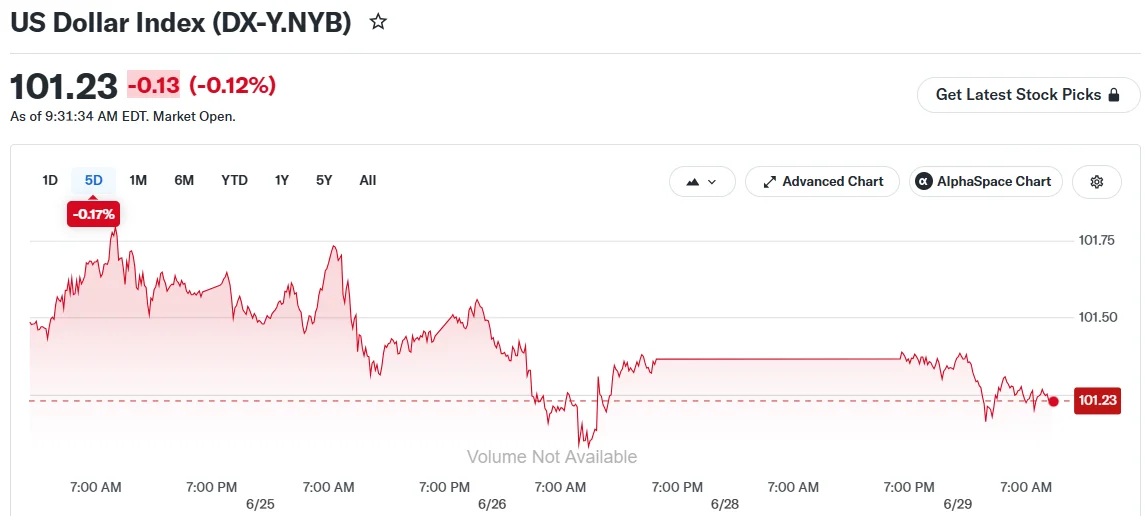
Despite this minor pullback, the currency is positioned to deliver its most impressive monthly showing since July 2025. June has seen the index climb approximately 2.5%.
Key Catalysts Behind the Dollar’s Ascent
Multiple dynamics have sustained the dollar‘s elevated position. With U.S. inflation hovering above the 4% threshold, the Federal Reserve is being pushed toward a more hawkish policy trajectory. Financial markets have incorporated expectations for two additional quarter-point rate increases before year’s end.
Robust economic indicators from the United States have reinforced this narrative. A durable jobs market has maintained investor appetite for dollar assets, with this week’s employment report anticipated as a crucial data point for future direction.
Investment flows targeting U.S. artificial intelligence equities have contributed to sustained dollar demand. International capital allocation into American markets has maintained consistent interest in dollar-based investments.

International Tensions and Monetary Policy Developments
The U.S.-Iran conflict had been a significant catalyst for dollar safe-haven buying in prior weeks. Following weekend military exchanges, both nations agreed to suspend hostilities. Diplomatic negotiations are scheduled to reconvene in Qatar starting Tuesday.
The cessation of military actions has begun alleviating pressure in international energy sectors. Petroleum prices have started retreating toward levels seen before the conflict as shipping activity from the Persian Gulf normalizes following a diplomatic accord between the two governments.
The euro gained 0.2% to reach $1.14 but continues trading near its weakest level in twelve months. Sterling maintained its position at $1.32 as markets digested significant political developments. Following Keir Starmer’s resignation announcement last week, Andy Burnham has emerged as the leading candidate for succession.
The ECB’s yearly Sintra conference commences Monday. ECB President Christine Lagarde will provide opening statements alongside Fed Chair Kevin Warsh and Bank of England Governor Andrew Bailey. Market participants are pricing in at least one additional ECB rate adjustment this year after the deposit rate reached 2.25%.
The Japanese currency showed little movement. The Bank of Japan’s Tankan business sentiment survey is scheduled for release this week and is projected to reflect strengthening confidence despite recent energy sector challenges.
Throughout Asia, market participants are monitoring China’s factory activity data, South Korea’s export statistics, and India’s industrial output metrics for insights into regional central bank policy trajectories.
The greenback’s direction in coming days will hinge significantly on commentary from policymakers at Sintra and the findings of Friday’s employment data release.
Get 3 Free Stock Ebooks
Discover top-performing stocks in AI, Crypto, and Technology with expert analysis.
- Top 10 AI Stocks - Leading AI companies
- Top 10 Crypto Stocks - Blockchain leaders
- Top 10 Tech Stocks - Tech giants



