


Key Takeaways
- LCID shares climbed as much as 15.6% Friday, finishing near $5.92, fueled by excitement surrounding its autonomous vehicle collaboration with Uber and Nuro
- The EV manufacturer will deliver Gravity SUVs and upcoming midsize models for a robotaxi service scheduled to launch commercially in 2027
- Lucid is implementing cost reductions through an 18% reduction in its U.S. employee base, projected to yield $158 million in annual savings
- Shareholders who purchased stock between February 25 and April 13, 2026 are covered by an ongoing securities class action lawsuit
- Analyst sentiment remains bearish — the consensus rating stands at “Reduce” with an average price target of $9.67
Lucid Group (LCID) shares experienced a significant rally Friday, surging as high as 15.6% to reach an intraday peak of $5.95 before closing around $5.92. Trading volume exploded to 35 million shares — approximately triple the typical daily volume of 12.1 million.
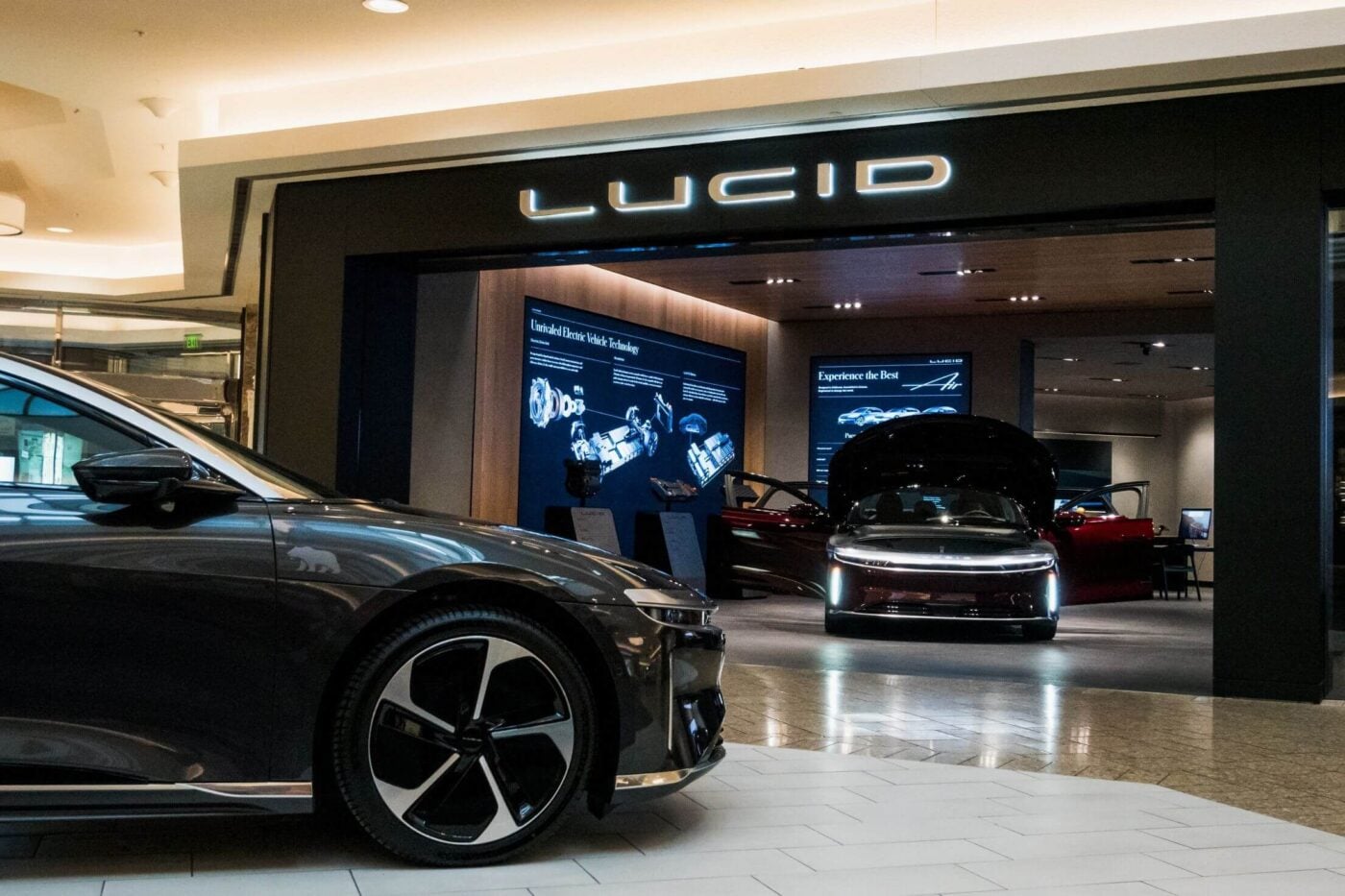
The spike in investor enthusiasm stemmed from renewed focus on Lucid’s position as the exclusive vehicle provider for Uber and Nuro’s self-driving taxi initiative. The electric vehicle maker will furnish its Gravity SUVs along with forthcoming midsize models for the autonomous service.
Production-validation robotaxis are currently being manufactured at the company’s Arizona manufacturing plant. The vehicles are undergoing testing and safety certification processes, with commercial operations planned to begin in 2027.
Initial rollout will occur in the San Francisco Bay Area, followed by Houston as the secondary location. Uber has already locked down a 50,000-square-foot facility in Houston dedicated to depot operations and charging infrastructure. Reports indicate that autonomous road testing with safety drivers is currently taking place in that market.

An engineering test fleet approaching 100 Gravity-based autonomous vehicles is being deployed throughout California and Texas to support the initiative.
Corporate Reorganization in Motion
Beyond the autonomous vehicle narrative, Lucid is executing a comprehensive reorganization strategy. The company is reducing its American workforce by 18%, an initiative projected to generate approximately $158 million in annual cost savings.
Executive transitions are occurring simultaneously with new product development initiatives. The restructuring indicates management’s commitment to streamlining operations while expanding vehicle manufacturing capacity.
Regarding financial performance, Lucid fell short of projections in its latest quarterly report. The company posted a loss of $2.82 per share, exceeding the consensus estimate loss of $2.53. Revenue totaled $282.5 million, significantly below analyst expectations of $358.5 million — despite representing a 20.2% increase compared to the prior year period.
Analyst Skepticism and Legal Challenges
Wall Street maintains a cautious stance on the stock. LCID currently holds an average analyst rating of “Reduce” with a consensus price objective of $9.67.
TD Cowen reduced its price target from $10 to $7 in May. Morgan Stanley maintains a $5 valuation target. Cantor Fitzgerald and Citigroup show greater optimism at $14, although Citigroup lowered its previous target from $17.
Multiple law firms are advancing a securities class action lawsuit affecting investors who owned LCID shares between February 25 and April 13, 2026. This legal overhang introduces additional risk factors.
Institutional ownership accounts for roughly 75% of outstanding shares. Goldman Sachs significantly increased its holdings in Q1, purchasing more than 2.8 million additional shares. AQR Capital Management expanded its position by 90%.
Despite Friday’s impressive gain, LCID remains down 50.2% year-to-date. At the current price of $5.92, shares trade 82% beneath the 52-week high of $31.30 reached in July 2025.
Get 3 Free Stock Ebooks
Discover top-performing stocks in AI, Crypto, and Technology with expert analysis.
- Top 10 AI Stocks - Leading AI companies
- Top 10 Crypto Stocks - Blockchain leaders
- Top 10 Tech Stocks - Tech giants



