


Key Takeaways
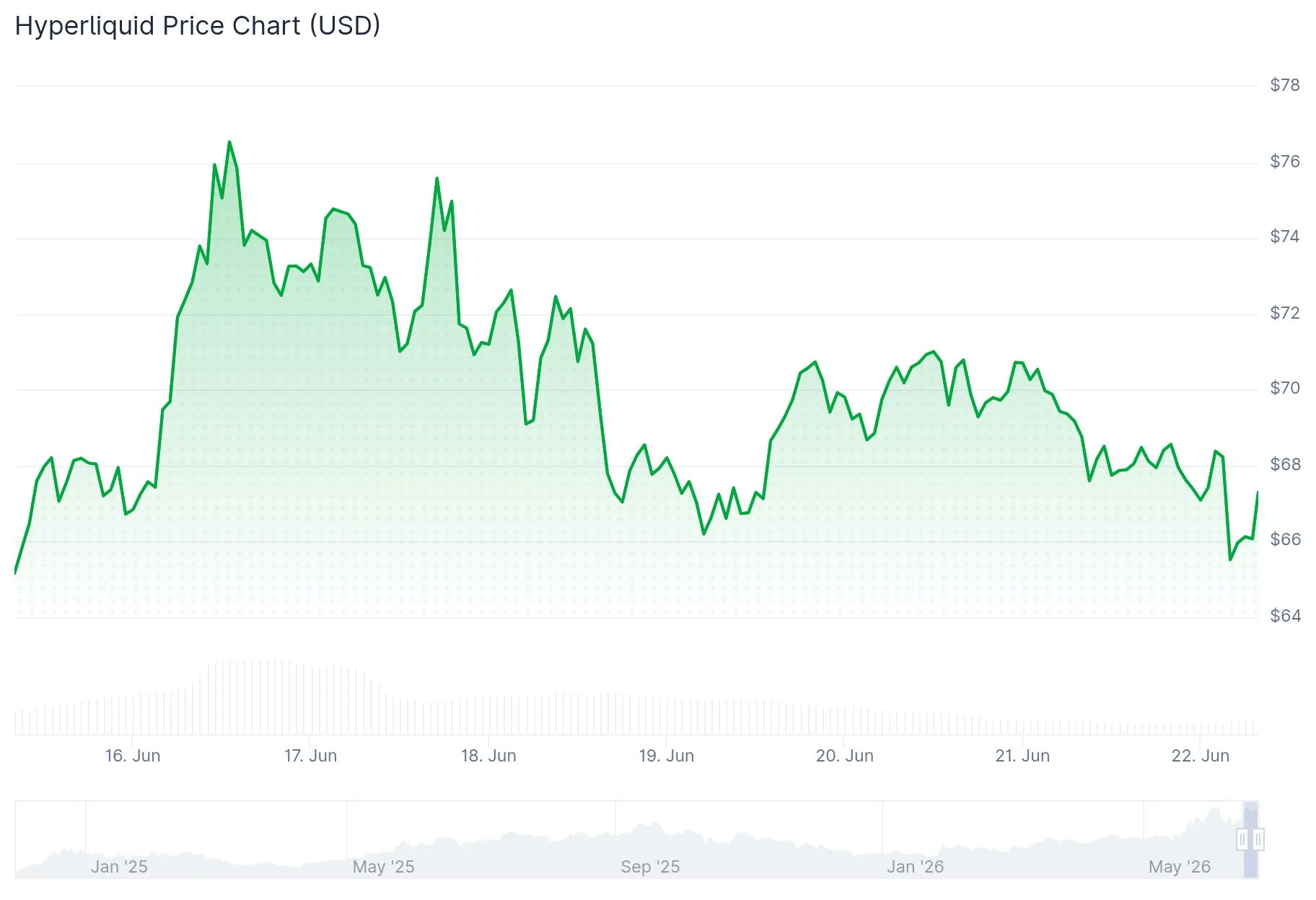
- The HYPE token has surged 194% year-to-date in 2026, approaching its peak price of $77
- Hyperliquid established itself by providing perpetual futures trading on a decentralized platform
- American financial regulators had previously restricted perpetual futures access — that landscape is shifting
- In a landmark move, Kalshi launched as the first CFTC-approved perpetual futures exchange in America, recording $1 billion in first-week volume
- Major platforms Coinbase and Robinhood are preparing to enter the perpetual contracts market
Hyperliquid (HYPE) has emerged as one of 2026’s standout cryptocurrency performers. Year-to-date gains have reached 194%, with the token currently hovering close to its record level of $77.
The HYPE token powers a decentralized trading platform focused on perpetual futures contracts. These financial instruments enable traders to take leveraged positions on cryptocurrency price movements — all without actually holding the digital assets themselves.
Perpetual futures contracts have become immensely popular within the crypto ecosystem. Market participants can establish both long and short positions, creating profit opportunities in both rising and falling markets.
For years, American traders were largely shut out from these products. Regulatory authorities considered them excessively risky due to the leverage mechanics and the potential for rapid position liquidation.
The regulatory environment is now evolving.

Kalshi Makes History
In early June 2026, prediction markets platform Kalshi achieved a significant milestone by becoming America’s first CFTC-regulated exchange offering perpetual futures contracts. The platform’s inaugural week generated an impressive $1 billion in trading activity.
Kalshi isn’t operating in isolation. Industry giants Coinbase and Robinhood have both indicated plans to launch perpetual futures offerings, viewing these products as logical extensions of their current trading ecosystems.
This development presents significant headwinds for Hyperliquid. American traders face legal restrictions preventing them from accessing the Hyperliquid platform. Consequently, U.S.-based individuals seeking perpetual futures exposure will migrate toward these newly available regulated options.
To legally service American customers, Hyperliquid would need to undergo comprehensive CFTC regulatory review. While company representatives have expressed openness to this process, specific timelines and potential structural modifications to their contract offerings remain undefined.
Implications for the HYPE Token
In analysis published by The Motley Fool, market commentator Dominic Basulto drew parallels to the online gambling sector’s evolution. When American regulators legalized online gambling, market activity rapidly migrated from offshore operators to domestic regulated platforms. Basulto suggests perpetual futures could follow a similar trajectory, with approved U.S. exchanges capturing market share currently held by platforms like Hyperliquid.
Basulto indicated he’s avoiding HYPE purchases despite the recent price appreciation, specifically citing the emergence of regulated American competition as a deterrent.
Hyperliquid’s exceptional 2026 returns occurred during a window of minimal regulated U.S. competition. The fact that Kalshi generated $1 billion in perpetual futures volume during just seven days of operation underscores the substantial demand for regulated alternatives.
Get 3 Free Stock Ebooks
Discover top-performing stocks in AI, Crypto, and Technology with expert analysis.
- Top 10 AI Stocks - Leading AI companies
- Top 10 Crypto Stocks - Blockchain leaders
- Top 10 Tech Stocks - Tech giants



