



Key Highlights
- Bitcoin hovered around $63,996, registering a 0.4% decline over 24 hours and a 2.2% weekly drop
- Washington and Tehran established a 60-day framework for comprehensive peace negotiations, pushing Brent crude to approximately $79
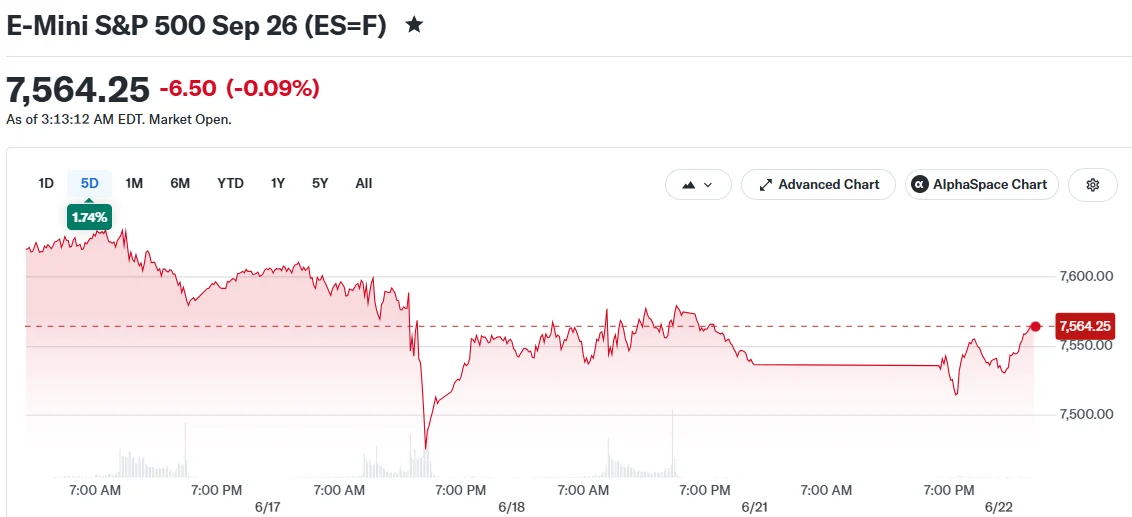
- Asian equity markets climbed 0.6% while US index futures declined, with S&P 500 contracts sliding 0.5%
- Dogecoin led major crypto losses with a 6.5% weekly decline; XRP retreated 4.3%
- The upcoming PCE inflation data on Thursday represents a critical benchmark for market direction and Federal Reserve policy
Bitcoin began the trading week hovering near the $64,000 mark but diverged from the positive momentum seen across Asian equity markets, despite improved geopolitical conditions.
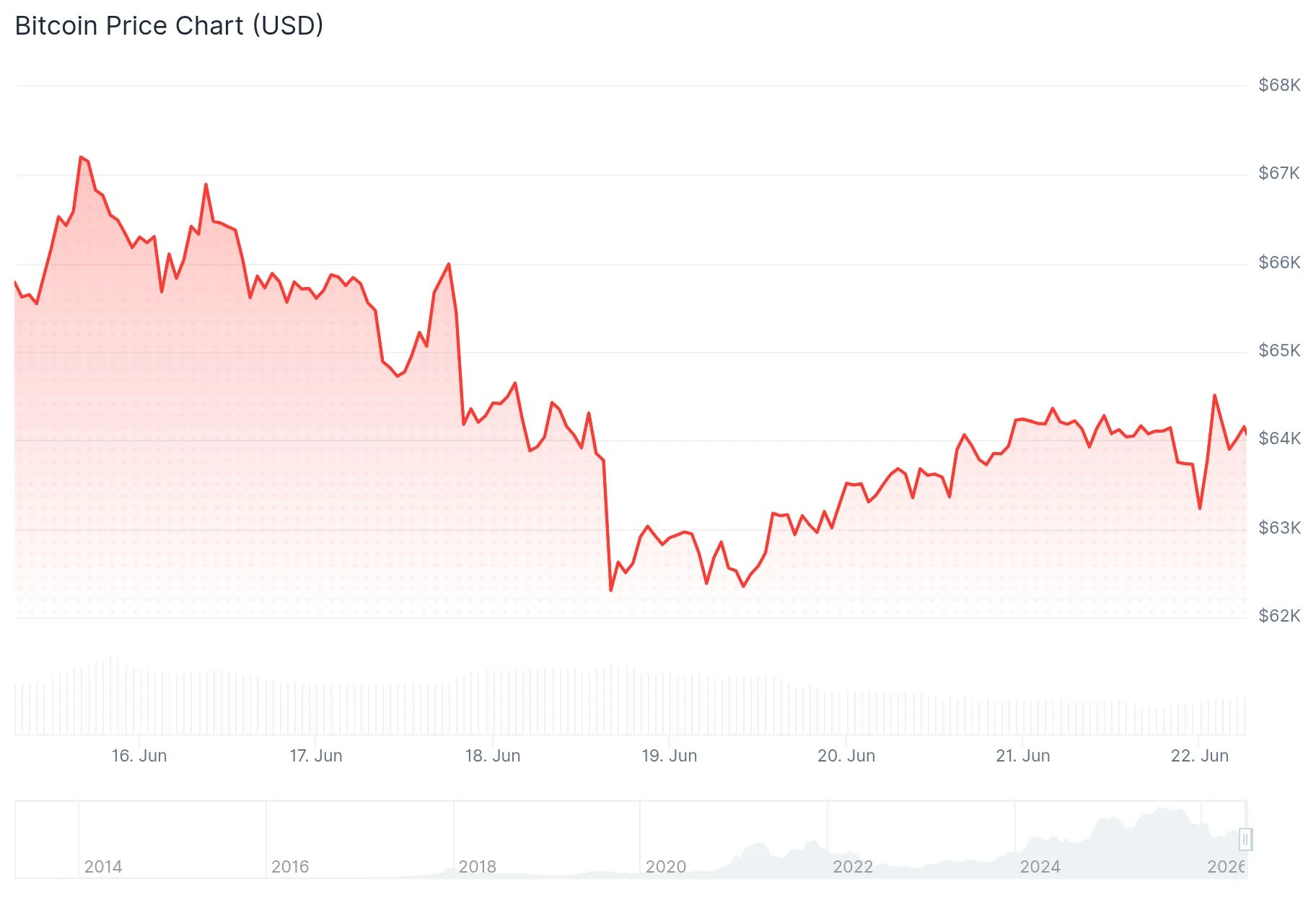
The leading cryptocurrency was changing hands at approximately $63,996, reflecting a 0.4% decline across the past day and a 2.2% weekly decrease, based on CoinDesk market data.
Digital Asset Markets Show Weakness
Broader cryptocurrency performance presented a varied picture. Solana posted a 3.7% weekly advance to $74, while Tron registered a 2.2% gain. Ether remained relatively unchanged at $1,733.
Larger declines emerged among other major tokens. BNB suffered a 4.2% weekly setback, XRP declined 4.3% to $1.13, and Dogecoin emerged as the poorest performer among leading cryptocurrencies, tumbling 6.5%.
Hyperliquid’s HYPE token, which had delivered impressive returns earlier in June, retreated 5% during Monday’s session. Despite this, the token maintained a 1.9% gain for the week.

Cryptocurrencies largely ignored the risk-appetite shift that propelled Asian equity indices higher. This divergence between digital assets and traditional stocks represents an important dynamic for market participants to monitor.
Diplomatic Progress and Energy Markets
Washington and Tehran reached agreement on a structured pathway toward finalizing a comprehensive peace accord within a 60-day timeframe. Mediating nations Qatar and Pakistan verified the advancement through a coordinated announcement, which included provisions for ensuring uninterrupted commercial maritime traffic through the Strait of Hormuz.
Brent crude futures retreated 1.7% to approximately $79 per barrel following the announcement. Conversely, West Texas Intermediate crude surged nearly 3% to approach $78 per barrel, as market participants also considered new statements from President Donald Trump warning of additional military responses should Iran-aligned organizations in Lebanon fail to withdraw.
Negotiations experienced initial turbulence on Sunday when Iran temporarily suspended discussions following Trump’s remarks, though both nations subsequently established a communication mechanism to prevent further escalation.
The MSCI Asia Pacific Index advanced 0.6%, supported by sustained enthusiasm surrounding artificial intelligence capabilities driving technology sector valuations.
US index futures trended lower in contrast. S&P 500 contracts decreased 0.5%, Nasdaq 100 futures fell 0.6%, and Dow futures retreated 0.3%.
Critical Economic Indicators on Deck
Investor attention has shifted toward Thursday’s scheduled release of the Personal Consumption Expenditures price index, which serves as the Federal Reserve’s primary inflation gauge.
Economists anticipate the core PCE metric, which excludes volatile food and energy components, will demonstrate a moderate uptick from April readings. This data arrives following the Federal Reserve’s indication of a more measured policy approach, with market participants delaying their projections for potential interest rate reductions.
This week’s data has the potential to significantly alter investor perspectives regarding monetary policy direction through the summer months.
Bitcoin has demonstrated strong correlation with risk-sensitive assets throughout each phase of the Iran diplomatic situation. Whether the 60-day peace framework proves sustainable, and whether cryptocurrency markets realign with broader market sentiment, will serve as central questions as the week unfolds.
Get 3 Free Stock Ebooks
Discover top-performing stocks in AI, Crypto, and Technology with expert analysis.
- Top 10 AI Stocks - Leading AI companies
- Top 10 Crypto Stocks - Blockchain leaders
- Top 10 Tech Stocks - Tech giants



