


Key Highlights
- Bitcoin declined 3% to approximately $63,900 as Ether, XRP, and Solana experienced similar drops exceeding 3%
- The Federal Reserve maintained its benchmark rate at 3.5%–3.75% while expressing elevated inflation worries and potential future rate increases
- Kevin Warsh presided over his inaugural Fed meeting as Chair, pledging commitment to achieving price stability
- President Trump’s interim peace agreement with Iran boosted equity markets but left cryptocurrencies unaffected
- Market observers anticipate Bitcoin will remain range-bound between $60,000 and $70,000 absent significant catalysts
Digital asset markets experienced widespread declines Thursday following a more aggressive Federal Reserve stance that unnerved investors, contrasting with equity futures that climbed on news of President Trump’s diplomatic breakthrough with Iran.
Digital Assets Decline Following Central Bank Decision
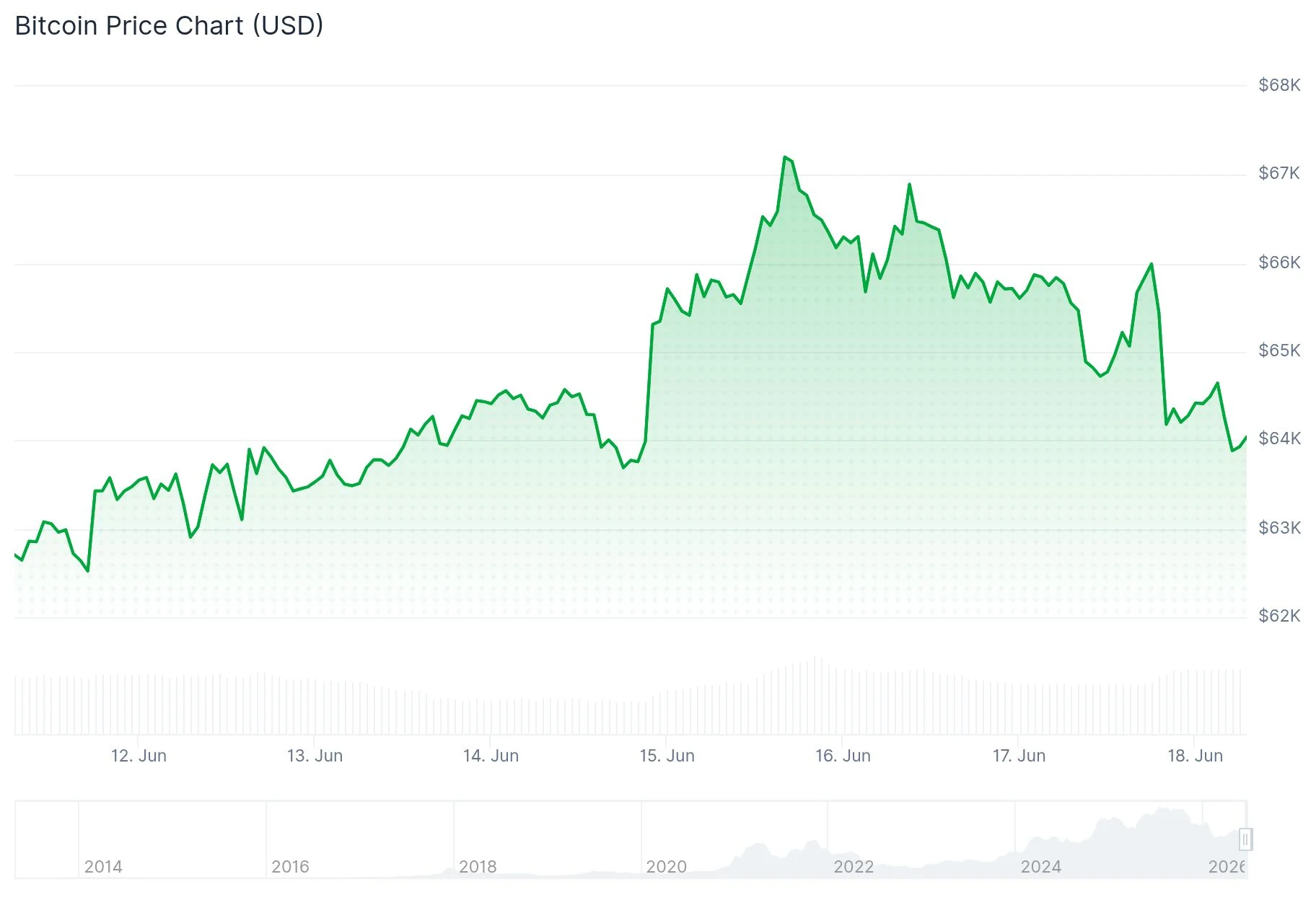
Bitcoin changed hands near $63,900, representing a 24-hour decline of 3%. Ether decreased 3.4% to reach $1,733. XRP shed 3.9% to settle at $1.17, while Solana declined 3.6% to $71.
Among prominent cryptocurrencies, Hyperliquid’s HYPE token experienced the steepest losses, plummeting 7.2% to $69. Despite Thursday’s selloff, the token remains up approximately 28% across the past week, making it one of the period’s strongest performers.
Tron distinguished itself as the sole major cryptocurrency trading positively, advancing 0.9%.
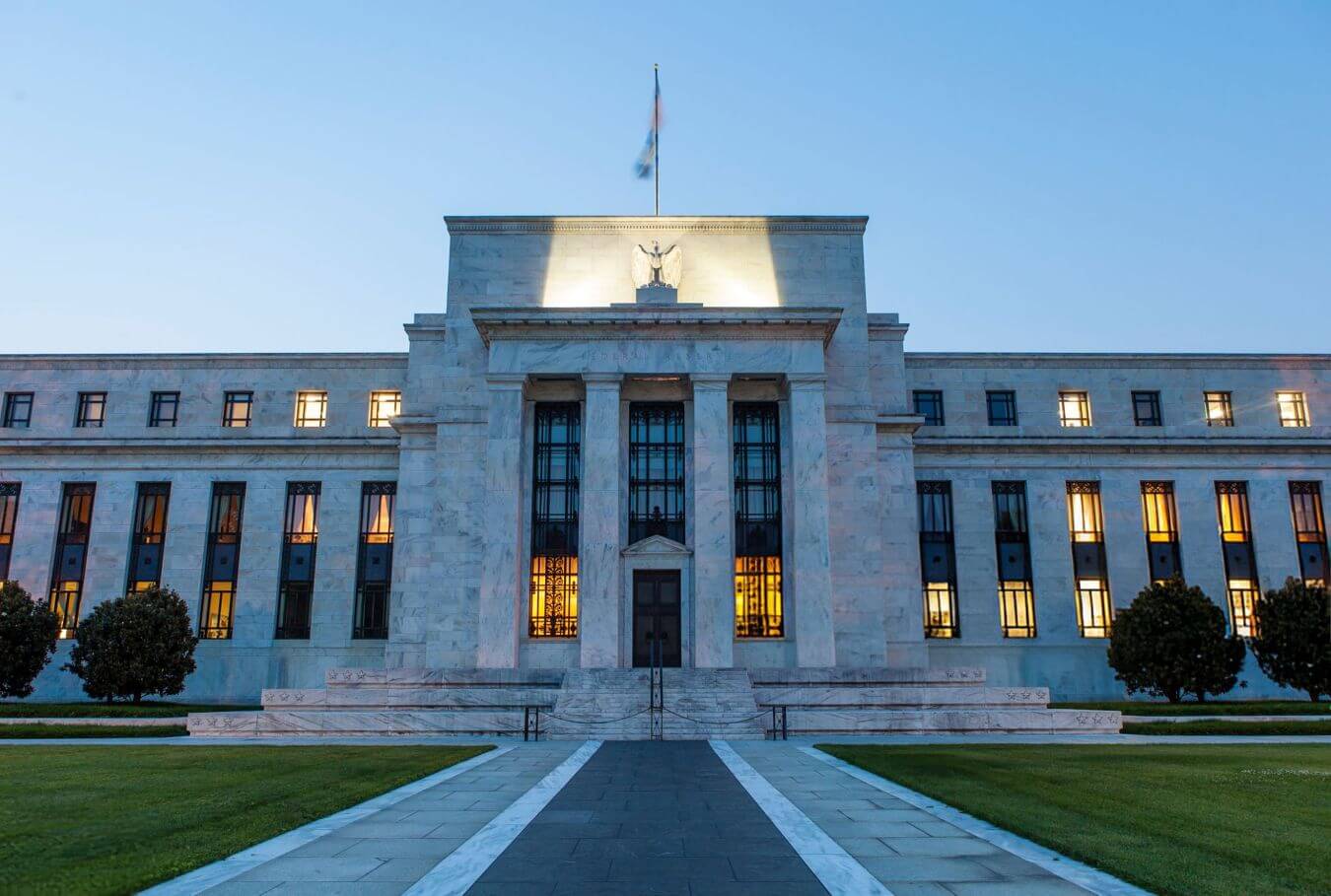
The Federal Reserve kept its policy rate unchanged at a range of 3.5% to 3.75%, matching market consensus. However, revised economic projections revealed elevated inflation expectations and a more gradual trajectory for future rate reductions.

Several central bank officials indicated that additional rate increases might still be necessary. This hawkish messaging tightened monetary conditions, typically redirecting capital away from speculative assets including cryptocurrencies.
The policy meeting marked Kevin Warsh’s debut as Federal Reserve Chair. He acknowledged substantial internal discussion preceding the decision and reaffirmed the institution’s dedication to restoring price stability.
Diplomatic Breakthrough Supports Equities, Bypasses Crypto
Concurrently, President Trump and Iran’s leadership finalized an interim peace framework that became effective Thursday. The arrangement may restore commercial navigation through the Strait of Hormuz and eliminate sanctions targeting Iranian petroleum exports.
Nasdaq 100 futures jumped approximately 1.4%. S&P 500 futures increased 0.8%. Dow futures advanced 0.6%. Brent crude oil retreated toward $78 per barrel.
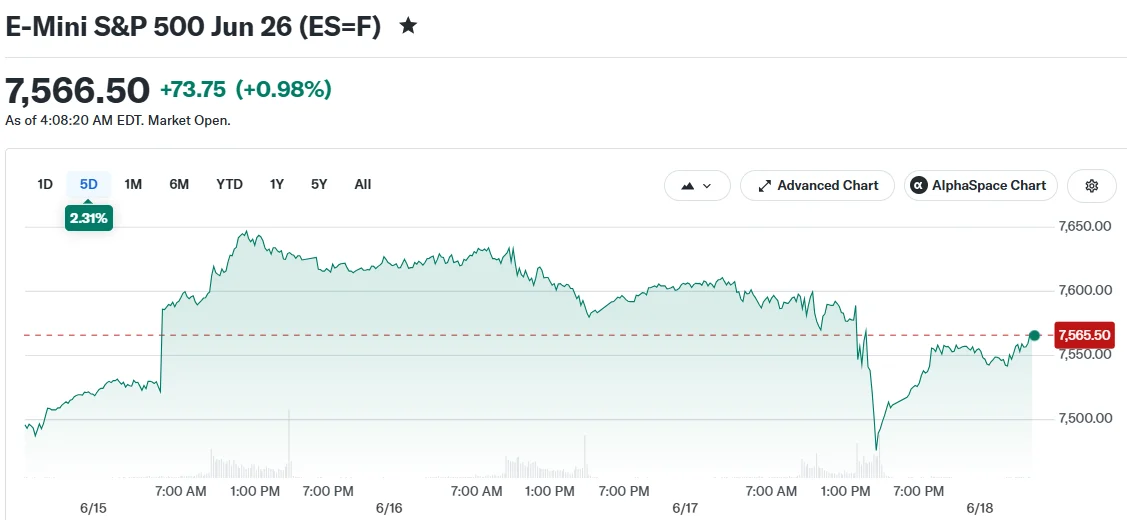
Cryptocurrency markets failed to mirror equity strength. This divergence indicates digital assets are currently responding more directly to monetary policy than geopolitical developments.
Thursday also represented the final trading session before markets close Friday in observance of the Juneteenth federal holiday.
Discussions addressing longer-term matters, including Iran’s nuclear capabilities, are scheduled to proceed throughout the subsequent 60-day period.
Market Outlook from Industry Professionals
Gerry O’Shea, who leads global market insights at Hashdex, projected Bitcoin will likely consolidate within a $60,000 to $70,000 corridor throughout coming weeks absent a substantial market driver.
He identified two possible catalysts: presidential approval of the CLARITY Act, legislation addressing crypto market structure, or additional progress in US-Iran diplomatic relations.
O’Shea additionally observed that market sentiment has weakened as initial public offerings and artificial intelligence equities have captured investor attention previously directed toward cryptocurrencies. He anticipates capital will eventually return as institutional participation expands and regulatory frameworks crystallize.
Bitcoin has maintained support in the lower $64,000 zone, suggesting intense selling pressure may be moderating. Nevertheless, buyers remain hesitant given the Federal Reserve’s restrictive monetary posture.
Get 3 Free Stock Ebooks
Discover top-performing stocks in AI, Crypto, and Technology with expert analysis.
- Top 10 AI Stocks - Leading AI companies
- Top 10 Crypto Stocks - Blockchain leaders
- Top 10 Tech Stocks - Tech giants



