



Key Highlights
- Starting June 17, Aster will allocate 99% of daily platform fees toward purchasing ASTER tokens from open markets.
- Every buyback is accompanied by an equivalent burn from reserve supplies, generating a dual 198% buyback-and-burn mechanism.
- The protocol plans to reduce ASTER’s total supply from 8 billion down to 3 billion through continuous burns.
- Tokens acquired through buybacks are distributed to veASTER stakers through the Loyalty Rewards system.
- ASTER surpassed the $0.65 resistance threshold and is now targeting the $0.81 price level.
Aster unveiled a significant tokenomics overhaul on June 17, 2026, propelling its ASTER token upward by more than 20% within 24 hours.
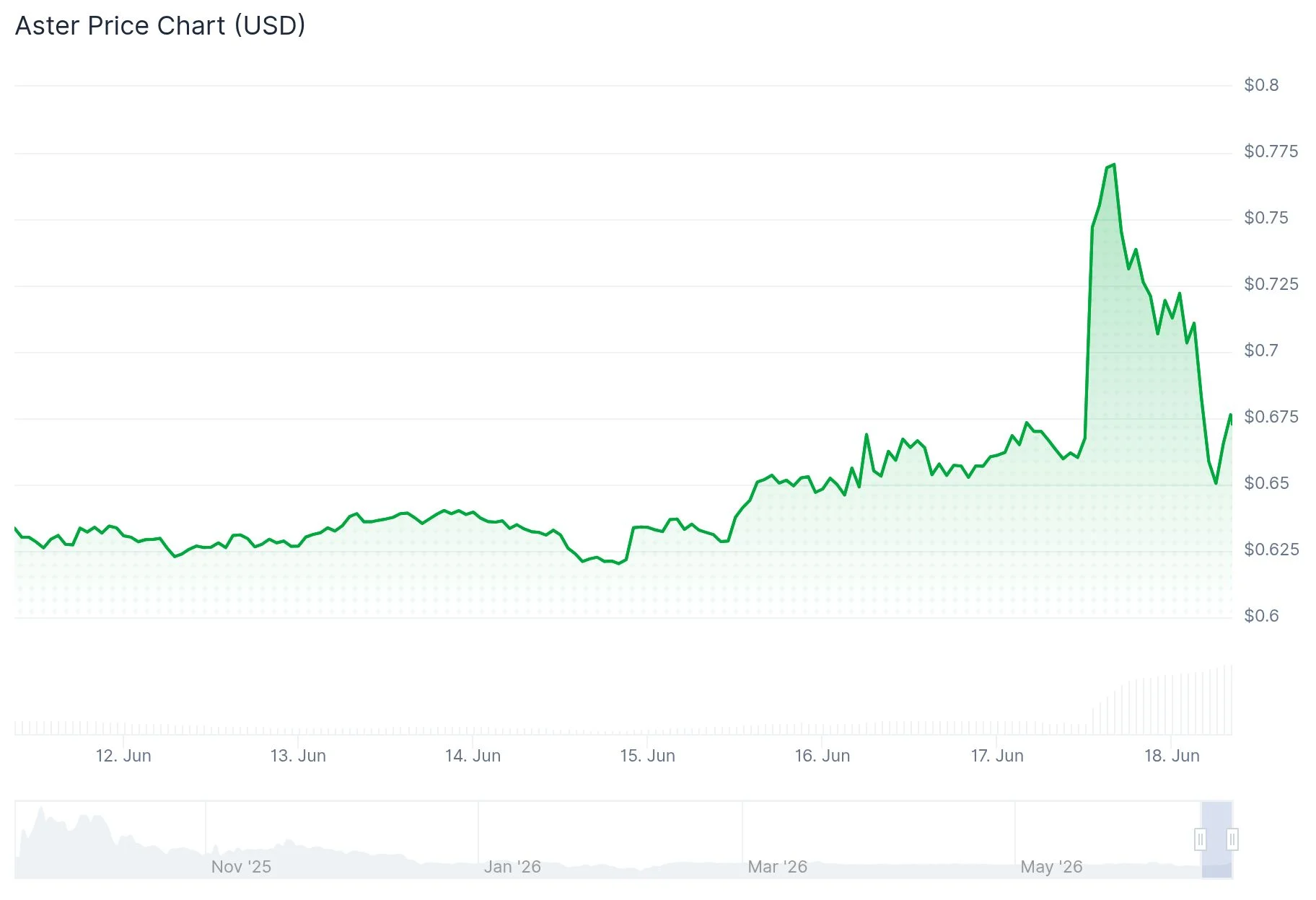
The heart of this upgrade is simple yet powerful: nearly all daily fees—99% to be exact—collected on the platform will now be deployed to purchase ASTER tokens straight from the open market.
These buybacks operate automatically through a time-weighted average price mechanism and are recorded transparently on-chain. The team has made the wallet address public—0xa0edBaBcb48034e368de286b49F9603C7AfA1b60—enabling full community verification of all purchases.
For each token repurchased from the market, an identical quantity of ASTER is permanently removed from the project’s reserve wallet, beginning with team allocations.
This dual approach produces what the protocol describes as a “198% combined buyback-and-burn effect,” effectively reducing circulating supply through simultaneous market purchases and reserve burns.

Aggressive Supply Reduction Strategy
Burn events occur every two weeks and will persist until the overall token supply shrinks from 8 billion to 3 billion ASTER tokens.
On June 17, the total supply was approximately 7.82 billion, while circulating supply hovered between 2.68 and 2.70 billion tokens.
All tokens acquired via the buyback program flow directly into the Loyalty Rewards distribution. Every reward epoch features a base allocation of 300,000 ASTER, supplemented by all tokens bought back during that period, then distributed proportionally to veASTER holders according to their lock weight.
Additional buying pressure comes from Aster Spot listings. Each permissionless token listing requires a 50,000 USDT fee, with all listing revenues funneled into the same buyback mechanism.
Market Reaction and Price Action
ASTER briefly touched nearly $0.80 immediately following the announcement before encountering profit-taking activity. The token was most recently trading around $0.74, maintaining approximately 13% gains for the day.
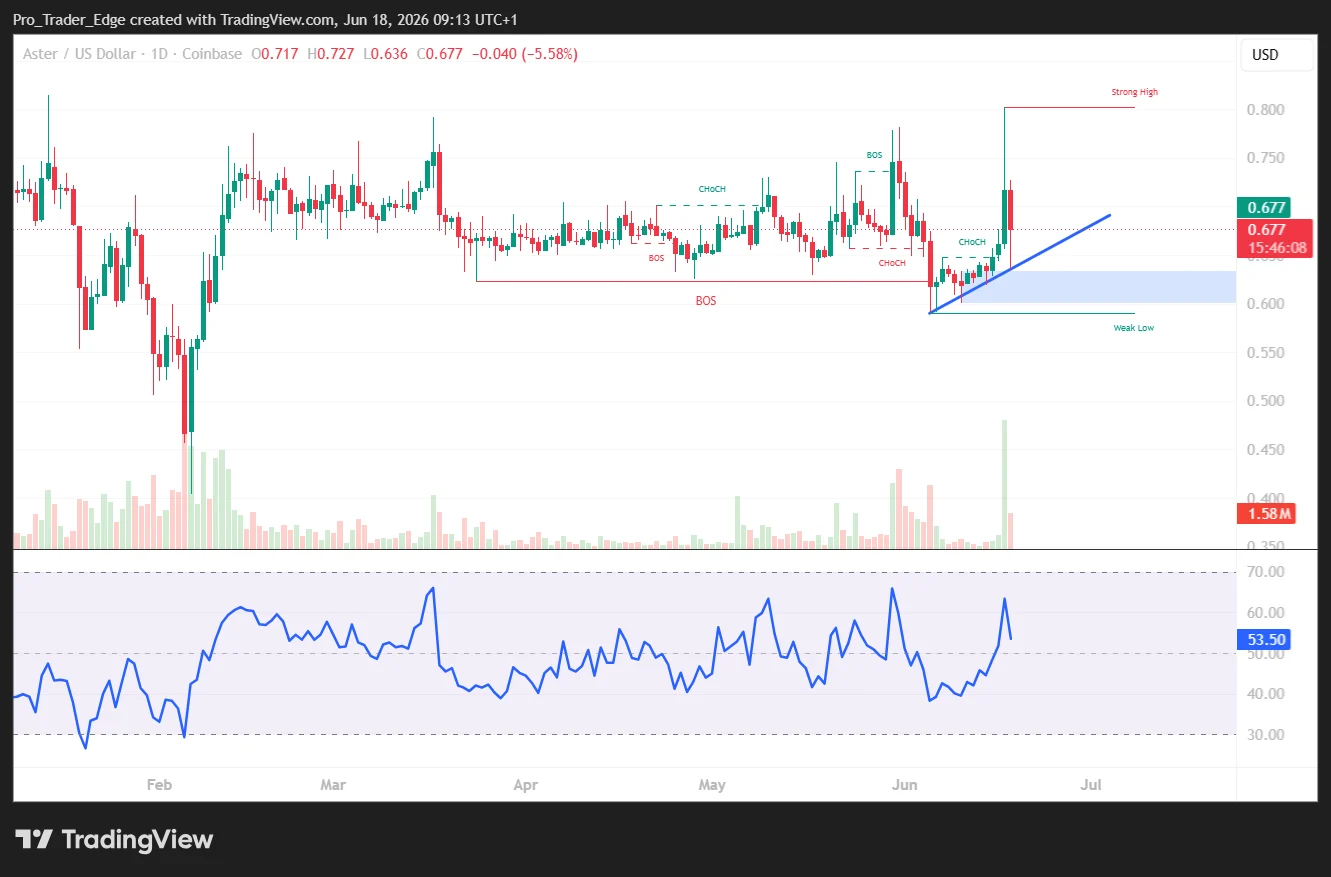
On the daily timeframe, ASTER successfully breached the $0.65 resistance level that had capped price action since April.
The Relative Strength Index climbed above 65, while the MACD indicator displayed a bullish crossover accompanied by growing positive histogram bars.
The next significant resistance level lies at $0.81, a zone that has previously rejected multiple upward attempts on the daily chart. A successful break above $0.81 would push ASTER into price ranges not visited since late 2025.
Traders are now monitoring the $0.65 zone as a potential support level in case of any price retracements.
This tokenomics revision expands upon previous iterations of the program that allocated 70–80% of fees toward buybacks, now capturing virtually all platform revenue for this purpose.
Get 3 Free Stock Ebooks
Discover top-performing stocks in AI, Crypto, and Technology with expert analysis.
- Top 10 AI Stocks - Leading AI companies
- Top 10 Crypto Stocks - Blockchain leaders
- Top 10 Tech Stocks - Tech giants



